Introduction
Engagement rate comes up constantly in Instagram strategy discussions, but many people using the term cannot actually calculate it or explain what counts toward it. This post gives a clear, practical answer: what engagement rate is, how to calculate it step by step, and what counts as a good number.
This is a shorter, more direct companion to the deeper engagement rate guide published on Day 3. If you want the full breakdown of formulas, benchmarks, and improvement strategies, that post covers it in depth. This post is the quick reference version.
What Engagement Rate Means
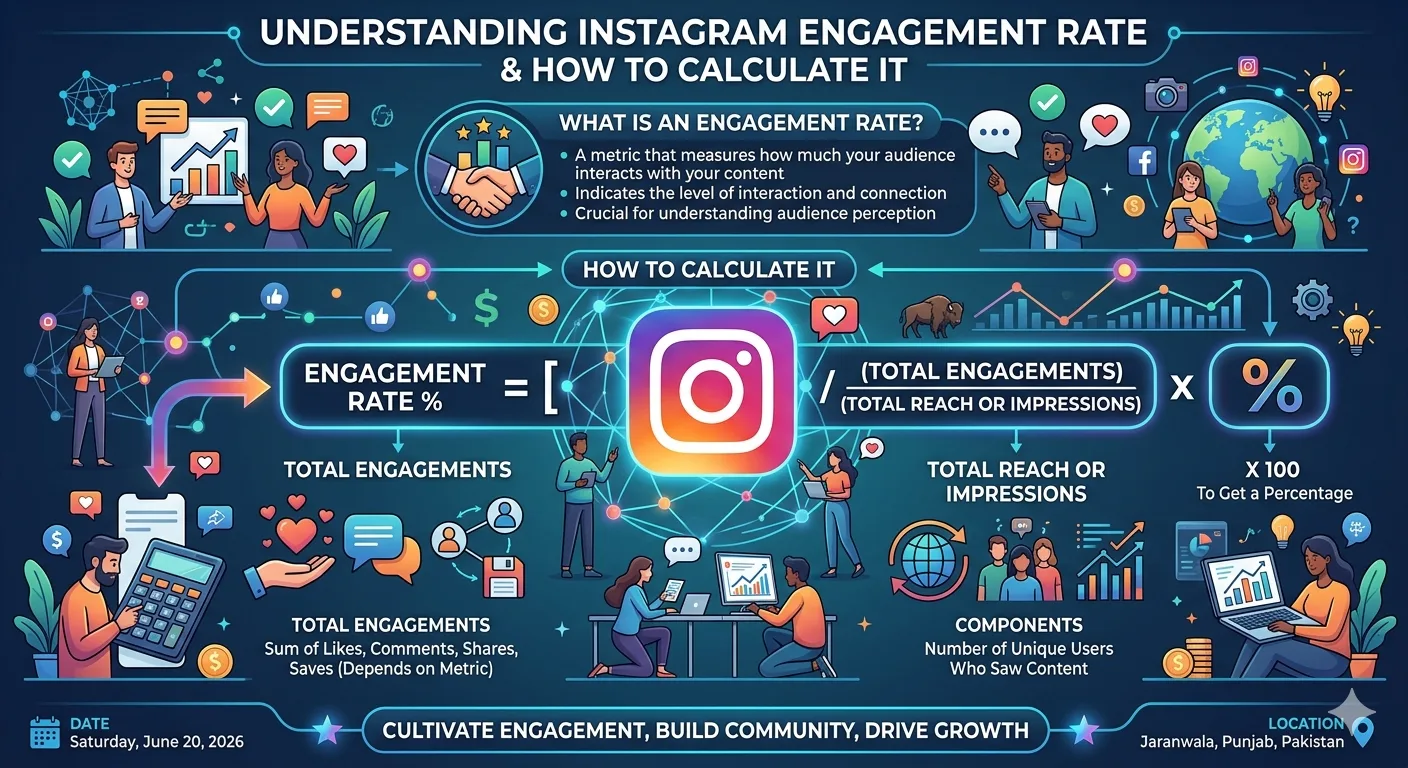
Engagement rate measures what percentage of an account's followers actively interact with its content. It answers a simple question: of everyone who follows this account, how many actually respond to what gets posted?
A high engagement rate means a large share of the audience is paying attention and taking action. A low engagement rate means most followers are passive and not really interacting with the content, regardless of how large the follower count looks.
What Counts as Engagement
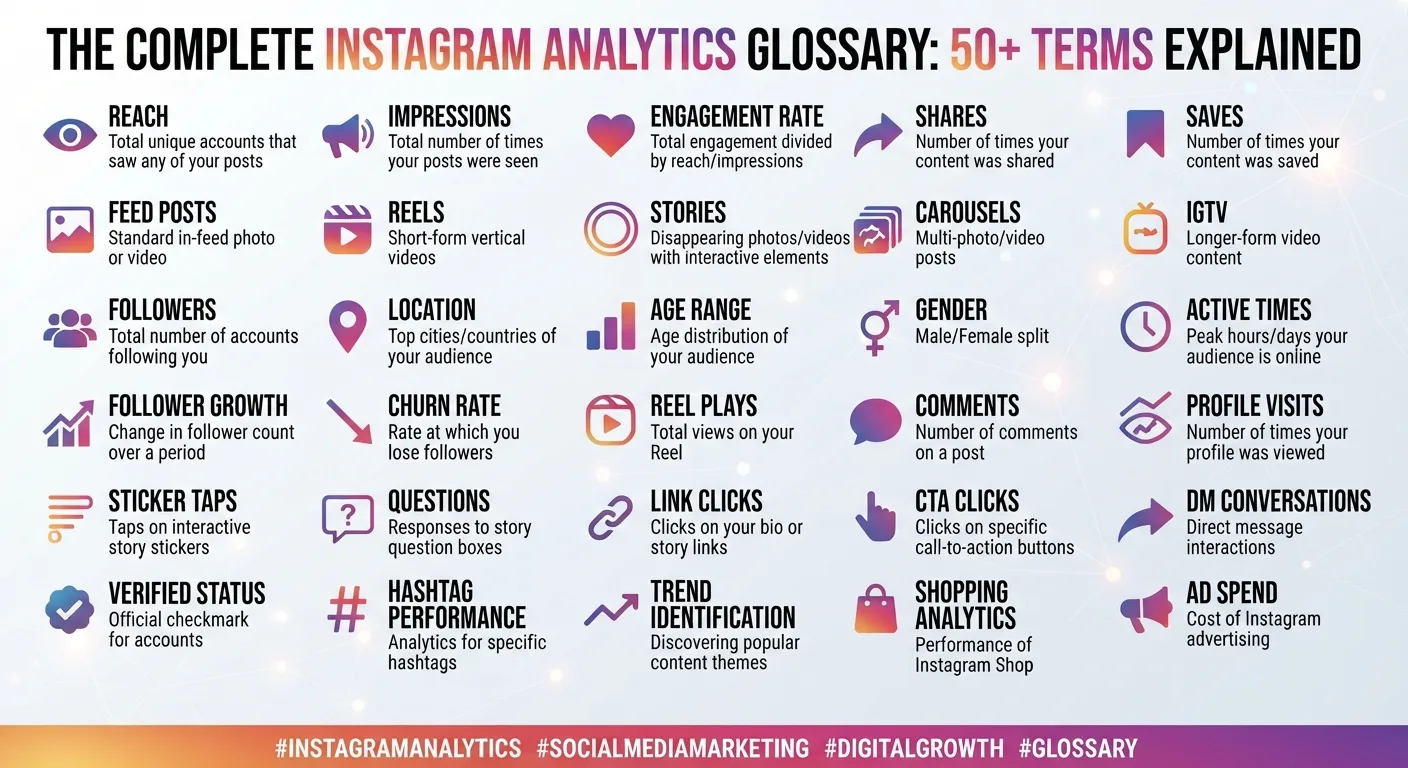
Most engagement rate calculations include the following actions:
Likes
Comments
Saves
Shares
Some calculations focus only on likes and comments since these are the only two publicly visible without owner access to Instagram Insights. Saves and shares add real value to a calculation but are not visible to outside viewers checking a public account.instapv
The Basic Formula
The standard formula used by most marketers is:
Engagement Rate = (Total Engagements ÷ Total Followers) x 100
Here is a simple example. A post receives 300 likes and 40 comments. The account has 8,000 followers.
Total engagements: 300 + 40 = 340
Engagement Rate: (340 ÷ 8,000) x 100 = 4.25%
That account's engagement rate on that post is 4.25 percent.
Calculating an Average Engagement Rate
A single post can be misleading since individual posts vary in performance. A more reliable picture comes from averaging engagement rate across multiple recent posts, typically 10 to 20.
Add up the total engagements across all the posts in your sample. Divide that total by the number of followers multiplied by the number of posts. Multiply by 100.
This smooths out the natural variation between individual posts and gives a more accurate sense of how the account performs overall.
What a Good Engagement Rate Looks Like
Engagement rate benchmarks vary by account size. As a general guide:
Accounts under 10,000 followers: 4 to 6 percent is solid, above 7 percent is excellent
Accounts between 10,000 and 100,000 followers: 2 to 4 percent is solid, above 5 percent is excellent
Accounts between 100,000 and 1 million followers: 1 to 2.5 percent is solid, above 3 percent is excellent
Accounts above 1 million followers: 0.5 to 1.5 percent is solid, above 2 percent is excellent
Larger accounts naturally show lower engagement rates. This is expected and not necessarily a sign of weaker content.
How to Check Engagement Rate for Any Public Account
If you want to calculate engagement rate for an account you do not own, you can do it manually. Visit the public profile. Note the follower count. Review the last 10 to 15 posts and calculate the average likes plus comments per post. Divide that average by the follower count and multiply by 100.
This manual method gives a reasonable estimate but misses saves and shares since those are not publicly visible.
For a faster and more complete approach, InstaPV calculates engagement rate automatically for any public Instagram account and displays the trend over time in its analytics dashboard. This is useful for competitor research and influencer evaluation without needing to do the math by hand.
-
How to Save Instagram Profiles to Track Progress Over Time
-
Instagram Stories Best Practices: 15 Tips for More Views
-
How to Find Instagram Micro-Influencers for Your Brand
Frequently Asked Questions
Q: Is a higher follower count always better than a higher engagement rate?
No. A smaller account with a high engagement rate often delivers stronger results for brands and partnerships than a large account with a low engagement rate, since engagement reflects genuine audience interest rather than just audience size.
Q: Does engagement rate include Story interactions?
Story-specific engagement, such as replies and poll responses, is generally tracked separately from feed post engagement rate. The standard engagement rate formula focuses on feed post interactions.
Q: Can engagement rate be calculated for free?
Yes. The manual formula above works for any public account using publicly visible data. Tools like InstaPV also calculate it automatically at no cost.
Q: Why did my engagement rate drop even though my content quality stayed the same?
Several factors can affect this, including inconsistent posting, algorithm changes, or follower count growing faster than genuine audience interest. Day 3's full engagement rate guide covers common causes in detail.
Conclusion
Engagement rate is a simple calculation with a meaningful payoff. It tells you, more honestly than follower count ever could, whether an audience is genuinely paying attention. Whether you are checking your own account or researching a potential partner, the formula takes seconds to apply and gives you a much clearer picture of real performance.
Calculate engagement rate instantly for any public account on InstaPV →
InstaPV is not affiliated with Instagram or Meta Platforms, Inc