Introduction
Stories going viral works differently from feed posts or Reels going viral. A Story cannot be shared to the Explore page. It does not accumulate likes or appear in hashtag searches. Its distribution surface is fundamentally different from every other Instagram format.
Yet Stories do spread. Not through algorithmic distribution to non-followers, but through the most powerful distribution mechanism available on any platform: direct person-to-person sharing. When someone watches a Story and immediately sends it to a specific friend, or reposts it to their own Story for their audience to see, that content is spreading through genuine human recommendation rather than algorithmic selection.Instapv
This human-powered spreading is what Story virality actually means, and understanding how it works is the foundation for creating Stories designed to spread.
How Stories Spread: The Mechanics of Story Virality
Before getting into what to create, it is worth being precise about how Stories actually spread beyond the original poster's audience.
When a viewer watches someone's Story and reshares it to their own Story, their entire follower base sees the reshared content. If several of those followers then reshare it to their Stories, the content continues cascading outward through the social graph in an organic chain of human endorsement.Read blog
The direct message share is a parallel spreading mechanism. When someone watches a Story and immediately sends it to a specific person or group, the content reaches new potential viewers through a personal recommendation from someone they trust. This direct message sharing is often the first stage of broader spreading, as recipients who find the content compelling share it further.
Both mechanisms share a common trigger: the content produces a strong enough immediate response that the viewer acts on the impulse to share it before moving to the next Story. Understanding what produces this impulse is the core insight needed to design shareable Stories.
The Seven Triggers That Make Stories Shareable
Seven specific emotional and psychological triggers consistently produce the sharing impulse in Story viewers. Designing Stories around one or more of these triggers is the most reliable approach to creating content that spreads.
Trigger 1: Extreme Relatability
When a Story articulates something so precisely aligned with the viewer's own experience that they think of a specific person who needs to see this, sharing becomes almost automatic. The mental process is immediate: "this is exactly what my friend Sarah always says" or "this is literally my life right now" followed by a share to that specific person or a reshare for the whole audience.
The most relatable Stories are built around highly specific observations rather than broad generalities. A Story about the precise feeling of finishing a task you have been avoiding for weeks is more shareable than a Story about procrastination in general, because the specific detail triggers recognition in a way that the generic topic does not.
Trigger 2: Surprising Information
A Story that reveals something the viewer did not know and finds genuinely surprising creates a sharing impulse driven by the desire to inform others. The sharing thought is "I had no idea about this and neither does anyone else I know."
The surprise needs to be genuine rather than manufactured. Clickbait style false surprises, framed as shocking but ultimately delivering mundane information, damage credibility rather than creating positive sharing momentum.
Trigger 3: Humor and Wit
Content that makes the viewer laugh creates an immediate desire to share the feeling of laughter with others. Funny Stories spread through the most natural of all sharing motivations: wanting others to experience the same positive emotion.
The humor that travels best on Instagram Stories tends to be relatable rather than purely absurdist, observational rather than constructed, and specific rather than generic. A Story about a very specific annoying situation that everyone has experienced but few have articulated spreads further than a generic joke because the recognition amplifies the humor.
Trigger 4: Actionable Value
A Story containing genuinely useful information that the viewer plans to use creates sharing motivation driven by wanting to help others. The thought is "this is actually useful and other people I know need this."
The value needs to be specific and immediately applicable. A Story with one highly specific, immediately actionable tip spreads further than a Story with five general principles, because specific value is more clearly useful to share than general value that requires interpretation before application.
Trigger 5: Strong Emotion
Stories that produce strong emotional responses, whether inspiration, concern, joy, or empathy, create sharing impulses driven by wanting others to feel the same thing or wanting to express something the viewer feels but cannot articulate themselves.
The most emotionally shareable Stories often touch universal experiences through specific personal detail, as covered in Day 12's caption guide. The combination of authentic specificity and universal resonance is what makes emotional content feel genuine rather than manipulative.
Trigger 6: Social Currency
Content that makes the sharer look good, knowledgeable, funny, or insightful to their audience creates sharing motivation driven by the social value of sharing rather than purely by the content itself. Sharing a Story that makes you appear in the know or well-connected to valuable information is itself a form of social signaling that motivates sharing independent of pure content appreciation.
Trigger 7: Urgent Relevance
Content that is relevant to something currently happening, whether a trend, a news moment, a cultural conversation, or a seasonal occasion, creates time-sensitive sharing motivation. The urgency of the relevance creates pressure to share now rather than later, which is particularly important given that Stories disappear in 24 hours.
Structural Techniques for Viral Stories
Beyond the psychological triggers above, several structural techniques increase the shareability of any Story content.
The One Frame One Idea Principle
As covered in Day 8's Stories best practices guide, each Story frame should communicate one clear idea. Frames that try to communicate multiple ideas simultaneously are harder to process quickly enough to produce the immediate sharing response.
The one-frame-one-idea principle is even more important for viral-focused Stories because the sharing impulse is most powerful immediately after the moment of recognition or impact. A crowded, complex frame delays or diffuses this moment rather than creating the sharp, clear impact that triggers an immediate share.
The Setup and Payoff Structure
Stories with a clear setup in the first frame and a payoff in a subsequent frame create forward momentum that pulls viewers through the sequence and concentrates emotional impact in the payoff moment. This structure works particularly well for surprise content, humor, and before-and-after format Stories where the contrast between setup and payoff generates the emotional response.
The Text-First Approach for Silent Viewers
As established in Day 11's Reels strategy guide regarding silent viewing, a significant proportion of Instagram users view content without sound. Stories designed to be fully comprehensible without audio reach the maximum possible audience, while Stories that depend on audio to communicate their key content are invisible to silent viewers.
Leading with clearly legible text that communicates the core content, even when the Story also has audio, ensures that the viral potential of the content is not limited to the subset of viewers watching with sound.
The Reshare Frame
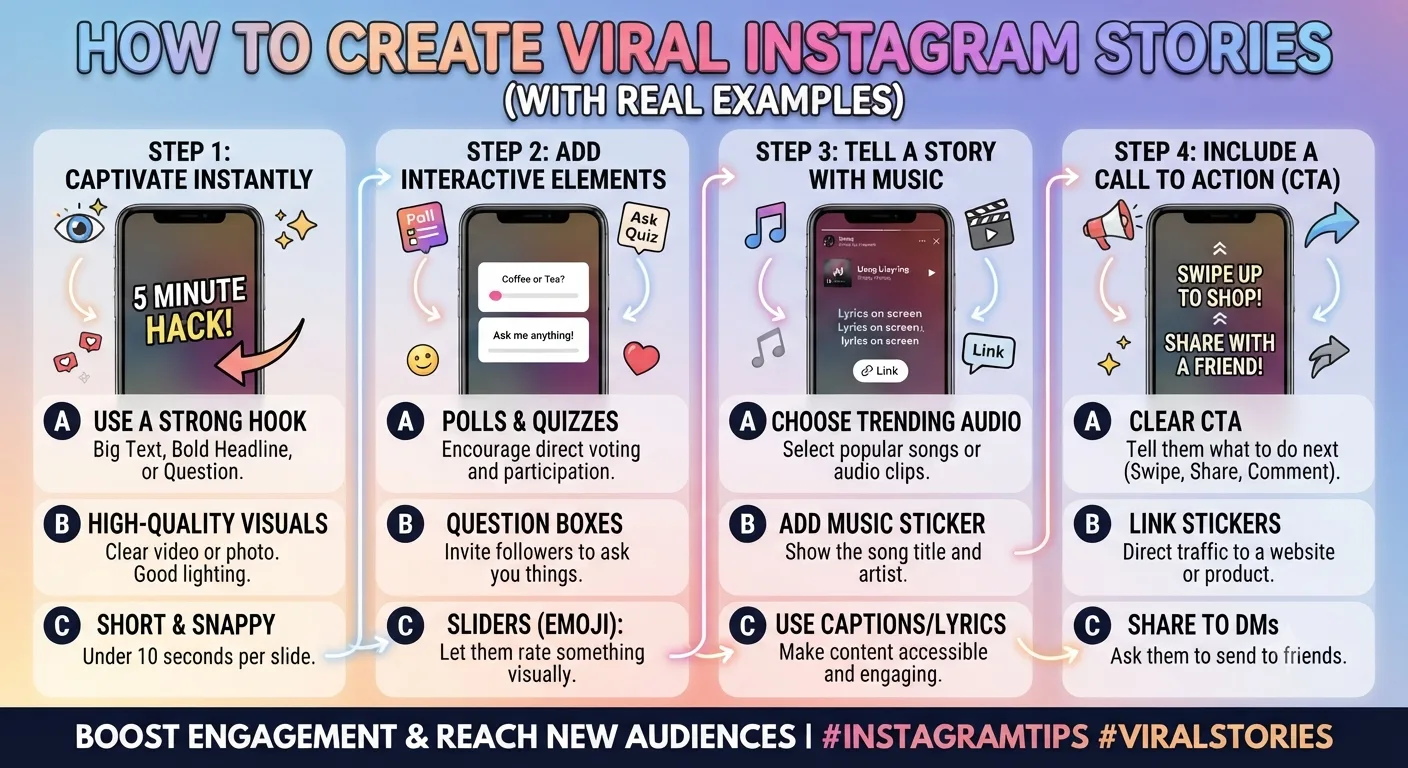
Adding a final frame that explicitly invites resharing increases the likelihood that viewers who found the content valuable will act on the sharing impulse. This can be as simple as "share this with someone who needs to hear it" or "reshare if this is you."
This explicit invitation works because many viewers feel the sharing impulse but do not act on it without a prompt. The invitation removes any ambiguity about whether resharing is welcomed and provides a specific social framing for the share.
Format Examples That Consistently Go Viral
Several specific Story formats have demonstrated consistent viral spreading across multiple niches.
The Myth vs Reality Slide Pair
A two-frame Story where the first frame states a commonly believed myth and the second frame reveals the reality is one of the most reliably shareable formats. The structure works because it validates the viewer's likely prior belief in the first frame before subverting it with the more accurate reality, creating the surprise response that drives sharing.
Example structure: Frame one states a commonly held belief in the niche using the label Myth. Frame two delivers the accurate alternative reality under the label Reality. A final frame invites resharing with anyone who has the same misconception.
The Relatable Scenario Sequence
A three to four frame sequence that builds through an increasingly specific and relatable scenario before landing on the punchline or point in the final frame. Each frame adds specificity that deepens recognition until the final frame produces the "this is literally me" response.
Example structure: Frame one establishes the general situation. Frame two adds a specific detail that narrows the relatable subset. Frame three adds an even more specific detail. Frame four delivers the punchline or observation that rewards the viewers who recognize all three details.
The Single Surprising Statistic
A single-frame Story presenting one specific, surprising statistic relevant to the niche in large, clear text with minimal additional context. The simplicity of the format concentrates full attention on the surprising information rather than distributing it across multiple elements.
The statistic must be genuinely surprising and accurately sourced. Invented or exaggerated statistics damage credibility if investigated, and Story content that spreads virally is exactly the content most likely to be investigated by skeptical viewers.
The Honest Admission
A Story in which the creator admits something vulnerable, counterintuitive, or against their own apparent interest in a way that is disarming enough to produce an immediate empathetic response. The format works because authenticity in a landscape of performance is itself surprising and emotionally impactful.
Example: A fitness creator admitting that they did not work out for three weeks and describing how it actually felt rather than what they expected it to feel like. The honesty disarms the usual expectation of aspirational fitness content and creates a relatable human moment that viewers want to share with others who follow the same creator.
Using Interactive Elements to Amplify Spread
Interactive Story elements can both reveal shareable content and increase engagement signals that improve Story bar placement as covered in Day 8's best practices guide.
A poll that reveals a surprising statistic in the results, where the poll itself invites viewers to guess before seeing the actual answer, creates a participatory experience that amplifies the surprise response. A question sticker that collects responses that are then shared anonymously in subsequent frames creates community content that individual contributors feel motivated to reshare.
Timing and Frequency for Viral Stories
Even well-designed shareable Stories need to be published when the audience is most active to achieve maximum initial distribution before the 24-hour window closes. As covered in Day 5's posting time guide, publishing during your audience's peak activity window maximizes the number of people who encounter the content while it is still within the sharing window.
Publishing shareable Story content as a standalone sequence rather than buried in a longer series of mixed content increases the likelihood that viewers reach the shareable content with their attention intact rather than having mentally checked out earlier in a long Story sequence.
Researching Viral Story Patterns in Your Niche
Understanding what Story content is currently spreading in your specific niche provides the most directly applicable creative intelligence for your own viral Story attempts.
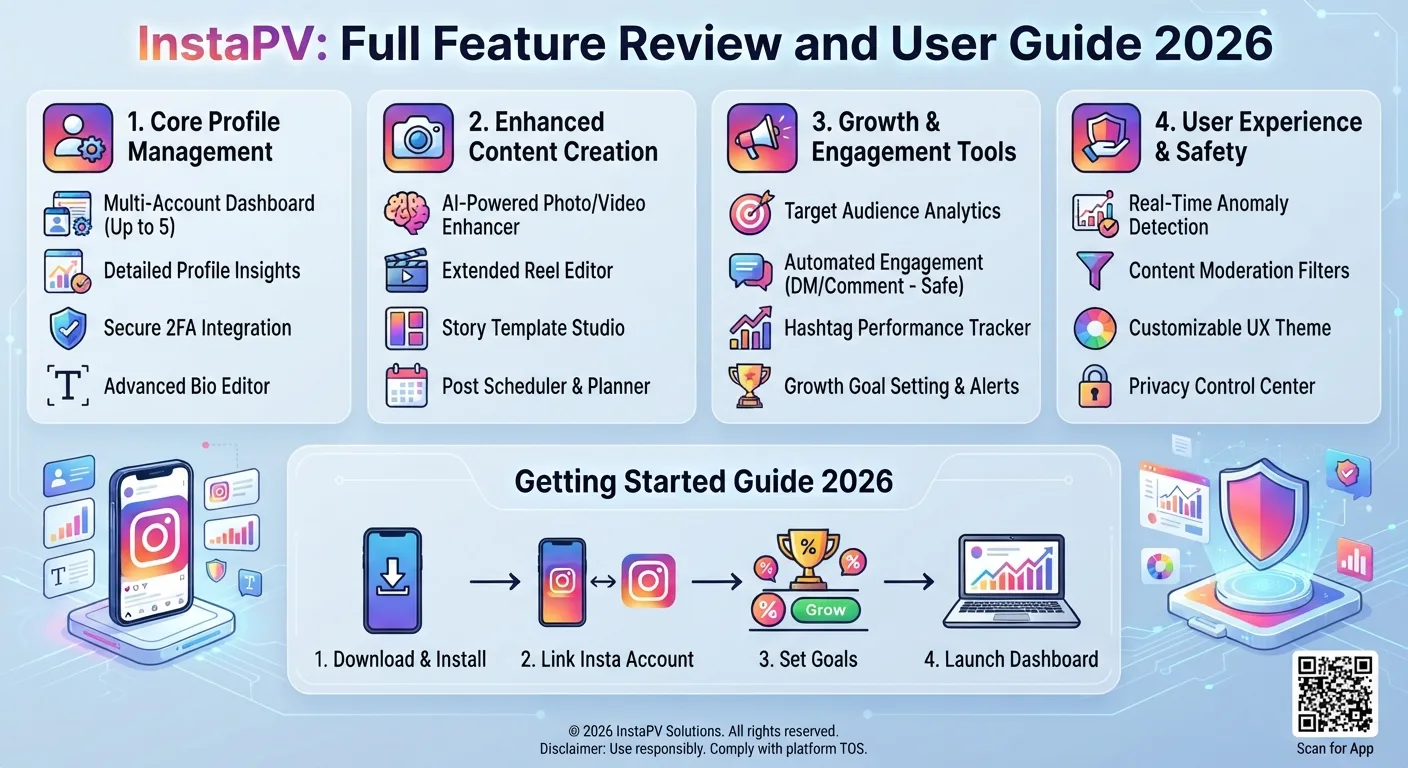
Using InstaPV to view Stories and Highlights from high-growth accounts in your niche reveals what content formats, structures, and topics those accounts are using in their Stories. Accounts that are growing rapidly and showing strong engagement rate trends are almost certainly creating Story content that is generating above-average sharing and engagement, and studying their approach provides niche-specific guidance beyond the general frameworks in this guide.
Frequently Asked Questions
Q: Can Stories actually go viral the way Reels or posts can?
Yes, but through a different mechanism. Stories spread through direct person-to-person resharing rather than through algorithmic distribution to non-followers. A Story that gets reshared by many viewers can reach audiences far beyond the original account's followers through this human-powered distribution, but the scale of spreading is typically more limited than algorithmic viral distribution of Reels or feed posts.
Q: How do I know if a Story has been reshared to other people's Stories?
Instagram notifies you when someone reshares your Story to their own Story, allowing you to see how many accounts have reshared it. Direct message shares, however, are not tracked or notified, so the full extent of Story spreading through direct messages is not visible to the original poster.
Q: Should viral Story attempts be separate from my regular Stories content?
Most effective Stories strategies combine regular relationship-building content with occasional specifically designed shareable content rather than optimizing every Story for virality. Regular content maintains the audience relationship and Stories bar placement that ensure shareable content reaches a large initial audience when it is posted.
Q: Does resharing a Story to your own Story create a viewer record for the original poster?
When someone reshares your Story to their own Story, the original post's viewer list does not include the people who watch the reshared version. The reshared version creates new viewers for the resharer's Story rather than adding viewers to the original Story's viewer list.
-
What Are Instagram Close Friends Stories and How to View Them?
-
How to Monitor Your Brand Mentions on Instagram for Free
-
Instagram vs TikTok: Which Platform Is Better for Creators in 2026?
Conclusion
Story virality works through human-powered distribution rather than algorithmic selection, which makes it both more genuine and more dependent on creating content that produces an immediate, strong enough response that viewers act on the impulse to share before moving to the next Story.
The seven sharing triggers, extreme relatability, surprising information, humor, actionable value, strong emotion, social currency, and urgent relevance, provide a framework for designing content that produces this response. The structural techniques and format examples above provide specific tools for executing against these triggers with the clarity and immediacy that Stories' fast-paced format demands.
Research viral Story formats and approaches from top accounts in your niche on InstaPV →