Introduction
Every brand on Instagram is publishing content. Far fewer brands are actually using the data that content generates to make better decisions. The gap between these two groups brands that post and hope, versus brands that post, measure, and adjust is often the single biggest factor separating accounts that grow steadily from accounts that stagnate for years.
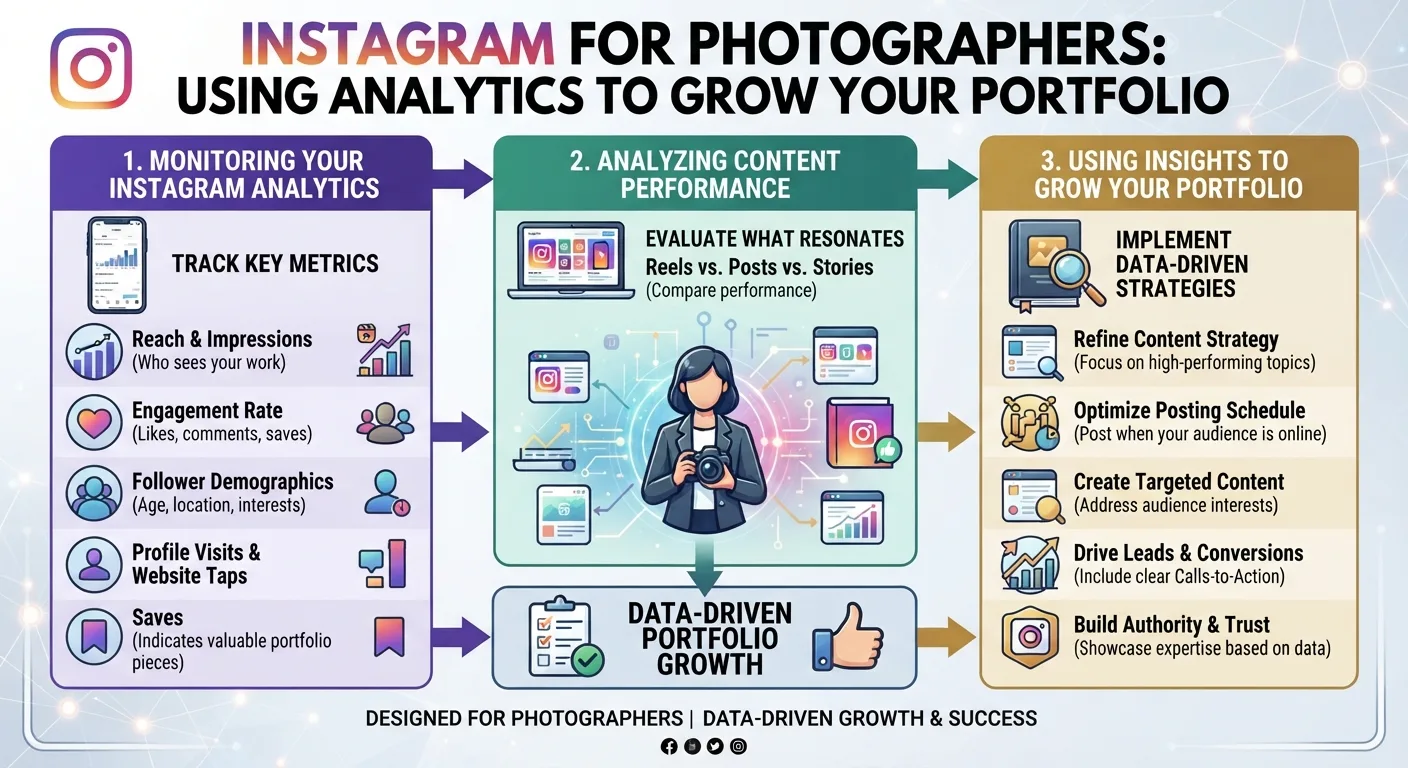
Instagram analytics is not just a reporting exercise for end-of-month meetings. Used properly, it is an operational tool that informs what content to create, when to post it, who to target, how to price influencer partnerships, and where to invest marketing budget. Brands that treat analytics as a continuous feedback loop rather than a retrospective report consistently outperform those that do not.
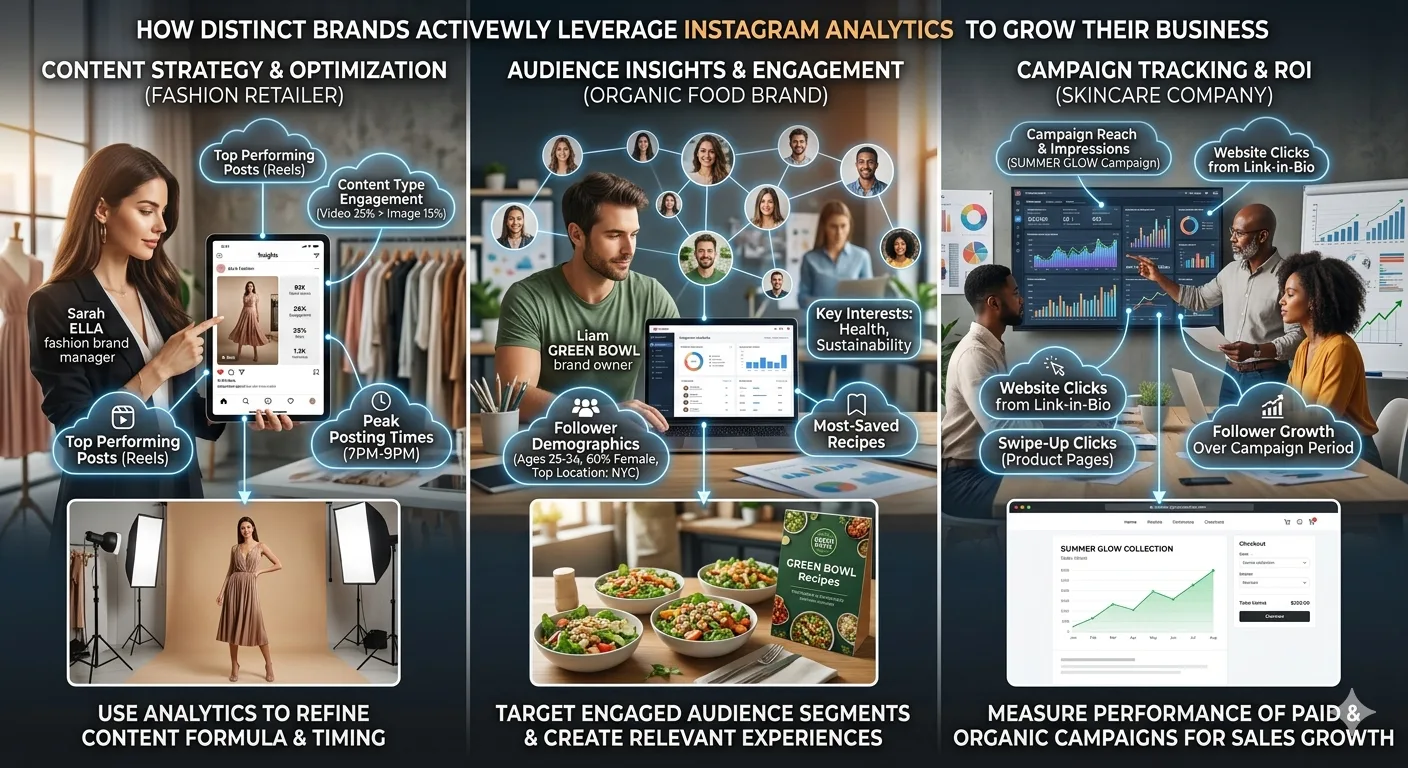
This guide walks through exactly how successful brands use Instagram analytics across every stage of their growth from content planning to audience targeting to competitive positioning with practical examples you can apply to your own business regardless of size or industry.
Why Analytics-Driven Brands Outperform Intuition-Driven Brands
Before getting into specific strategies, it is worth understanding the underlying reason analytics matters so much for brand growth.
Human intuition about content performance is notoriously unreliable. Marketers and business owners frequently believe a piece of content performed well because they personally like it, because it generated a few enthusiastic comments from people they know, or simply because they spent a lot of time creating it. None of these are reliable indicators of actual performance relative to other content.
Analytics removes this bias entirely. A post either generated strong reach, engagement, and saves, or it did not regardless of how the creator feels about it. Brands that consistently check their analytics develop an increasingly accurate intuition over time, because their gut feelings are continuously calibrated against real data. Brands that never check analytics develop intuitions that may be entirely disconnected from what their actual audience responds to.
This compounding effect is why analytics-driven brands tend to improve steadily over time, while intuition-only brands often plateau repeating the same content patterns indefinitely because there is no feedback mechanism telling them what is and is not working.
Strategy 1: Content Format Optimization
One of the most immediate and practical uses of Instagram analytics is determining which content formats Reels, carousel posts, single-image posts, stories perform best for a specific brand and audience.
How Brands Approach This
Successful brands track performance across content formats over a meaningful sample size typically 20 to 30 posts per format minimum and compare average reach, engagement rate, and saves across formats.
Many brands discover surprising results when they do this analysis. A skincare brand might assume that polished product photography performs best, only to discover through analytics that short educational Reels explaining ingredient benefits generate three times the saves and significantly higher reach. A B2B software company might assume that infographic carousels are their strongest format, only to find that short customer testimonial video clips drive substantially more profile visits and website clicks.
Practical Application
Once a brand identifies its highest-performing format through analytics, the practical step is to shift content production resources toward that format without abandoning others entirely, since format diversity still matters for algorithmic distribution and audience variety. The shift is directional: if Reels are outperforming carousels by a wide margin, increasing Reel production from one per week to three per week while maintaining occasional carousels is a data-backed adjustment that compounds over months.
Strategy 2: Posting Time Optimization
Audience activity patterns vary significantly by industry, geography, and audience demographics. Posting at the right time can mean the difference between a post that gets immediate engagement triggering algorithmic distribution and one that is published into a quiet period and never builds momentum.
How Brands Approach This
Brands use analytics to identify when their specific audience is most active, rather than relying on generic "best time to post" advice that applies to no one's audience specifically. Instagram Insights provides audience activity data for business accounts, showing exactly when followers are online by day and hour.
A brand targeting working professionals might find their audience is most active between 7 and 8 AM before work and again between 7 and 9 PM after work with very little activity during standard business hours. A brand targeting students might see the opposite pattern, with high activity during midday breaks and late evening.
Practical Application
Brands that align their publishing schedule with verified audience activity windows consistently see stronger initial engagement, which Instagram's algorithm interprets as a signal to distribute the content more widely. This is one of the simplest analytics-driven changes a brand can make, and it requires no change to content itself only to scheduling.
Strategy 3: Audience Demographic Alignment
Understanding who actually follows and engages with a brand's account versus who the brand believes its target audience is frequently reveals important gaps that analytics can help close.
How Brands Approach This
Instagram Insights provides demographic breakdowns of followers by age range, gender, and top locations. Brands compare this data against their intended target customer profile.
A common discovery: a brand that designed its marketing strategy around a 25 to 34 year old target audience might find that their actual Instagram audience skews significantly older or younger, or is concentrated in geographic markets the brand had not prioritized. This mismatch often explains why certain campaigns underperform the content is being created for an audience that is not actually the one engaging with the account.
Practical Application
When analytics reveal a demographic mismatch, brands have two options: adjust content to better serve the audience they actually have, or adjust acquisition strategy to attract the audience they originally intended to reach. Both are valid responses, but both require first knowing the mismatch exists which only analytics can reveal.
Strategy 4: Competitive Benchmarking
Brands do not operate in isolation, and understanding how their performance compares to direct competitors provides essential context that internal metrics alone cannot offer.
How Brands Approach This
A brand's own engagement rate of 2 percent might seem disappointing in isolation but if every competitor in the same industry is also averaging around 2 percent, it indicates the brand is performing at industry norms rather than underperforming. Conversely, a 2 percent engagement rate in an industry where competitors average 5 percent signals a real problem worth investigating.
This is where tools that allow analysis of public competitor accounts become valuable. Using InstaPV, brands can research competitor accounts' follower growth trends, engagement rates, posting frequency, and content strategy building a benchmark dataset without requiring access to those competitors' private analytics.
Practical Application
Brands that maintain an ongoing competitive benchmark tracking three to five direct competitors monthly gain continuous context for interpreting their own performance. A sudden drop in a brand's own engagement rate that coincides with a similar drop across all tracked competitors likely reflects a platform-wide algorithm change rather than a brand-specific problem. A drop that occurs only for one brand while competitors remain stable points to a brand-specific issue worth addressing directly.
Strategy 5: Influencer Partnership Evaluation
For brands that work with influencers whether through paid sponsorships, product gifting, or ambassador programs analytics is the difference between partnerships that drive measurable results and partnerships that look good on paper but deliver little actual value.
How Brands Approach This
Before committing to a partnership, brands research a potential influencer's follower growth trajectory, engagement rate relative to their account size, content consistency, and audience alignment. An influencer with a large following but declining engagement, inconsistent posting, or an engagement rate far below benchmarks for their account size represents a much higher-risk investment than an influencer with a smaller following but strong, consistent metrics across all of these dimensions.
After a partnership, brands track the influencer's content performance reach, engagement, and any trackable actions like link clicks or discount code usage to evaluate actual return on investment rather than relying on the influencer's self-reported reach figures, which can be inflated or based on metrics that do not reflect genuine audience response.
Practical Application
Brands that build a systematic influencer evaluation process using public analytics tools like InstaPV checking growth trajectory, engagement rate benchmarks, and content consistency before every partnership decision make measurably better investment decisions over time. This is particularly valuable for smaller brands with limited marketing budgets, where a single poor influencer investment represents a significant proportion of available resources.
Strategy 6: Identifying Content Themes That Drive Saves and Shares
Saves and shares are the engagement signals most strongly tied to algorithmic distribution, and analytics helps brands identify exactly what content themes generate these specific responses.
How Brands Approach This
Rather than looking at overall engagement, brands segment their content by theme educational content, product showcases, behind-the-scenes content, user-generated content, promotional content, entertainment content and compare save and share rates specifically across these categories.
It is common for brands to discover that their highest-liked content and their highest-saved content are completely different categories. A fashion brand might find that styled outfit photos generate the most likes, while step-by-step styling tutorials generate dramatically more saves because saves represent content people intend to act on later, while likes represent immediate appreciation.
Practical Application
Because saves and shares carry significant algorithmic weight, brands that identify and increase production of content themes with high save and share rates often see compounding reach improvements over time not just from the increased save rate on individual posts, but from the broader distribution that high-save content receives from Instagram's algorithm.
Strategy 7: Tracking the Customer Journey From Discovery to Conversion
For brands using Instagram as part of a broader sales funnel, analytics helps map how users move from initial discovery through to becoming customers.
How Brands Approach This
Brands track profile visits, website link clicks, and where applicable conversion data from Instagram traffic through their e-commerce platform or website analytics. By examining which types of content drive the highest profile visit rates and which profile visits convert to website clicks at the highest rates, brands build a picture of their Instagram-driven customer journey.
-
Instagram Profile Viewer InstaPV
-
Public vs Private Instagram: What Data Can You Actually See?
-
How to Find Trending Instagram Accounts in Your Niche
A brand might find that educational content drives the highest reach and engagement, but promotional content with clear calls to action drives the highest website click rate. This does not mean the brand should only post promotional content but it does inform a content mix strategy where educational content builds audience and trust, while strategically placed promotional content converts that audience into website visitors.
Practical Application
Brands that map this journey can make informed decisions about content mix ratios for example, maintaining a ratio of educational to promotional content that maximizes both audience growth and conversion, rather than defaulting to either all promotional content (which tends to suppress reach and engagement) or all educational content (which builds audience without converting it).
Strategy 8: Seasonal and Campaign Performance Analysis
Brands with seasonal business cycles or recurring campaigns use historical analytics data to plan future campaigns more effectively.
How Brands Approach This
By reviewing analytics from previous seasonal campaigns holiday promotions, product launches, sales events brands identify patterns in audience behavior tied to specific times of year. A brand might find that engagement on promotional content increases significantly in the two weeks before a major holiday, while engagement on educational content remains relatively stable year-round.
This historical analysis also reveals which specific pieces of content from past campaigns performed best, providing a template for future campaign content rather than starting from scratch each time.
Practical Application
Brands that maintain a year-over-year analytics archive for major campaigns can plan future campaigns with significantly more confidence knowing approximately when to begin building momentum, what content formats historically performed best for that campaign type, and what realistic performance benchmarks to expect.
How Smaller Brands Can Use Analytics Without Enterprise Tools
A common misconception is that meaningful analytics-driven strategy requires expensive enterprise software. In reality, the core analytics that drive most of the strategies above are available through Instagram's free native Insights tool for business and creator accounts, supplemented by free tools like InstaPV for competitive and influencer research.
A Practical Monthly Analytics Routine
For brands without dedicated analytics staff, a simple monthly routine captures most of the value:
Week 1: Review the previous month's top and bottom performing posts by reach, engagement rate, and saves. Note any patterns by content type, format, or topic.
Week 2: Check audience activity data and confirm posting schedule still aligns with peak audience activity times.
Week 3: Research two to three competitor accounts using InstaPV compare follower growth and engagement rate trends against your own account's performance over the same period.
Week 4: Plan the following month's content calendar with adjustments based on the previous three weeks of analysis shifting format mix, posting times, or content themes based on what the data showed.
This routine requires no specialized tools beyond Instagram's native Insights and a free analytics platform like InstaPV, and takes a few hours per month a small investment relative to the strategic clarity it provides.
Common Analytics Mistakes Brands Make
Even brands that engage with analytics regularly often fall into a few common traps that limit the value they get from the data.
Focusing on Vanity Metrics
Follower count and total likes are the most visible numbers but often the least actionable. Brands that focus primarily on these metrics tend to chase short-term spikes giveaways, follow-for-follow tactics that do not translate into meaningful business outcomes. Engagement rate, saves, shares, and website clicks are far more predictive of actual business value.
Reacting to Single Data Points
A single post that underperforms does not indicate a strategy failure, just as a single post that goes viral does not indicate a strategy breakthrough. Brands that overreact to individual posts abandoning content formats after one weak performance, or over-investing in formats after one viral hit often make decisions based on noise rather than signal. Looking at trends across 15 to 20 posts minimum provides much more reliable signal.
Ignoring Competitive Context
A brand that only looks at its own metrics in isolation loses important context. Without competitive benchmarking, it is impossible to know whether a given performance level represents strong execution, industry-standard performance, or genuine underperformance relative to what is achievable in that specific market.
Not Connecting Instagram Data to Business Outcomes
Engagement and reach are useful, but ultimately most brands care about business outcomes sales, leads, brand awareness translating to offline behavior. Brands that never connect Instagram analytics to these downstream outcomes risk optimizing for metrics that look good on a dashboard but do not move the business forward. Tracking website clicks, promo code usage, and other trackable conversion signals alongside engagement metrics closes this gap.
Frequently Asked Questions
Q: Do I need a business or creator account to access Instagram analytics?
Yes, for the native Instagram Insights dashboard, your account needs to be set to either a business or creator account. This is free to switch in account settings and provides access to reach, impressions, audience demographics, and content performance data for your own posts.
Q: How can I see analytics for a competitor's account?
You cannot access another account's private Insights dashboard. However, tools like InstaPV provide publicly available analytics follower growth trends, estimated engagement rates, and posting activity for any public Instagram account, which is sufficient for most competitive benchmarking purposes.
Q: How long should I track a metric before drawing conclusions?
For content format and theme analysis, a sample of at least 15 to 20 posts per category provides reasonably reliable signal. For growth trend analysis, at least 30 days of data, and ideally 90 days, gives a clearer picture than shorter windows which can be affected by short-term fluctuations.
Q: What is the single most important metric for a small business to track?
While engagement rate is the most universally useful metric for understanding content performance, small businesses with e-commerce or lead generation goals should prioritize tracking website clicks and any trackable conversion actions, since these connect Instagram activity directly to business outcomes.
Q: How often should analytics inform content strategy changes?
Monthly reviews are generally sufficient for most brands. Making changes too frequently based on weekly or even daily fluctuations often means reacting to noise rather than meaningful trends. Monthly analysis provides enough data to identify genuine patterns while still allowing for timely strategy adjustments.
Conclusion
The brands that grow consistently on Instagram are rarely the ones that post the most or have the most creative ideas in isolation. They are the brands that have built analytics into their operational rhythm using data to inform what to create, when to post it, who to target, and which partnerships and campaigns are worth pursuing.
None of the strategies in this guide require expensive tools or specialized expertise. They require consistency: checking the data regularly, looking for patterns across enough content to be meaningful, and being willing to adjust strategy based on what the data shows rather than what intuition suggests.
For competitive research and influencer evaluation specifically, tools like InstaPV extend this analytics-driven approach beyond your own account giving you visibility into the public performance of any Instagram account relevant to your business strategy.
Research competitor and influencer analytics for free on InstaPV →