Introduction
Photography and Instagram have had a complicated relationship over the past decade. The platform that was originally built almost entirely around photography has evolved into a video-first ecosystem where Reels dominate algorithmic distribution and still photography faces more competition than ever for feed placement and audience attention.
Despite these shifts, Instagram remains one of the most powerful portfolio and client acquisition channels available to photographers across virtually every specialty. The visual format still fundamentally suits photography. The audience that seeks out photography content on Instagram is genuinely appreciative and engaged. And the commercial opportunities, from client inquiries to print sales to workshop enrollment, are real and growing for photographers who approach the platform strategically.
What has changed is that the strategies that worked for photography accounts five years ago are no longer sufficient. The photographers growing most effectively on Instagram in 2026 are those who combine genuine photographic excellence with sophisticated content strategy, community engagement, and analytics-driven decision making. This guide covers that combination specifically, with a focus on how analytics insights translate into portfolio development and business growth for photographers.
The Photography Instagram Landscape in 2026
Understanding the specific dynamics of photography content on Instagram in 2026 shapes every strategic decision.
Still Photography in a Video-First Environment
The algorithmic prioritization of Reels covered in Day 11's Reels strategy guide means that still photography faces structural challenges for non-follower discovery that it did not previously face. Reels reach non-follower audiences through the Reels tab and Explore page distribution mechanisms. Still photography reaches primarily existing followers through the main feed.Instapv
This does not mean still photography is ineffective. It means the role of still photography in a photographer's Instagram strategy has shifted. Still photography is primarily an audience retention, quality demonstration, and portfolio content format rather than a primary discovery format. Discovery increasingly happens through Reels showing behind-the-scenes work, process content, and the story behind the images.
The Portfolio vs Process Split
Photographers who have grown most effectively on Instagram in recent years have typically developed a dual-track content approach: portfolio images that demonstrate technical and artistic excellence to existing followers and potential clients who visit the profile, and process and behind-the-scenes content, often in Reel format, that drives discovery and provides the human context that still images alone do not convey.
This split reflects a fundamental insight about what different content types accomplish for a photography account. A stunning landscape photograph demonstrates capability and attracts followers who appreciate fine photography. A Reel showing the journey to get that shot, the technical decisions made in the field, or the post-processing approach that transformed the raw file into the finished image does something different: it builds the parasocial relationship that turns a viewer into a genuine fan who follows consistently, engages actively, and eventually becomes a client or customer.
Analytics That Matter for Photography Accounts
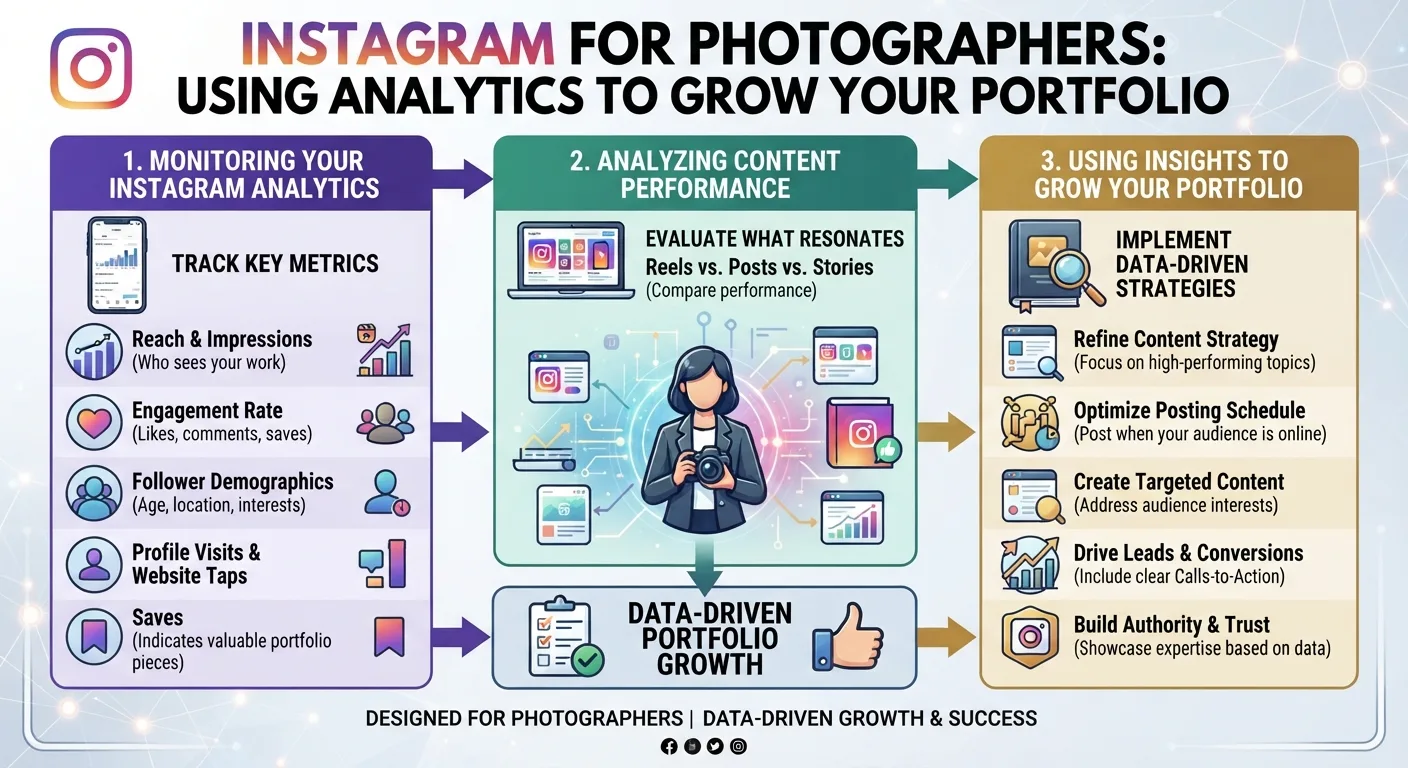
The general analytics framework covered throughout this series applies to photography accounts, but certain metrics are particularly diagnostic for the specific goals of a photography business.
Save Rate by Image Category
For photographers, save rate is the most important engagement metric, and analyzing it by image category or style provides the most actionable creative intelligence available from Instagram data.
When a viewer saves a photograph, they are indicating that the image is worth keeping, whether for inspiration, reference, or the simple reason that it is beautiful enough to want to return to. This save behavior is a direct signal of which images generate the strongest appreciation from the audience rather than just passing engagement.
Tracking save rate across different categories of your photographic work reveals which subjects, styles, and approaches generate the strongest sustained interest from the audience. A portrait photographer who tracks save rate across different portrait styles, locations, and lighting approaches will often find that specific stylistic elements or subjects generate dramatically higher save rates than others, which is directly actionable intelligence for both creative development and client positioning.
Profile Visit to Follow Conversion by Post Type
As covered in Day 18's business metrics guide and Day 22's reach guide, the profile visit to follow conversion rate reveals how effectively content converts discovered viewers into followers. For photographers, tracking this conversion rate for different content types, specifically whether portfolio images or process content generates higher profile visit to follow conversion, reveals which content type is most effective at making a strong enough first impression for new viewers to commit to following.
This is particularly valuable for understanding the role of Reels in the overall strategy. A behind-the-scenes Reel that drives many profile visits but converts at a low rate suggests the existing portfolio on the profile is not compelling enough to convert viewers who discovered the account through process content. A portfolio image that drives fewer profile visits but converts at a high rate suggests existing followers are being deepened in their appreciation rather than new audiences being acquired.
Engagement Rate by Photography Specialty
For photographers who work across multiple specialties, tracking engagement rate separately for content from different specialties reveals which specialty resonates most strongly with the current audience. A wedding photographer who also shoots commercial work and personal landscape projects will often find that engagement rates differ significantly across these categories.
This data informs both content allocation decisions and positioning strategy. If landscape photography consistently generates dramatically stronger engagement than commercial work, this is a signal about the audience the account has built and what content they came to follow for, which has implications for how the account is positioned and what content is prioritized.
Building an Analytics-Informed Photography Portfolio
Using analytics data to inform portfolio curation and development is one of the highest-leverage applications of Instagram analytics for photographers.
Identifying Signature Images Through Data
Every photographer has images that resonate with audiences far beyond typical performance. These outlier performers are often candidates for signature portfolio positions: images that should be featured prominently in the Highlights section, used as profile cover images, included in website portfolio selections, and featured in physical portfolio presentations for client meetings.
Identifying these images through analytics, rather than personal preference alone, produces portfolio selections that are validated by actual audience response rather than the photographer's own aesthetic bias. Personal preference and audience response are often aligned but frequently diverge in instructive ways.
Using Audience Response to Inform Creative Development
Beyond portfolio curation, analytics data from Instagram can inform the creative development of photographic style and approach. Identifying which specific visual characteristics generate the strongest save and engagement rates, such as color temperature, depth of field approach, subject matter, or compositional style, provides data-backed direction for creative development that complements the artistic development that comes from studying masters, attending workshops, and following personal creative vision.
This is not about abandoning artistic integrity to chase engagement. It is about developing self-awareness about which aspects of your photographic work resonate most strongly with the specific audience your work has attracted, and using this awareness to make more informed decisions about creative direction.
The Portfolio Refresh Process
Using a data-informed portfolio refresh process on a quarterly or semi-annual basis keeps the Instagram portfolio current with both recent work and evolving audience preferences.
The process involves reviewing the previous period's content performance data to identify the highest-performing images and image categories, curating the profile's permanent visible content to emphasize these strongest performers, using the archive feature covered in Day 24 to remove lower-performing or stylistically dated older work without permanently deleting it, and reviewing the Highlight structure to ensure it reflects current work quality and client specialty priorities.
Reels Strategy for Photographers
As covered in Day 11's Reels strategy guide, Reels are the primary discovery format on Instagram. For photographers, developing a Reels approach that drives discovery without compromising the account's positioning as a serious photographic presence requires specific thought.
Behind-the-Scenes and Process Reels
The content category most naturally suited to Reels for photographers is behind-the-scenes and process content. Showing the process of creating an image, from location scouting through shooting to post-processing, provides the video format content that drives Reels distribution while directly demonstrating the expertise and attention to craft that differentiates professional photographers from casual photographers.
This content serves a dual purpose that makes it particularly strategic. It drives discovery through the Reels algorithm. And it builds the expertise demonstration and trust that converts discovered viewers into potential clients who understand the work and skill that goes into professional photography.
Before and After Transformation Reels
As covered in Day 16's content types guide, before and after content generates strong engagement across virtually every niche. For photographers, before and after Reels showing the transformation from raw file to finished image are particularly effective because they demonstrate the complete expertise involved in professional photography, including both capture and post-processing skills, in a format that is visually compelling and widely shareable.
The specific format that works well is a side-by-side or transition reveal that shows the RAW file or unedited capture alongside the final processed image. This format is comprehensible to any viewer regardless of their familiarity with photography, while being specifically informative and impressive to viewers who understand post-processing.
Educational Content for the Photography Community
Photographers who teach, share technical knowledge, or provide educational content for other photographers create a specific type of high-save-rate content that drives strong algorithmic distribution. As covered in Day 21's Week 3 recap, educational content is currently generating some of the strongest save rates across the platform, and photography education, from technical tutorials to gear reviews to composition principles, fits naturally within this high-performing content category.
For photographers positioned as experts or educators, Reels covering specific technical topics, location-specific tips, gear recommendations, or post-processing techniques serve the dual function of demonstrating expertise and generating the save and share rates that drive discovery.
Using InstaPV for Competitive Photography Research
Competitive research through InstaPV is particularly valuable for photographers trying to understand what is working in their specific photography niche.
Identifying Leading Accounts in Your Photography Specialty
Searching for accounts in your specific photography specialty, whether landscape, portrait, wedding, architectural, wildlife, or any other category, and reviewing their follower growth and engagement rate trends through InstaPV reveals who the current leaders are and how they are performing.
As covered in Day 19's niche research guide, studying the five to eight accounts most worth learning from in your specific niche provides validated strategic intelligence. For photographers specifically, this research reveals which photographic approaches are generating the strongest audience response right now, how leading photographers balance portfolio content with process and educational content, what the visual consistency and aesthetic standards of successful accounts in the specialty look like, and how the most successful accounts in the niche are using Reels to drive discovery alongside still photography for audience retention.
Benchmarking Engagement Rate by Specialty
Engagement rate benchmarks vary by photography specialty in ways that generic platform averages do not capture. Using InstaPV to check engagement rates across five to ten accounts in your specific specialty provides the most relevant benchmark for assessing whether your own account's engagement is above, at, or below what successful photographers in your niche are achieving.
Instagram for Photography Business Development
Beyond portfolio demonstration, Instagram serves specific business development functions for photographers that analytics can help optimize.
Client Inquiry Drivers
For photographers whose Instagram presence generates client inquiries, identifying which specific content types most reliably trigger inquiries provides direction for content strategy that extends beyond engagement optimization to direct business development.
Track the content posted in the weeks preceding each client inquiry and identify patterns over time. For many photographers, client inquiries cluster around specific types of work, specific post formats, or specific time periods following specific content. This pattern recognition reveals what content serves the business development function most effectively rather than only optimizing for engagement metrics.
Profile Optimization for Client Conversion
As covered in Day 6's bio optimization guide, the bio section is the most important text space on any Instagram profile for converting profile visitors into followers or clients. For photographers, the bio should clearly communicate the photography specialty, geographic area if relevant, and the specific type of client or collaboration the photographer is seeking.
Many photography accounts under-optimize their bios with generic descriptions that do not communicate specific value to potential clients. A portrait photographer whose bio says "capturing beautiful moments" communicates almost nothing to a potential client looking for a specific type of portrait photographer in a specific location for a specific occasion.
-
Instagram Collaboration Features: How They Work and What to Track
-
Social Media Report Template: How to Present Instagram Data
-
How to View Archived Instagram Posts and Stories (2026 Guide)
Frequently Asked Questions
Q: Is Instagram still worth investing in for photographers given the shift toward video?
Yes, with the caveat that effective photography Instagram strategy in 2026 involves more than posting portfolio images. The combination of portfolio images for audience retention and quality demonstration with process and educational Reels for discovery provides a complete strategy that leverages both the visual nature of photography content and the current platform dynamics favoring video for reach.
Q: How do I research which photography niches are currently growing most strongly on Instagram?
Using InstaPV to track follower growth rates and engagement trends across accounts in different photography specialties provides direct evidence of which niches are experiencing the strongest growth right now. Comparing growth trajectories across wedding, portrait, landscape, commercial, and other specialties reveals where the platform's audience interest is currently strongest.
Q: Should photographers watermark images posted on Instagram?
This is a creative and business decision rather than a purely strategic one. Watermarks can reduce the risk of image theft but also reduce the visual impact of images in the feed. The analytics-informed perspective is to track whether watermarked versus unwatermarked images generate different engagement rates for your specific account and audience, since responses to watermarking vary significantly across photography communities.
Q: How important is a consistent editing style for Instagram photography accounts?
Very important, as covered in Day 6's visual consistency section and Day 10's brand analysis. For photography accounts specifically, visual consistency in editing style is one of the primary signals that distinguishes a professional, intentional photographic presence from a diverse collection of images without a unifying aesthetic. Consistent editing creates the immediate visual recognition that makes a photography account feel like a coherent body of work rather than a random collection.
Conclusion
Instagram for photographers in 2026 requires a more sophisticated and analytically informed approach than simply posting strong images and hoping for growth. The combination of excellent still photography for portfolio demonstration and audience retention, process and educational Reels for discovery and expertise demonstration, analytics-driven portfolio curation and creative development, and competitive research through InstaPV for strategic benchmarking provides a complete framework for photography Instagram success.
The photographers growing most effectively are those who treat Instagram as a strategic business development and portfolio tool informed by data rather than a passive gallery space that audiences discover on their own.
Research top photography accounts and engagement patterns in your niche on InstaPV →