Introduction
Most businesses approach Instagram with tactics rather than strategy. They decide to post three times a week, use relevant hashtags, and engage with followers. These are reasonable individual decisions, but they are not a strategy. A strategy is a coherent plan that connects specific activities to specific goals through a logical causal chain, supported by defined success metrics and a process for adaptation when results diverge from expectations.
The difference between a tactical approach and a strategic approach to Instagram growth is ultimately the difference between activity and intention. Tactical accounts post content and hope growth follows. Strategic accounts define what growth means, identify what will drive it, execute with discipline and measurement, and adjust based on evidence.
This guide provides a complete framework for writing an Instagram growth strategy for any business, from the initial situation assessment through goal setting, content strategy development, distribution planning, and the measurement and adaptation systems that keep the strategy productive over time.Instapv
Part 1: Situation Assessment
Every sound strategy begins with honest assessment of the current situation. Without knowing where you are starting from, there is no meaningful way to plan how to get where you want to go.
Current Account Audit
The first step is a thorough assessment of the current state of the Instagram account using the full audit framework from Day 26's audit guide. This audit covers the profile presentation, content quality and consistency, engagement performance, audience quality, competitive standing, and business impact of the current account.
The audit produces a clear picture of current strengths worth preserving and building on, and current weaknesses representing the highest-priority opportunities for improvement. This picture is the honest starting point from which the strategy builds.
Competitive Landscape Assessment
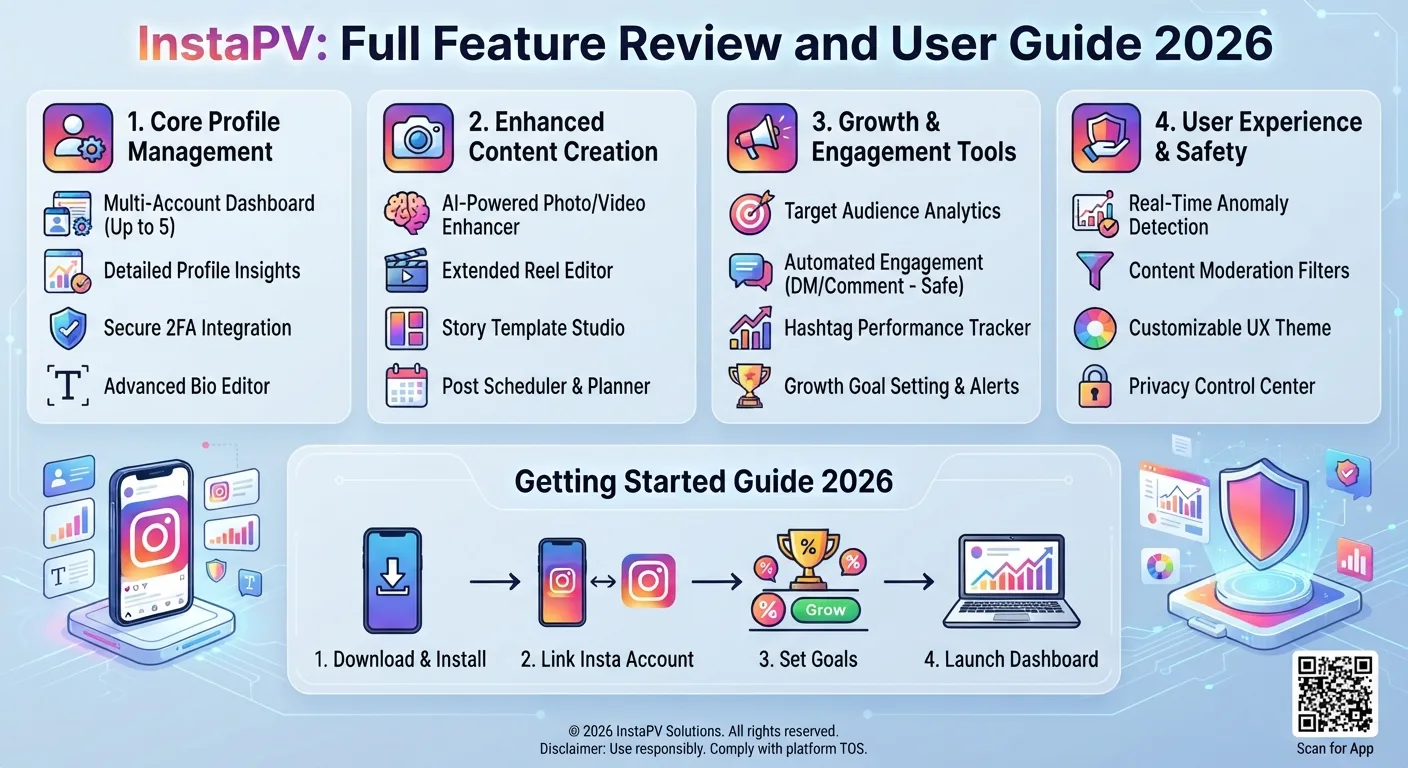
As covered in Day 9's competitor analysis guide, understanding the competitive landscape gives the strategy essential context. Using InstaPV to review three to five key competitor or peer accounts provides data on follower growth rates, engagement rates, content approaches, and posting patterns that reveal both what is working in the competitive environment and where genuine differentiation opportunities exist.
The competitive assessment answers questions including who the primary Instagram competitors are, what content approaches are generating the strongest engagement in the competitive landscape, what the typical engagement rate benchmark is for accounts of comparable size in this niche, and where the competitive set is leaving gaps that represent positioning opportunities.Read blog
Audience Research
As covered in Day 19's market research guide and Day 11's demographics guide, the strategy should be built around a clear understanding of the target audience. Combining Instagram Insights demographic data for existing followers with the comment section research and community mapping methods from Day 27's niche community guide provides a multidimensional audience picture.
The audience assessment should produce a specific, detailed description of the primary target audience: their demographics, their Instagram behavior patterns, the content they engage with most deeply, the language they use to describe their interests and needs, and the specific problems or desires that connect them to the account's topic area.
Part 2: Goal Setting
With the situation assessment complete, goal setting translates the desired future state into specific, measurable, time-bound objectives.
Defining Primary Business Objectives
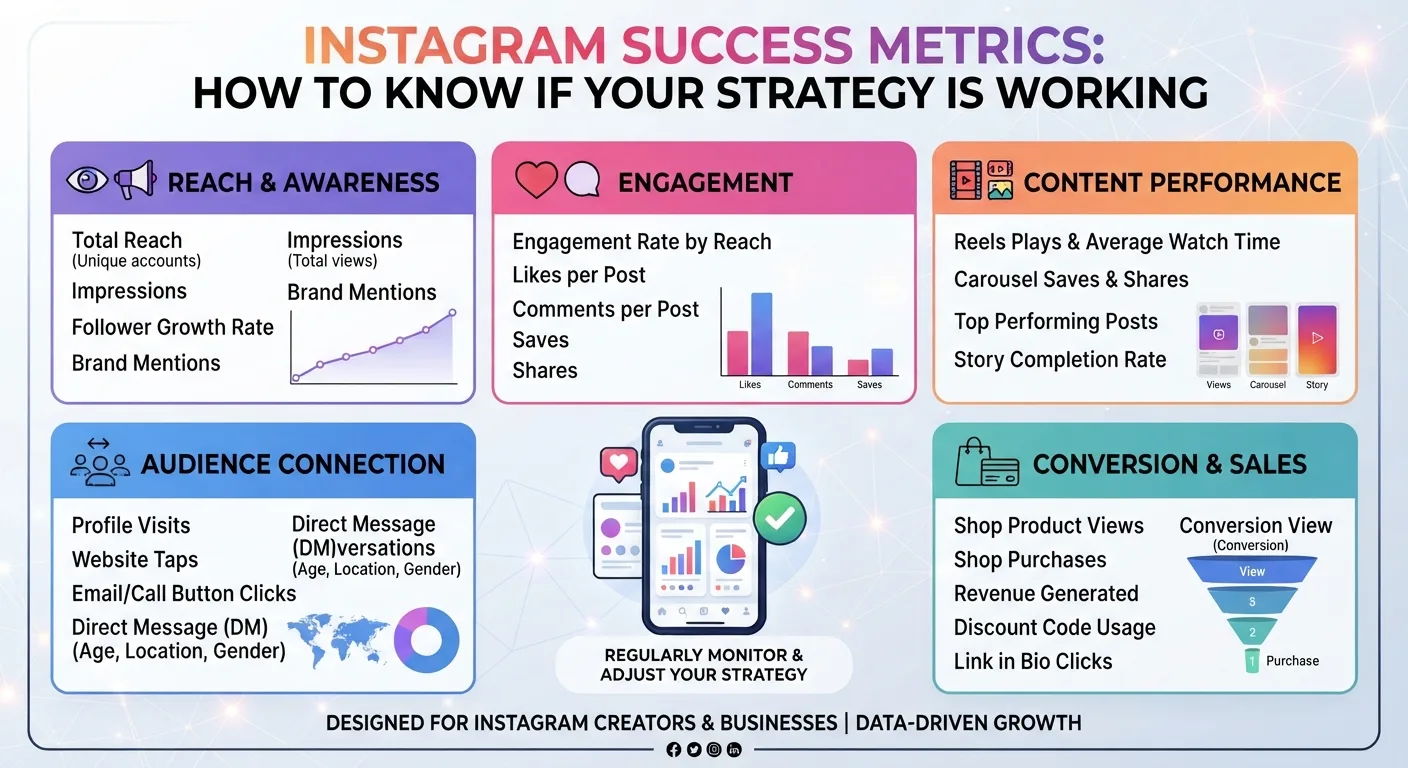
As covered in Day 27's success metrics guide, the strategy's goals should connect to specific business objectives rather than being purely platform metrics. The primary business objective for Instagram defines what the strategy is ultimately trying to achieve for the business.
For an e-commerce brand, the primary objective might be increasing Instagram-attributed revenue by a specific percentage within a specific time period. For a service business, it might be generating a specific number of qualified leads monthly from Instagram activity. For a content creator building toward monetization, it might be reaching the audience size and engagement quality threshold that attracts specific partnership rates. For a local business, it might be becoming the most recognizable Instagram presence in the local market for a specific service category.
The primary objective should be specific, measurable, and directly connected to business outcomes rather than platform metrics.
Setting Platform Metric Targets
Below the primary business objective, three to five platform metric targets represent the intermediate milestones that indicate the strategy is on track toward the primary objective.
As covered in Day 27's success metrics guide, platform metric targets should be set using the baseline established in the audit and the competitive benchmark data from InstaPV research. Targets that are not grounded in either current performance or competitive benchmarks are essentially guesses that have no predictive relationship to what is actually achievable.
For each platform metric target, specify the current baseline, the target level, the time horizon for achievement, and the logical connection between this metric and the primary business objective.
Timeline and Phase Structure
Complex growth strategies typically benefit from a phased timeline that sets appropriate expectations for different stages of the journey. As covered in Day 21's growth case study, different phases of Instagram growth have different primary priorities and different appropriate success metrics.
A phased structure might designate the first three months as a foundation phase focused on establishing content quality, consistent posting rhythm, and early community building. The following three months become a growth acceleration phase where Reels investment and collaboration activity intensify to drive non-follower reach. The following six months become a business impact phase where the audience built in earlier phases is converted more actively to business outcomes.
Each phase should have its own specific targets and its own primary strategic focus, with the sequence designed to build the foundation that subsequent phases require.
Part 3: Content Strategy
The content strategy component defines what will be created, in what formats, at what frequency, and for what specific audience purposes.
Content Pillar Definition
As covered in Day 10's small business guide and Day 11's personal brand guide, content pillars are the two to four core themes that define what the account consistently produces. The pillar structure should be derived from the intersection of the business's genuine expertise or value proposition and the specific interests and needs demonstrated by the target audience through research.
For each content pillar, define the specific topics it covers, the primary audience need it addresses, the content formats most appropriate for it, and the specific engagement or business outcome it is primarily designed to drive.
One pillar might primarily drive discovery through high-save-rate educational content. Another might primarily drive community building through personal story and behind-the-scenes content. A third might primarily drive conversion through social proof and demonstration content. The pillar structure should ensure that all three of discovery, relationship, and conversion are addressed rather than concentrating entirely on any single function.
Format Mix Planning
As covered in Day 12's format comparison guide, different formats serve different strategic functions. The format mix in the growth strategy should allocate content production effort across formats in proportion to how much each format contributes to the strategy's prioritized objectives.
For strategies primarily focused on audience growth, Reels as covered in Day 11 should receive meaningful allocation as the primary discovery format. For strategies prioritizing engagement depth with existing audiences, carousels and Stories should receive greater emphasis. For strategies with both growth and engagement priorities, a balanced mix that includes regular Reels alongside weekly carousels and daily Stories reflects the full strategic scope.
The format mix should also be realistic about production capacity. A strategy that calls for daily Reels alongside three weekly carousels is not achievable for a solo creator with other responsibilities. Production-honest format allocation, as covered in Day 4's growth hacks guide regarding sustainable cadence, produces better long-term results than ambitious format plans that collapse due to burnout within two months.
Content Calendar Structure
As covered in Day 13's content calendar guide, translating the pillar structure and format mix into a specific monthly content calendar provides the operational structure for consistent execution.
The content calendar component of the strategy does not need to specify individual post topics months in advance. It should specify the pillar and format allocation across the week that creates the consistent rhythm within which specific topics are planned on a monthly basis.
Part 4: Distribution Strategy
Content quality is necessary but not sufficient for Instagram growth. The distribution strategy defines how content is amplified beyond organic algorithmic reach through hashtag strategy, collaboration, community engagement, and cross-platform promotion.
Hashtag Strategy
As covered in Day 9's hashtag strategy guide, niche-specific hashtags in the moderate size range provide supplementary discovery beyond algorithmic distribution. The distribution strategy should specify the hashtag sets developed through the research process in Day 22's hashtag tracking guide and the rotation approach that avoids repetitive patterns.
Collaboration Plan
As covered in Day 14's organic growth guide and Day 24's collaboration guide, collaboration is one of the most effective organic growth mechanisms for accounts at most stages of development. The distribution strategy should include a specific collaboration plan identifying the types of accounts worth collaborating with, the formats of collaboration most appropriate for the strategy's objectives, and a realistic frequency for collaborative content.
Community Engagement Schedule
As covered in Day 14's organic growth guide, consistent community engagement through substantive comments on relevant accounts is one of the most reliable organic discovery mechanisms. The distribution strategy should specify a community engagement schedule that is realistic enough to maintain consistently and specific enough to produce results.
Cross-Platform Promotion
For businesses with presence on other platforms, specifying how each platform will direct audiences to Instagram and what distinct value Instagram provides that motivates cross-platform following provides the integrated distribution approach covered in Day 14's organic growth guide.
Part 5: Influencer and Partnership Strategy
For businesses where influencer or brand partnership is a significant component of the overall Instagram strategy, a dedicated strategy component addresses this specifically.
Influencer Selection Criteria
Based on the influencer evaluation framework from Day 7's influencer research walkthrough and Day 15's audience analysis guide, define the specific criteria that candidates must meet for inclusion in partnership consideration. These criteria should include minimum engagement rate by account size tier, audience demographic alignment requirements, content quality standards, maximum sponsored content frequency thresholds, and any niche-specific considerations relevant to the business category.
Partnership Goal Framework
Define what specific outcomes each partnership category is designed to achieve. Discovery partnerships focused on new audience exposure have different selection criteria than credibility partnerships focused on authority transfer or conversion partnerships focused on direct commercial outcomes.
Evaluation and Measurement
Specify how each partnership will be evaluated after execution, including the specific metrics that will be used, the timeline for evaluation, and the threshold that defines a successful partnership worth repeating.
Part 6: Analytics and Adaptation System
As covered in Day 27's success metrics guide and Day 23's analytics-to-action guide, the analytics system transforms the strategy from a static document into a living framework that improves through evidence and adjustment.
Monthly Review Structure
Define the specific monthly analytics review process: which metrics will be reviewed, how they will be compared against baseline and targets, what competitive benchmarking will be conducted using InstaPV, and what the output of each monthly review will be in terms of specific strategy adjustments for the following month.
Decision Triggers
Specify the performance thresholds that trigger specific strategic responses. If engagement rate falls below a specific level for two consecutive months, what specific diagnostic process will be initiated? If follower growth rate accelerates significantly, what content type or format will be analyzed to understand the driver? Pre-defining these decision triggers prevents the paralysis or inconsistent reactivity that characterizes strategy adaptation without a structured framework.
Quarterly Reassessment
Define a quarterly reassessment process that reviews whether the overall strategy direction remains appropriate given accumulated performance data and any changes in the competitive landscape or business objectives. The quarterly reassessment is distinct from monthly reviews in its scope: it asks whether the strategy itself needs adjustment rather than whether execution of the current strategy needs refinement.
Part 7: Resource Planning
A strategy without realistic resource planning is a wish list rather than an operational plan.
Time Allocation
Specify the weekly time budget for each major Instagram activity category: content creation, community engagement, analytics review, collaboration outreach, and strategic planning. The time allocation should be realistic based on available capacity and should add up to a total that is sustainable over the strategy's full time horizon.
Production Resources
Identify any production resources required to execute the content strategy, including photography equipment, editing software, design tools, scheduling platforms, or professional production support. Specify how these will be acquired if not currently available and what budget is allocated for each.
Tool Stack
As covered in Day 13's creator tools guide and Day 27's agency tools guide, specify the tool stack that will support the strategy: InstaPV for competitive research and influencer evaluation, Instagram Insights for owned account analytics, scheduling tools for content management, and any additional tools required for specific strategy elements.
The One-Page Strategy Summary
Once the full strategy document is developed, distilling it to a single summary page provides the reference document most likely to be consulted regularly rather than filed after initial development.
The one-page summary should include the primary business objective and three to five platform metric targets with time horizons, the two to four content pillars with their primary audience purposes, the format mix allocation expressed as a weekly rhythm, the distribution strategy highlights covering hashtag approach, collaboration frequency, and community engagement schedule, and the monthly review commitment including which metrics are reviewed and what the process produces.
This summary becomes the working reference document that keeps daily and weekly execution aligned with the strategic framework, while the full strategy document serves as the foundational reference for quarterly reassessment and major strategy decisions.
-
Month in Review: 30 Days of Instagram Insights Recap
-
Instagram Success Metrics: How to Know If Your Strategy Is Working
-
The Complete Instagram Analytics Glossary: 50+ Terms Explained
Frequently Asked Questions
Q: How long should an Instagram growth strategy document be?
A complete strategy document using the framework above typically runs ten to twenty pages for thorough treatment of all components. The one-page summary is the day-to-day reference. The full document is the foundational reference. Both serve different purposes and both are worth developing.
Q: How often should the full strategy be revisited and potentially replaced?
A complete strategy replacement, as opposed to incremental monthly and quarterly adjustments, is appropriate when the business objective fundamentally changes, when the competitive landscape shifts dramatically, when the account reaches a new growth phase as covered in Day 21's growth case study, or when accumulated evidence over six to twelve months demonstrates that the current strategic framework is not producing progress toward defined objectives.
Q: How do I use InstaPV throughout the strategy development and execution process?
InstaPV supports the strategy at several specific stages: competitive landscape assessment during the initial situation analysis, competitive benchmarking for goal setting, niche content research for content pillar development, influencer candidate research for partnership strategy, and monthly competitive benchmarking during the ongoing analytics review. As covered throughout this series, InstaPV's value is most concentrated in the research and competitive intelligence functions that cannot be served by Instagram's own native tools.
Q: Can this framework be applied to an account that has been running for years without a formal strategy?
Yes. For existing accounts, the starting point is the full audit from Day 26 rather than a clean slate assessment, but the strategy framework itself applies regardless of account age. The key adjustment for existing accounts is being honest in the audit about what has accumulated over time, including any audience quality issues, content inconsistency, or strategic drift that needs to be addressed before the new strategy can build effectively on the existing foundation.
Conclusion
An Instagram growth strategy is not a content plan or a posting schedule. It is a coherent framework that connects specific activities to specific goals through a logical causal chain, supported by the analytics infrastructure that reveals whether the connection between activities and goals is producing expected results.
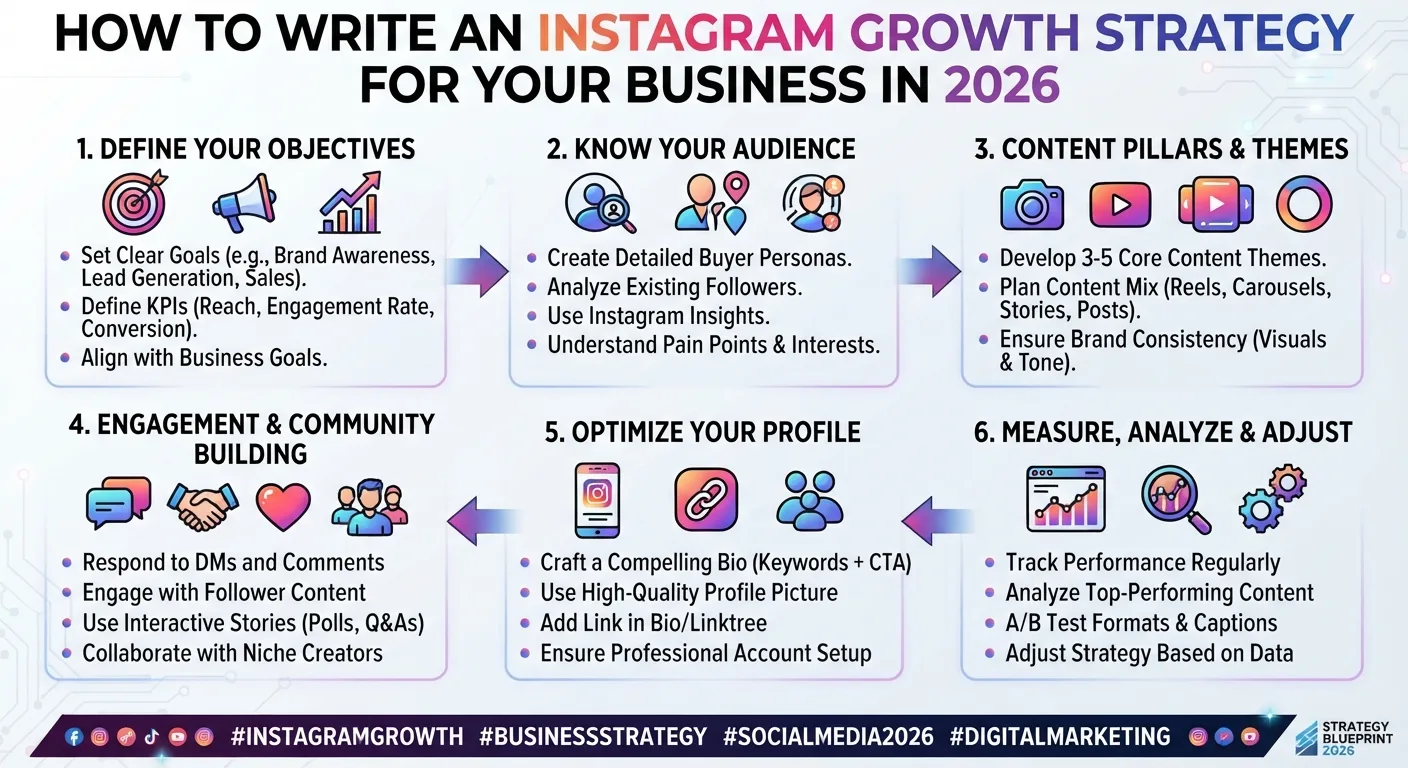
The seven-component framework in this guide, covering situation assessment, goal setting, content strategy, distribution strategy, partnership strategy, analytics and adaptation, and resource planning, provides the complete structure for a strategy that is both ambitious and executable. The level of specificity in each component determines how useful the strategy is as an operational guide rather than an aspirational document.
Businesses that invest the time to develop this strategy properly and execute it consistently over a meaningful time horizon will build Instagram presences that compound in value over time rather than plateauing from lack of strategic clarity and analytical discipline.
Start your competitive research for Instagram strategy development on InstaPV →