Introduction
Instagram has become one of the most accessible marketing channels available to small businesses. The barrier to entry is low. The potential reach is enormous. And unlike traditional advertising, the platform rewards genuine content quality and audience connection over raw budget size.
But getting started without any guidance is overwhelming. What kind of account do you need? What should you post? How often? How do you get followers who are actually potential customers rather than random accounts? And how do you know if any of it is working?
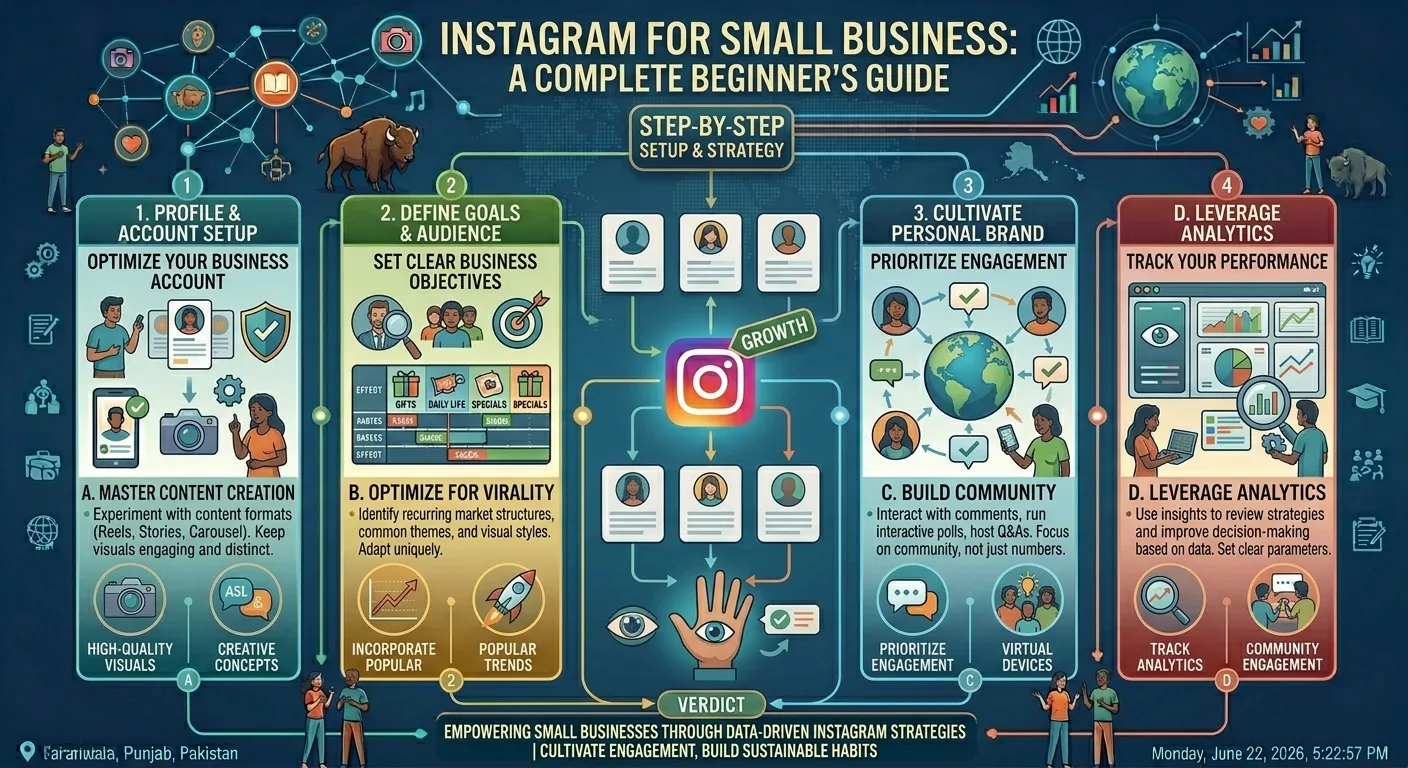
This guide answers all of those questions in plain, practical language. It covers everything a small business owner needs to go from no Instagram presence to a functioning, growing account with a clear strategy behind it.
Step 1: Set Up the Right Account Type
The first decision is account type. Instagram offers three options: personal, creator, and business. For a small business, the business account is almost always the right choice.
A business account gives you access to Instagram Insights, which is the native analytics dashboard covered throughout this series. It also allows you to add contact buttons to your profile, display your business category, run paid promotions, and connect to Instagram Shopping if relevant to your product offering.
Switching an existing personal account to a business account takes less than two minutes in settings and does not affect your existing followers or content.instapv
Step 2: Complete Your Profile Fully
Before posting a single piece of content, make sure your profile is fully complete. An incomplete profile loses potential followers at the very first moment of discovery.
Your profile picture should be your logo or a clean, recognizable brand image. Your display name should include your business name and ideally a keyword describing what you do, as covered in Day 6's bio optimization guide. Your bio should communicate what your business offers, who it serves, and what action you want visitors to take. Your website link should go to a specific, relevant destination rather than a generic homepage.
A complete, well optimized profile converts a significantly higher percentage of profile visitors into followers than an incomplete one.
Step 3: Define Your Content Pillars
Content pillars are the two to four core themes that define what your account consistently posts about. Having defined pillars prevents the common small business Instagram problem of posting randomly without any clear through line that gives followers a reason to keep following.
For a local bakery, pillars might be product showcases, behind the scenes content, and customer stories. For a marketing consultant, pillars might be client results, practical tips, and industry insights. For a fitness studio, pillars might be workout content, member spotlights, and nutrition guidance.
Defining pillars before you start posting means every piece of content you create has a clear home and purpose rather than being created ad hoc with no strategic coherence.
Step 4: Plan a Realistic Posting Schedule
Consistency matters more than frequency, as covered in multiple posts throughout this series. For most small businesses managing Instagram without a dedicated social media team, three to four posts per week is a sustainable starting point that builds algorithmic momentum without requiring an unsustainable time commitment.
Plan content a week or two in advance rather than deciding what to post on the day itself. This reduces the cognitive load of content creation significantly and makes it easier to maintain consistency through busy periods.
Step 5: Create Content Across Multiple Formats
As covered in Day 6's Stories versus posts comparison, different Instagram formats serve different purposes. A complete small business content strategy uses multiple formats rather than relying on only one.
Feed posts and Reels drive discovery and reach new audiences. Stories build daily connection with existing followers. Highlights give new profile visitors permanent access to your most important content. Using all of these formats in a coordinated way produces better results than relying on any single format alone.
Step 6: Prioritize Local and Community Content
For small businesses with a local customer base, local content is one of the most effective differentiators on Instagram. Tagging your location, using local hashtags, featuring local landmarks or events, and collaborating with other local businesses generates highly targeted visibility in your specific geographic market that larger, more generic brands cannot replicate.
Local community content also tends to generate strong engagement because it resonates specifically with the local audience most likely to become actual customers.
Step 7: Show the People Behind the Business
One of the most consistent findings across small business Instagram accounts is that content showing the real people behind the brand outperforms purely product focused content for engagement. Introducing your team, showing your process, sharing your story, and letting your personality come through builds the kind of trust that drives customer decisions in a way that product photography alone never does.
This is particularly true for service businesses where the relationship with the provider is itself part of the value being purchased.
Step 8: Engage Actively With Your Community
Posting content is only half of a functional Instagram strategy. Responding to every comment on your posts, replying to story mentions, and engaging genuinely with content from accounts in your local area or industry builds the relationship signals that improve your algorithmic standing while also building genuine community around your brand.
For small businesses, the personal touch of a real, thoughtful response to a comment is a genuine advantage over larger brands whose engagement is often managed by agencies at a generic, impersonal level.
Step 9: Use Instagram Shopping If Relevant
If your business sells physical products, setting up Instagram Shopping allows you to tag products directly in posts and Stories, creating a direct path from content discovery to purchase within the app. As covered in Day 7's trends roundup, Instagram is actively investing in its shopping infrastructure, and shoppable content receives favorable algorithmic treatment.
Setup requires connecting a product catalog to your business account and going through Instagram's product approval process, which typically takes a few days.
Step 10: Understand Your Analytics
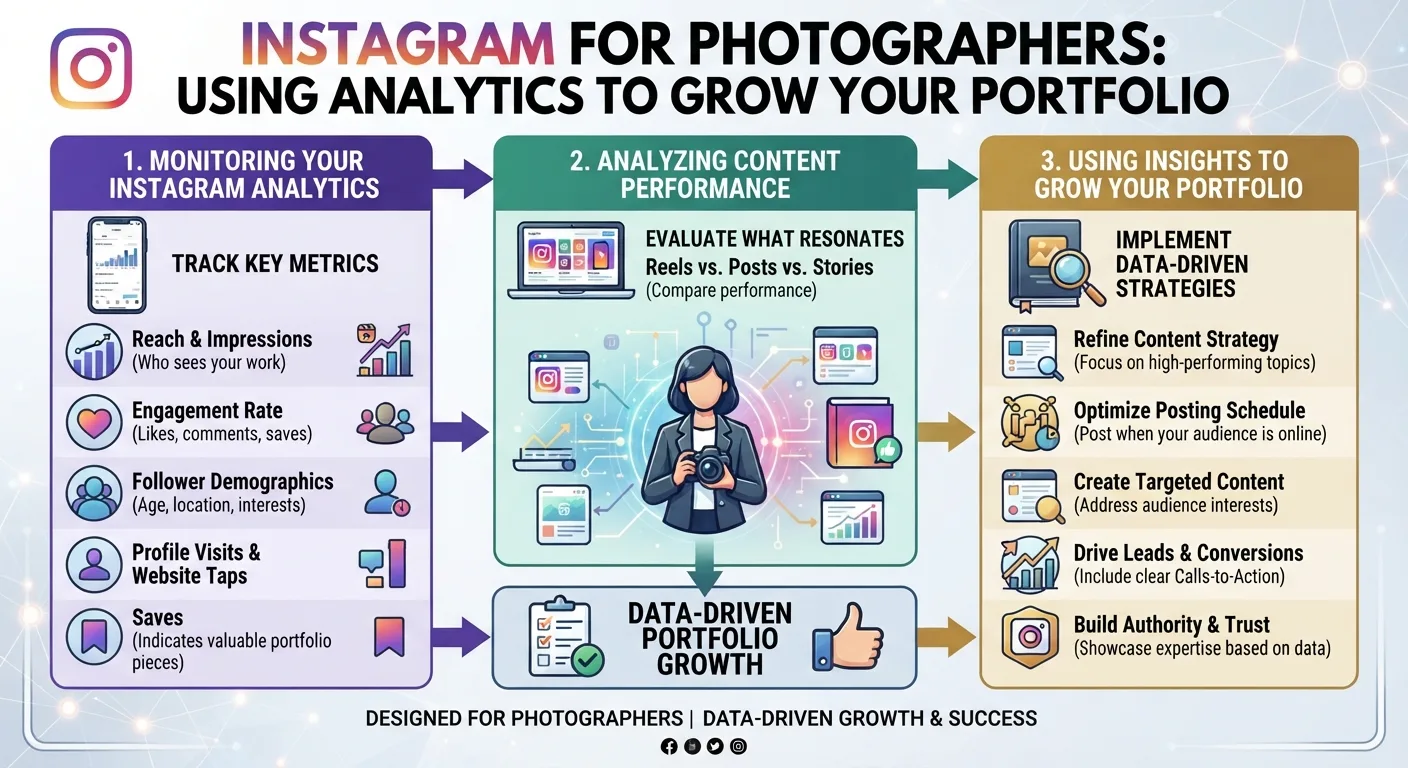
Once your account has been active for a few weeks, Instagram Insights starts providing useful performance data. As covered in Day 2's analytics guide, the metrics worth prioritizing for small businesses are engagement rate, reach relative to follower count, and any trackable conversion actions like website link clicks.
Review your analytics monthly rather than obsessively checking daily numbers. Look for patterns across multiple posts rather than reacting to individual performance highs or lows.
Step 11: Research Your Competition
Understanding what competing businesses in your area or industry are doing on Instagram provides useful context and creative direction. As covered in Day 9's competitor analysis guide, systematic competitor research using InstaPV gives you anonymous access to competitor content, growth trends, and engagement patterns without tipping them off to your interest.
This research is particularly useful for small businesses entering a market where established competitors already have developed Instagram presences, since it reveals what is already working rather than requiring you to figure everything out from scratch.
Step 12: Be Patient With Growth
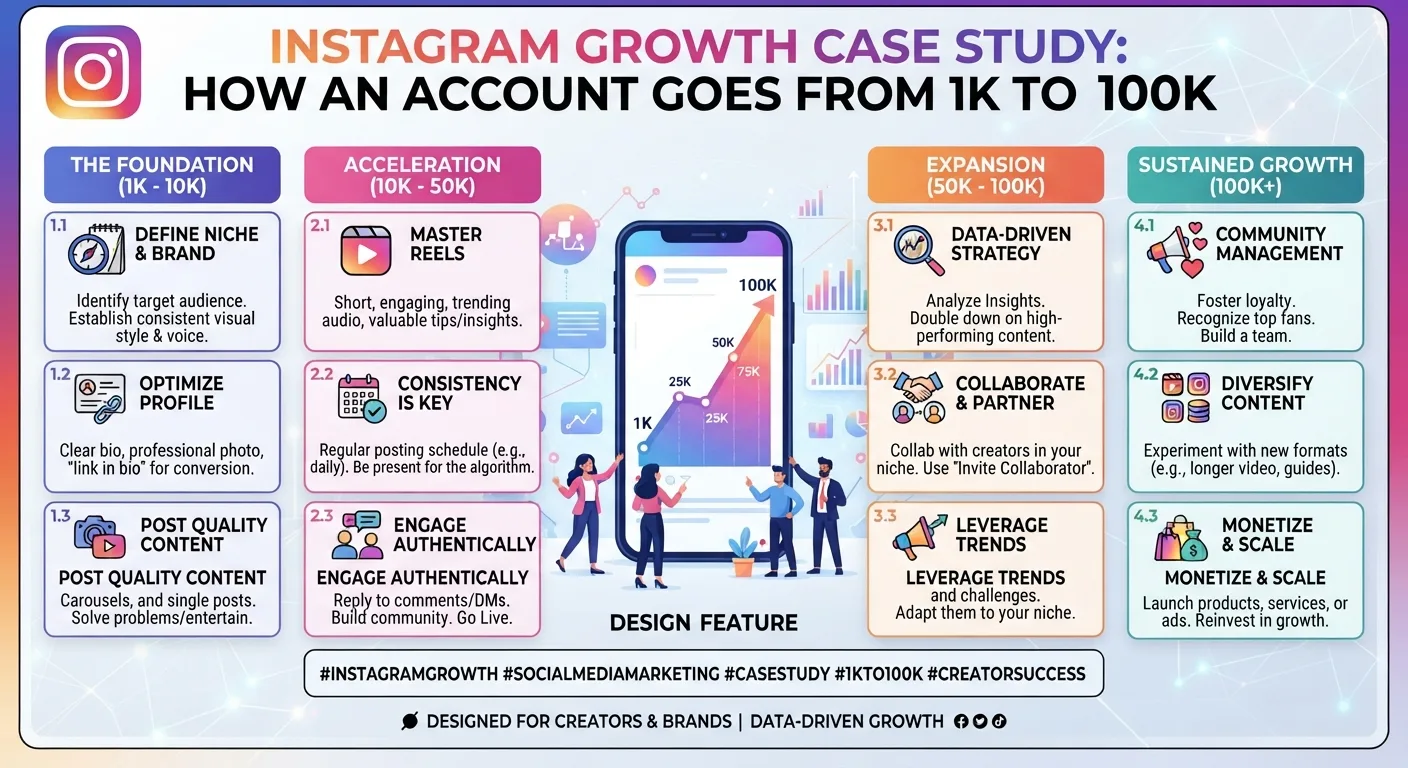
Instagram account growth for small businesses is almost always slower than new account owners expect, particularly in the early months before the algorithm has enough data about your content and audience to distribute it effectively.
Consistent accounts that stick with a clear strategy for six to twelve months almost always show meaningful growth by the end of that period. Accounts that post inconsistently for a few weeks, see slow early results, and abandon the strategy never reach the point where the compounding effects of consistent content take hold.
Common Small Business Instagram Mistakes
Posting only promotional content is one of the most common mistakes. An account that only ever posts discounts and product announcements gives followers no reason to stay engaged between purchase decisions. The most effective small business accounts provide ongoing value through educational, entertaining, or community content alongside promotional posts.
Using low quality images consistently damages brand perception in a way that is difficult to recover from. Instagram is a visual platform and image quality is one of the primary signals new visitors use to assess brand credibility. Investing in basic photography improvements, even just better lighting and a cleaner background, produces disproportionate returns.
Ignoring Stories entirely is another common gap. As covered in Day 6, Stories build the daily connection with existing followers that feed posts alone cannot replicate.
Treating every post as a standalone piece rather than building coherent, connected content across a consistent set of pillars creates an account with no clear identity, which makes it much harder for casual visitors to understand what the account is about and why following is worth their attention.
Frequently Asked Questions
Q: Do I need a large budget to succeed on Instagram as a small business?
No. The most important inputs are time, consistency, and genuine knowledge of your audience. Many small businesses with minimal budgets have built highly effective Instagram presences through consistent, authentic content. Paid promotion can accelerate growth but is not a prerequisite for building a meaningful organic presence.
Q: How long before my Instagram account starts driving real business results?
This varies considerably depending on industry, posting consistency, content quality, and what counts as a business result. Most accounts that post consistently and strategically start seeing meaningful engagement within two to three months. Attributable business outcomes like website traffic, inquiries, or sales driven by Instagram typically become visible within four to six months of consistent activity.
Q: Should I pay for followers to build credibility faster?
No. As covered in multiple posts throughout this series, purchased followers damage your engagement rate, which reduces your organic reach and algorithmic standing. A small account with genuine followers who engage with content is far more valuable than a large account with a majority of fake followers who never interact.
Q: How do I know what content to post if I am not sure what my audience wants?
Start by posting a variety of content types across your defined pillars and reviewing which formats and topics generate the strongest engagement in your first few months. Your own analytics data is the most reliable guide to what your specific audience wants, supplemented by competitor research using InstaPV to understand what is working in your specific industry.
Q: Is it worth hiring someone to manage Instagram for my small business?
This depends on how central Instagram is to your marketing strategy and how much time you have available. Many small business owners manage Instagram effectively themselves with a clear strategy and a realistic time commitment. If Instagram becomes a significant customer acquisition channel and you cannot give it adequate consistent attention, bringing in specialist support becomes more justifiable.
-
Top 20 Most Followed Instagram Accounts and What You Can Learn From Them3
-
How to Find Viral Instagram Content in Your Industry
-
How to Use Instagram Analytics for Content Planning
Conclusion
Instagram is genuinely one of the most accessible and effective marketing channels available to small businesses in 2025. The path from no presence to a functioning, growing account with real business impact is straightforward when you follow a clear sequence: set up correctly, define your pillars, post consistently across multiple formats, engage genuinely with your community, understand your analytics, and be patient enough for the compounding effects of consistency to take hold.
None of these steps require a large budget or specialist expertise. They require clarity, consistency, and a genuine commitment to serving your specific audience well.
Research how successful small businesses in your niche use Instagram on InstaPV →