Introduction
Your Instagram bio has one job: to convert profile visitors into followers.
That sounds simple, but the reality is that most Instagram bios fail at this job not because the account owner lacks anything worth following, but because the bio does not communicate value clearly, quickly, and compellingly enough to make a new visitor decide to hit the Follow button.
Consider the typical profile visit. Someone discovers your account through a Reel, a hashtag, a shared post, or a mention from another account they follow. They tap through to your profile. In the next five to ten seconds, they scan your bio, glance at your grid, and make a decision: follow or leave. Your bio is doing most of the work in those five to ten seconds it either communicates immediately why following is worth their attention, or it fails to make the case and they scroll on.
This guide covers every element of your Instagram bio, how to optimize each one, what the most common mistakes are, and how to build a bio that consistently converts curious profile visitors into engaged followers.
Why Your Bio Matters More Than Most People Realize
Before getting into the specifics of bio optimization, it helps to understand the full scope of what your bio is responsible for.
First Impression for Every New Visitor
Every new person who discovers your account through Explore, through a share, through a hashtag, through a collaboration lands on your profile page. Your bio is often the first text content they read about you, before they look at your posts in any detail. The impression it creates in those first seconds determines whether they give your content further attention or leave immediately.
Search and Discoverability
Your display name and bio text are searchable within Instagram. Keywords in your name field and bio contribute to whether your account appears when users search for relevant terms. Bio optimization is therefore not just about persuasion it is also about discoverability.
The Foundation of Your Brand Communication
For business accounts and professional creators, the bio is often the primary channel through which new visitors understand what you do, who you serve, and why they should care. A vague or generic bio forces visitors to do the work of figuring this out themselves most will not bother.instapv
The Anatomy of an Instagram Bio
An Instagram bio consists of several distinct elements, each with its own optimization considerations. Here is a breakdown of every component.
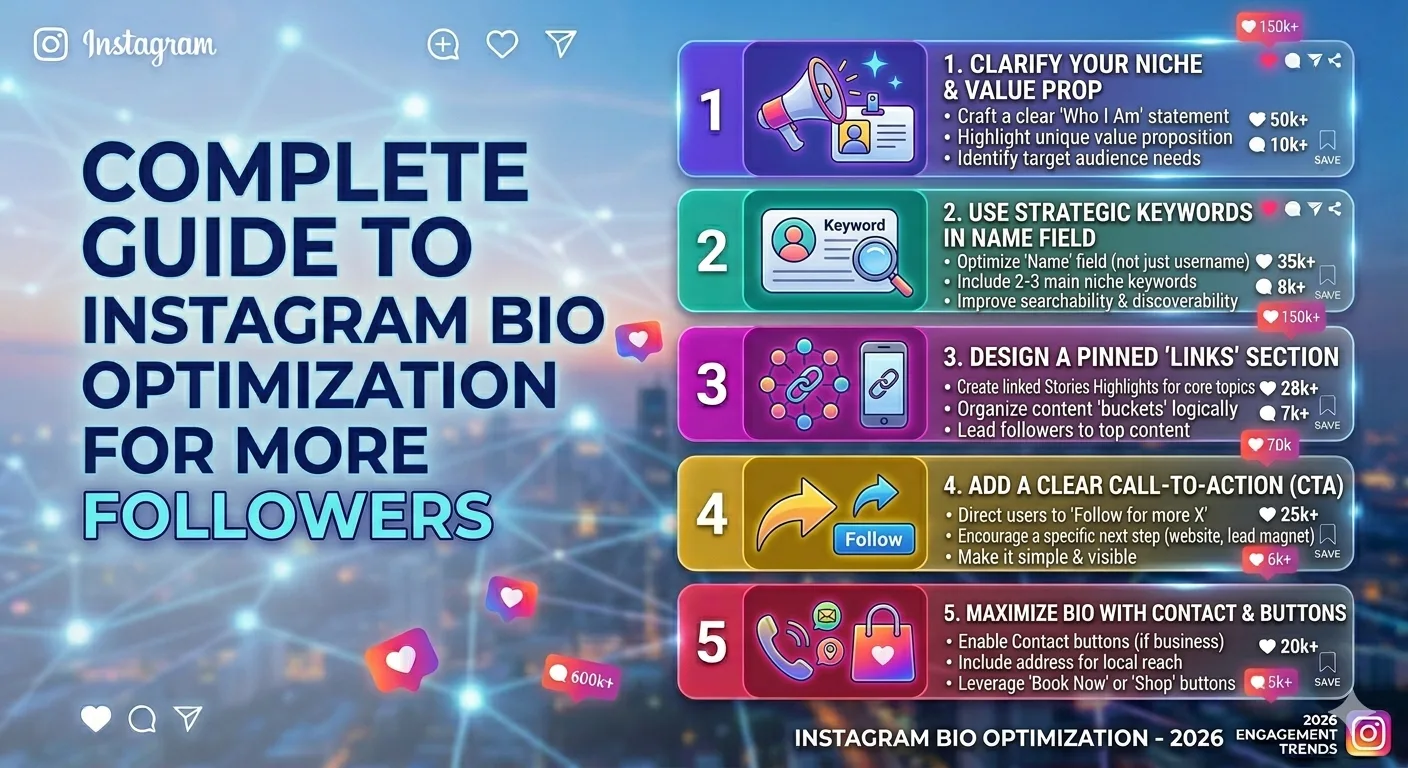
Display Name (30 Characters)
The display name appears in bold at the top of your profile, directly above the bio text. This is a separate field from your username and one that many accounts underuse.
Most accounts simply put their real name or brand name in the display name field, which is fine but represents a missed opportunity. The display name is also searchable within Instagram, which means it is one of the primary fields that determines whether your account appears in relevant searches.
The most effective approach to display name optimization for discoverability is to include your primary keyword alongside your name or brand name. A fitness coach named Sarah Johnson might use "Sarah Johnson | Fitness Coach" rather than just "Sarah Johnson." A food blogger called The Hungry Traveler might use "The Hungry Traveler | Food & Travel" rather than just the brand name.
This serves two purposes simultaneously: it tells new visitors immediately what you do, and it increases the likelihood of your account appearing when people search for the relevant topic within Instagram.
Username (30 Characters)
Your username is your @handle the unique identifier for your account. For most established accounts, the username is already set and changing it would disrupt existing followers and any external links pointing to your profile.
For new accounts still establishing their username, the key considerations are memorability, simplicity, and brand consistency. A username that matches your brand name across other platforms makes it easier for existing fans from other channels to find you. Avoid numbers, underscores, and special characters where possible they reduce memorability and make it harder for people to find you when searching.
Profile Picture
While not technically bio text, the profile picture is the most visible element of your profile in most contexts it appears in the Stories bar, in search results, in comment sections, and in the Explore page before anyone ever visits your profile. It is therefore part of the first impression your bio creates.
For personal brands and creators, a clear, well-lit headshot with a neutral or simple background consistently outperforms logos, full-body photos, or complex images at the profile picture's small display size. The image needs to communicate something meaningful at a size as small as a postage stamp on mobile.
For business accounts, a clean, recognizable logo on a simple background tends to work best prioritizing clarity and brand recognition over complexity.
Bio Text (150 Characters)
The bio text field gives you 150 characters to communicate what you do, who you serve, why your account is worth following, and what action you want visitors to take. This is a significant amount of information to pack into a small space, which is why bio text optimization requires deliberate choices about what to include and what to leave out.
Website Link
The link field below the bio is the one place on Instagram where you can place a clickable link making it potentially your most valuable piece of profile real estate for accounts that have goals beyond Instagram itself.
Contact Information and Category
Business accounts can display contact buttons (Email, Call, Directions) and a category label beneath the display name. These elements add credibility and accessibility for business profiles.
Call to Action (CTA)
While not a separate field, a call to action embedded in the bio text or linked to the website link is an important strategic element that most bios either lack or execute poorly.
Writing Your Bio Text: A Framework
With only 150 characters, every word in your bio text needs to earn its place. Here is a framework for writing bio text that consistently converts.
Line 1: What You Do and Who You Serve
The first line of your bio text should answer the two most fundamental questions a new visitor has: what is this account about, and is it for someone like me?
A single clear, specific line that names your content area and your target audience communicates more than a vague aspirational statement or a list of personality traits. Compare these two examples:
Vague: "Lover of life, food, and all things beautiful "
Specific: "Plant-based recipes for busy parents "
The second version immediately tells a new visitor whether this account is relevant to them a busy parent interested in plant-based cooking knows instantly that this account is worth exploring further, while someone who does not fit that description knows this account is not for them. Both outcomes are valuable.
Line 2: What You Provide or What Makes You Different
The second line is an opportunity to communicate either the specific value you provide (what someone will get from following you), your unique angle or perspective (what makes your take on your topic distinctive), or a relevant credential that establishes credibility.
Value statement: "Weekly recipes ready in under 30 minutes"
Unique angle: "Real food, no superfoods budget required"
Credential: "Registered Dietitian | 10 years in pediatric nutrition"
The best choice depends on your specific situation whether your value is primarily in what you provide, your distinctive perspective, or your authority in the topic.
Line 3: Social Proof or Community Signal
A third line can include social proof (numbers that establish credibility though be careful not to lead with follower counts, which can backfire if lower than expected) or a community signal that invites visitors to identify as part of your audience.
Social proof example: "Recipes shared in 40+ countries"
Community signal: "Join 50K parents eating better "
Call to Action
If space permits, include a clear call to action pointing to your link particularly if you have a specific resource, lead magnet, or landing page that would be valuable to new profile visitors. Even a simple "Free meal plan " or "New recipe every Monday" gives visitors a specific reason to tap the link and take the next step beyond just following.
The Link in Bio: Making It Work Harder
The single clickable link in your Instagram bio is one of the most underoptimized elements across most accounts. Here is how to use it more effectively.
Use a Link-in-Bio Tool for Multiple Destinations
Instagram allows only one clickable link in the bio, but link-in-bio tools dedicated landing pages that present multiple links under a single URL allow you to direct visitors to several destinations. This is useful for accounts that want to direct traffic to a website, a YouTube channel, a newsletter, a product page, and a contact form simultaneously.
Update the Link Strategically
Rather than leaving a static permanent link that never changes, many high-performing accounts update their link in bio to correspond with their most recent or currently promoted content a new blog post, a product launch, a current campaign. This makes the bio link feel current and gives existing followers who return to the profile a reason to tap it again.
Reference the Link in Your Content
The bio link generates clicks primarily when it is actively referenced in content stories, captions, and Reels that direct viewers "to the link in bio." A link that is never mentioned in content is rarely clicked by anyone. Building a habit of directing audiences to the link in bio as part of your regular content strategy dramatically increases its utilization.
Common Bio Mistakes to Avoid
Being Too Vague About What You Do
Generic bios like "lifestyle | travel | food" or "sharing my journey" fail to communicate specific enough value for new visitors to understand why following would benefit them. The more specific your bio is about what you offer and who it is for, the higher your conversion rate will be among the specific audience that is genuinely right for your account.
Listing Personal Traits Instead of Value
Many bios read as personal introductions "coffee addict, dog mom, marketing professional by day" rather than value propositions for potential followers. While personality can be woven into a bio effectively, the primary purpose of bio text is communicating what a visitor will get from following, not describing who the account owner is as a person.
Wasting the Name Field
Using the name field only for your actual name or brand name without including any keyword, topic, or descriptor is a missed searchability opportunity. The name field is one of Instagram's primary searchable bio elements leaving it as just a name means missing potential discovery from people searching for your topic.
Neglecting the Link
A bio with no link, or a link to a generic homepage that does not connect to anything specifically relevant to the Instagram audience, misses one of the platform's few opportunities for driving traffic off-platform.
Overusing Emojis
A few strategically placed emojis can add visual interest and help organize bio text into scannable sections. An emoji after every phrase, or a row of decorative emojis that add no meaning, creates visual noise that makes the bio harder to read quickly. Use emojis purposefully as visual bullets to separate lines, or to add a single personality touch rather than as decoration.
Not Including a Call to Action
A bio without a call to action leaves visitors without a clear next step beyond the passive decision to follow or not. Even a simple directional prompt "New post every Tuesday" or "Start here" pointing to the link gives visitors something active to do and increases the likelihood of both following and link engagement.
-
Instagram Story vs Post: Which Drives More Engagement?
-
How to View Instagram Without an Account: Step-by-Step Guide
-
Top 5 Instagram Niches with the Highest Engagement in 2026
Bio Optimization for Different Account Types
The optimal bio structure varies somewhat depending on the type of account and its primary goals.
Personal Brand and Creator Accounts
For personal brand accounts, the bio should balance credibility with personality establishing what you create and for whom, while giving a sense of the voice and perspective that makes your content distinctive. The display name should include your primary topic or specialty for searchability.
Business and Brand Accounts
Business bios benefit from clarity about what the business does and who it serves, with particular attention to category labels and contact information that establish legitimacy and accessibility. The link should typically go to a primary landing page or product page rather than a generic homepage.
Local Business Accounts
Local business accounts benefit from including location information in the bio text (in addition to Instagram's location field, which requires separate setup), hours or contact information if space allows, and a specific call to action reflecting what the primary visitor action should be booking a table, calling for an appointment, visiting the store.
Niche Content Accounts
Accounts built around a specific content niche recipes, fitness, personal finance should be the most specific about both the niche and the specific angle within it. The more precisely the bio communicates the exact type of content produced (not just "fitness" but "strength training for women over 40"), the higher the conversion rate among the specifically targeted audience.
How to Research Effective Bios in Your Niche
One of the most useful things you can do before writing or rewriting your own bio is to study bios from successful accounts in your niche not to copy them but to understand what patterns work for your specific audience type.
Using InstaPV, you can view the complete profile information including the full bio text, display name, and category for any public Instagram account without logging in. Searching for multiple accounts in your niche and reviewing their bio structures gives you a picture of what effective bio communication looks like in your specific competitive landscape.
Pay attention to what the highest-follower, highest-engagement accounts in your niche have in common in their bio structures, while also looking for patterns in how they differentiate themselves since the most effective bios in any niche tend to stand out from the conventions of that niche rather than blending in.
Testing and Iterating Your Bio
Unlike feed posts, which are published and accumulate performance data over time, bio changes are not tracked with a built-in analytics framework by Instagram. However, indirect indicators can help you assess whether a bio change has improved conversion.
Profile visit to follower conversion rate the percentage of profile visitors who follow can be estimated by tracking follower growth alongside profile visit data from Instagram Insights over periods before and after a bio change. An improved conversion rate following a bio update suggests the new bio is more effectively communicating value to profile visitors.
A useful practice is to change only one bio element at a time rather than rewriting the entire bio simultaneously, so that if conversion rate changes, you can attribute the change to the specific element you modified.
Frequently Asked Questions
Q: How often should I update my Instagram bio?
There is no fixed schedule for bio updates, but reviewing it quarterly is a reasonable practice to ensure it still accurately reflects your current content focus, any new credentials or achievements worth highlighting, and the current most important call to action. More frequent updates may be warranted when your content strategy shifts significantly or when you have a specific time-sensitive promotion or resource to highlight.
Q: Should I include my location in my Instagram bio?
For local businesses and location-specific personal brands, including a location in the bio text can be valuable for helping potential followers understand the geographic context of your content. For accounts with a global audience, location information in the bio text is generally less important though Instagram's separate location field (available for business accounts) can be used for map-based discoverability without taking up bio text space.
Q: Do hashtags in the bio actually work for discoverability?
Instagram allows clickable hashtags in bio text, and some accounts include one or two branded or niche-specific hashtags in their bios. For discoverability through hashtag search, the value is limited hashtag pages typically surface posts and Reels rather than profiles. Branded hashtags in the bio can serve a community-building purpose by directing followers to a community hashtag, but should generally not replace other bio content in the limited 150-character space.
Q: Is it better to write my bio in first person or third person?
For personal brand and creator accounts, first person ("I create plant-based recipes for busy families") tends to feel more authentic and personal. For business and brand accounts, third person ("Award-winning bakery serving Los Angeles since 2015") can work well. The most important thing is that the bio communicates value clearly voice is secondary to clarity.
Q: Can I see how my bio looks to someone who is not logged into Instagram?
Yes. You can use InstaPV to search your own username and view your profile as it appears to anyone browsing without a logged-in Instagram account. This shows you exactly what an unauthenticated visitor or someone researching your profile through InstaPV would see a useful perspective for ensuring your bio makes sense to new visitors who have no prior context about your account.
Conclusion
Your Instagram bio is the shortest and most important piece of copy you will write for your account. In 150 characters of text, a name field, a profile picture, and a link, it needs to communicate who you are, what you offer, who you serve, and why following is worth someone's attention all within the five to ten seconds a typical profile visitor spends before making their decision.
The framework in this guide leading with what you do and who you serve, adding value or differentiation, incorporating social proof or community signals, and ending with a clear call to action gives every element of your bio a specific job to do. Combined with thoughtful keyword inclusion in the name field, a regularly updated and well-promoted link, and ongoing observation of what works in your specific niche, bio optimization is one of the highest-leverage improvements any Instagram account can make.
Start by reviewing your current bio against the framework in this guide. Identify the single most important element to improve first, make that change, and track the impact before moving to the next optimization.
Research how top accounts in your niche structure their bios using InstaPV →