Introduction
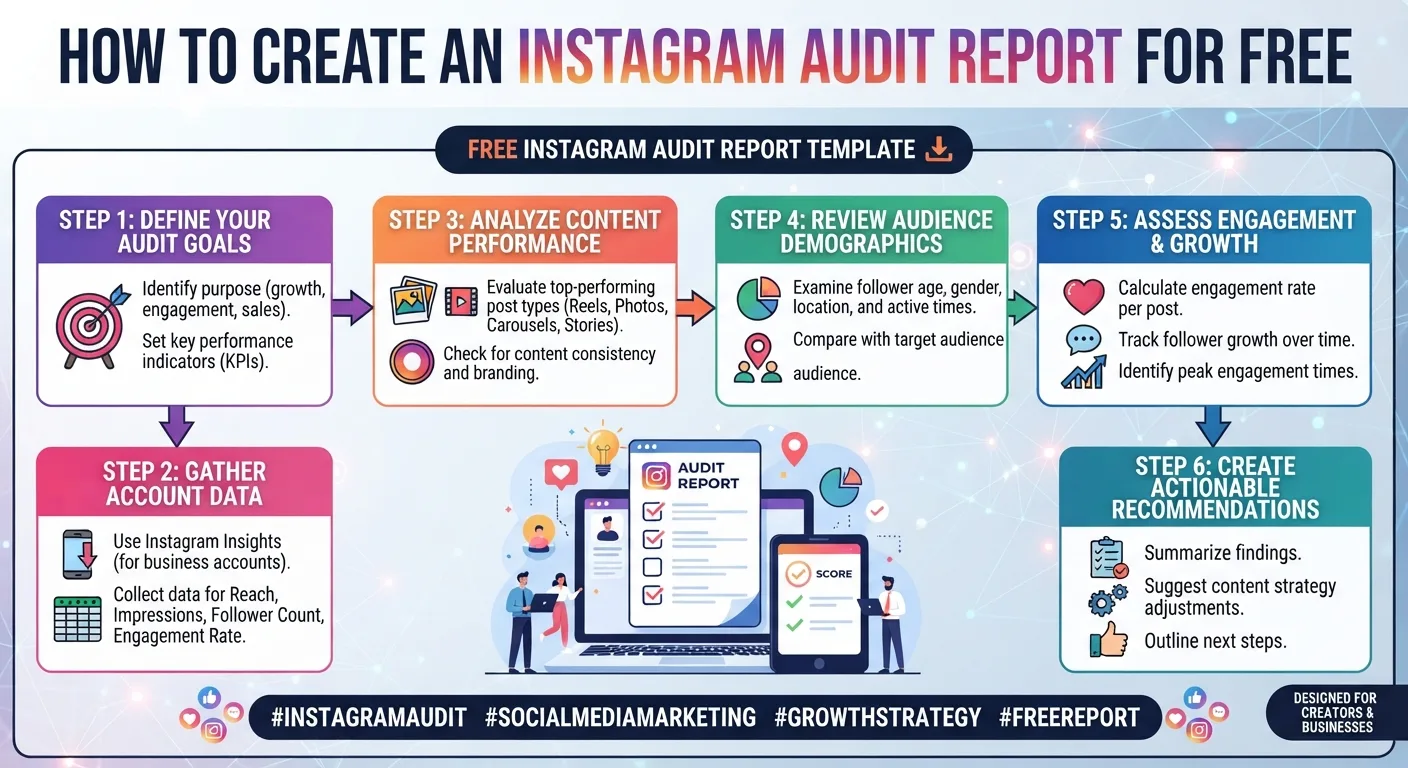
An Instagram audit report is a systematic assessment of every element of an Instagram account, from the profile presentation and content strategy to the analytics performance and competitive standing. Done properly, it surfaces both immediate quick wins and deeper strategic issues that routine content creation never reveals.
Most businesses and creators conduct informal, partial audits occasionally, noticing something specific that seems off and fixing it without ever reviewing the whole picture. A full structured audit report takes a different approach: it reviews every component systematically, documents what is working and what is not, and produces a prioritized action plan grounded in evidence rather than intuition.
This guide covers how to create a complete Instagram audit report using entirely free tools: Instagram's native Insights, InstaPV for competitive and public account analysis, and standard free productivity tools for documentation and reporting. No paid analytics platform required.
When to Conduct an Instagram Audit
Several situations call for a formal audit rather than the routine analytics review covered in Day 19's KPI tracking guide.
When an account has been running for six months or more without a systematic review, a full audit often surfaces accumulated strategic drift that has gradually moved the account away from its original positioning without anyone noticing.
When growth has plateaued for more than two to three months despite consistent posting, a full audit typically identifies the specific bottleneck preventing further growth rather than the vague sense that something is not working.
When a brand or business is undergoing a strategic shift, a full audit of the current Instagram state provides the baseline from which to measure the impact of strategic changes.
When onboarding a new client as a social media manager or agency, a full audit of the existing account state is the essential starting point for understanding what you are working with before making any changes.
When preparing a pitch or proposal for new social media work, an audit of the prospective client's account demonstrates analytical capability and provides specific, credible recommendations grounded in actual account data.
The Free Tools You Will Need
Before beginning the audit, gathering the necessary tools takes five to ten minutes.
Instagram Insights provides the performance data for the owned account being audited. Access requires a business or creator account and is available directly within the Instagram app.
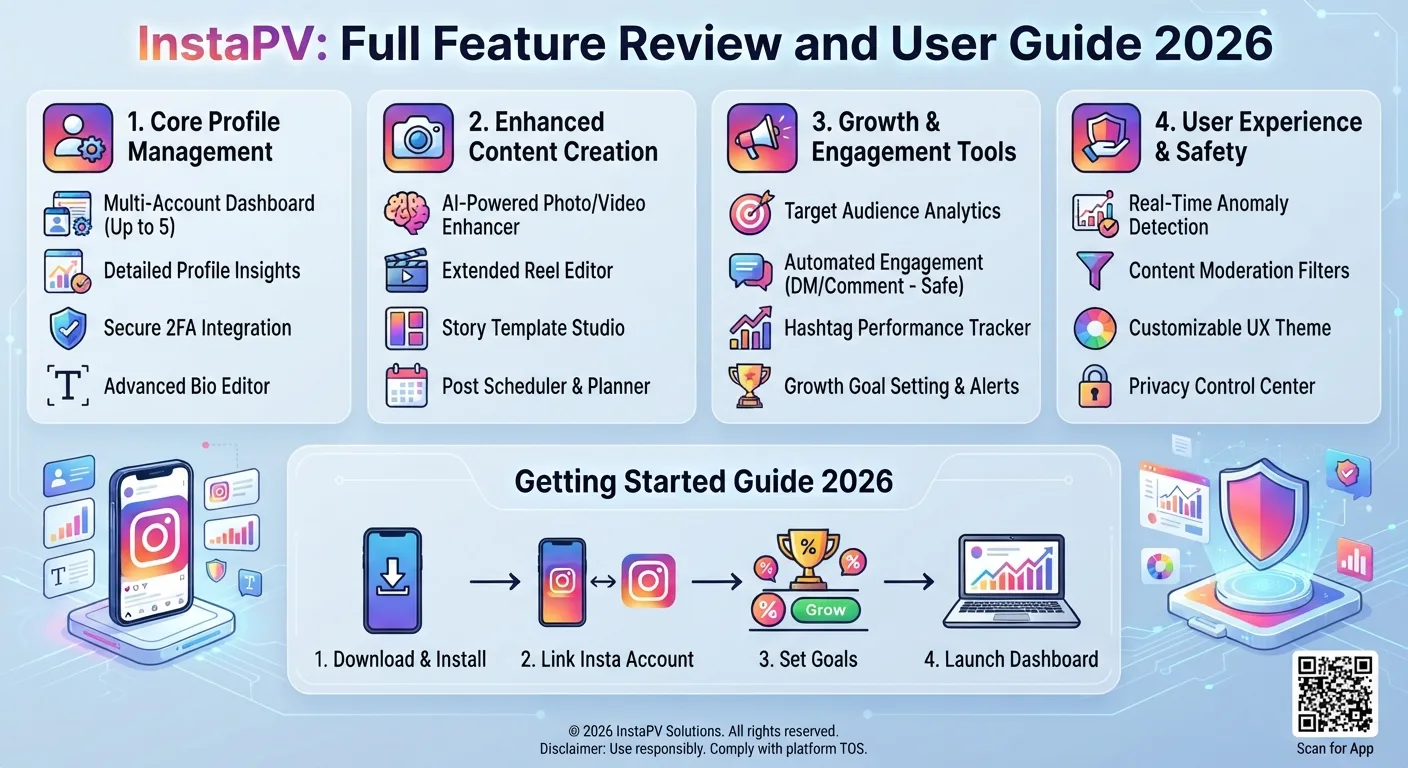
InstaPV provides the competitive context data, public account analytics for comparable accounts and competitors, and anonymous access to Stories and Highlights for the account being audited. As covered throughout this series, InstaPV is free for core functionality with no login required.
A free spreadsheet or document tool, whether Google Sheets, Google Docs, or any comparable free alternative, provides the documentation structure for recording findings and building the final report.
Instagram's platform for direct profile review, visiting the account being audited on both mobile and desktop to assess the visual presentation and user experience, provides the qualitative first impression assessment.
Section 1: Profile and First Impression Audit
The profile audit covers everything visible to a new visitor in the first ten seconds of discovering the account.
Profile Picture Assessment
Review the profile picture for clarity and recognizability at small sizes. As covered in Day 22's profile picture guide, the profile picture appears at very small thumbnail sizes in most Instagram contexts, and many images that look professional at full size become unrecognizable at thumbnail size.
Rate the profile picture on a simple three-point scale: strong, adequate, or needs improvement. Note any specific issues, whether the image lacks contrast, is too complex for small display sizes, is outdated, or is inconsistent with the brand's visual identity.
Display Name Assessment
Check whether the display name field includes a relevant keyword alongside the name or brand name. As covered in Day 6's bio optimization guide, the display name is searchable within Instagram and represents a missed discoverability opportunity when it contains only a name without any descriptive keyword.
Note what keyword or descriptor is currently included, whether it accurately reflects the account's current positioning, and whether any improvement would increase search discoverability.
Bio Text Assessment
Review the bio text against the framework from Day 6: does it clearly communicate what the account offers, who it serves, and what action a new visitor should take? Apply the specific bio structure checklist:
Does line one communicate what the account does and who it serves? Does line two communicate unique value or credibility? Is there a clear call to action directing visitors to the link? Is there a link? Does the link go to a current, relevant destination?
Score each element and note specific improvements for any that are missing or weak.
Link Assessment
Note whether a link is present, where it goes, whether the destination is currently active and relevant, and whether the bio text references the link with a call to action. An absent link, a broken link, or a link to a generic homepage without specific relevance to the Instagram audience all represent immediate fixes.
Overall First Impression Rating
Step back and assess the overall impression the profile creates in under ten seconds. Imagine encountering this account through a Reel or shared post for the first time. Does the profile immediately communicate what the account is about and why it is worth following?
Section 2: Content Audit
The content audit covers the last thirty posts across all formats.
Content Pillar Coverage
Categorize each of the last thirty posts by content theme. Create a simple frequency table showing how many posts fall into each category. Assess whether the distribution reflects a coherent content strategy with clear pillars, as covered in Day 10's small business guide, or whether it is scattered across too many themes without a clear focus.
Format Distribution
Create a frequency table of content formats: Reels, carousels, single images, video posts. Compare this against the strategic format mix recommendations from Day 12's format comparison guide. Note whether Reels, the primary discovery format covered in Day 11, are receiving adequate allocation given the account's growth goals.
Visual Consistency Assessment
Review the last thirty posts as a visual grid. Assess whether consistent visual style, color palette, and aesthetic approach are present. As covered in Day 10's analysis of major Instagram accounts, visual consistency is one of the most distinguishing characteristics of successful Instagram accounts. Note any significant inconsistencies in editing style, color tone, photography approach, or graphic design that undermine visual coherence.
Content Quality Assessment
Assess the overall production quality of recent content relative to the standard expected in the account's specific niche. As covered in multiple posts throughout this series, quality requirements vary by niche. The relevant question is whether the content meets the baseline expectation for this specific niche's audience rather than any universal quality standard.
Caption Quality Assessment
Review the captions on the last ten posts. Apply the caption quality framework from Day 12's caption guide: do captions end with specific, compelling questions? Do they lead with strong hook lines? Do they provide genuine value or insight rather than simply describing the image?
Rate overall caption quality and note any specific patterns that should be addressed.
Section 3: Engagement Audit
The engagement audit covers how content is connecting with the audience.
Engagement Rate Calculation and Assessment
Using Instagram Insights, calculate the average engagement rate across the last twenty posts using the formula from Day 8's engagement rate guide. Compare against the benchmarks for the account's size tier. Note whether engagement rate is tracking above, at, or below benchmark, and whether the trend is improving, stable, or declining.
Save Rate Assessment
For accounts with access to save data through Instagram Insights, calculate average save rate across recent posts. As covered throughout this series, save rate is one of the most valuable engagement signals. Note which content types or topics are generating the highest save rates, and whether the current content mix is optimized for save generation.
Comment Quality Assessment
Spend ten minutes reading through comment sections on the ten most recent posts. Apply the qualitative assessment framework from Day 12's caption guide: are comments substantive and content-specific, or generic? Is the account owner responding to comments actively? Is there evidence of genuine community conversation rather than one-directional broadcasting?
Section 4: Audience and Growth Audit
The growth audit covers the trajectory of the account rather than its current state.
Follower Growth Trend
Using InstaPV's analytics for the account being audited, review the follower growth chart for trend direction and any notable patterns. Is the account growing consistently, plateauing, or declining? Are there any unexplained growth spikes that might indicate concerns covered in Day 18's fake follower guide?
Follower Quality Assessment
Compare the account's engagement rate against the benchmarks for its size tier. Significant underperformance on engagement rate relative to benchmarks suggests a follower quality issue, whether from purchased followers, audience drift, or content that has moved away from what the audience originally followed for.
Follower Demographic Alignment
Where available through Instagram Insights, review the audience demographic breakdown against the account's intended target audience. Note any significant mismatches between the actual and intended audience, as covered in Day 11's demographics guide.
Section 5: Stories and Highlights Audit
Stories Activity and Frequency
Assess whether the account posts Stories consistently. As covered in Day 8's Stories best practices guide, consistency in Stories posting is one of the primary factors in maintaining strong Stories bar placement. Note posting frequency, any extended gaps, and whether interactive elements are being used.
Highlights Structure Assessment
Review the Highlights section systematically. Using InstaPV to view Highlights from an outsider perspective provides the new-visitor view that the account owner cannot easily get through their own logged-in experience.
Assess whether Highlights exist, whether categories are logical and clearly labeled, whether covers are visually consistent with the overall account aesthetic, whether content within each Highlight is current and relevant, and whether the Highlights structure serves as an effective navigation system for new profile visitors.
Section 6: Competitive Context Audit
The competitive context audit benchmarks the account's performance against comparable accounts in the niche.
Identifying the Comparison Set
Select three to five accounts that are genuinely comparable to the account being audited: similar niche, similar account size range, and operating in a similar market context.
Competitive Metrics Comparison
Using InstaPV to review each comparison account, collect follower growth trend assessment and engagement rate for each. Present this alongside the audited account's equivalent figures in a simple comparison table.
Note whether the audited account is outperforming, matching, or underperforming the comparison set on these key metrics, and what this relative positioning suggests about the effectiveness of the current strategy.
Content Gap Analysis
Review the content of the comparison accounts for themes and formats that are generating strong engagement but that the audited account is not currently covering. As covered in Day 19's market research guide and Day 9's competitor analysis guide, content gaps in the competitive landscape represent positioning opportunities.
Section 7: Business Impact Audit
For accounts with measurable business objectives, the business impact audit connects Instagram performance to downstream outcomes.
Traffic and Conversion Review
Using Google Analytics or the website analytics platform described in Day 26's ROI measurement guide, review Instagram as a traffic source: volume, quality indicators including bounce rate and session duration, and conversion rate for Instagram-sourced traffic.
Link Performance Review
Review the bio link click data available through Instagram Insights. Calculate the link click rate as a percentage of profile visits to assess how effectively the profile is converting visitors into website visitors.
ROI Estimate
Using the methodology from Day 26's ROI guide, calculate a rough monthly ROI estimate for the account based on input costs and attributed business outputs. Note whether the current ROI is positive, negative, or unclear due to attribution limitations.
Section 8: Prioritized Action Plan
The final section of the audit translates findings into a prioritized action plan.
Immediate Fixes (This Week)
List three to five changes that can be implemented immediately and that address the highest-impact quick wins identified in the audit. These are typically profile optimizations: updating the bio, adding or improving a call to action, fixing the link, updating Highlight covers, or addressing any obvious content quality issue in the most recent posts.
Short-Term Improvements (Next Month)
List three to five strategy adjustments that require more effort to implement but that address significant issues identified in the audit. These might include developing a clearer content pillar structure, implementing the caption improvement framework from Day 12, shifting the format mix to increase Reels allocation, or establishing a consistent Stories posting routine.
Longer-Term Strategic Shifts (Next Quarter)
Note any more fundamental strategic issues identified in the audit that require sustained effort over a longer period to address. These might include rebuilding visual consistency, repositioning the account for a different audience segment, or developing a collaboration strategy to address growth plateau.
Formatting the Final Report
For Internal Use
A structured document with the eight sections above, each containing findings and recommendations, provides a comprehensive internal audit record. Keep the language concise and action-focused rather than comprehensive and descriptive.
For Client Presentation
For presenting an audit to a client, condense findings into a presentation format with clear visual hierarchy. Lead with the executive summary of overall account health, present key findings by section with supporting data, and end with the prioritized action plan that frames the value of the recommended work.
Updating the Audit Over Time
Scheduling a full audit every quarter, compared against the previous audit findings, tracks whether identified issues have been addressed and whether new issues have emerged. This recurring comparison provides more strategic insight than any single standalone audit.
-
What Is Instagram Story Completion Rate and Why It Matters
-
How to Use Public Instagram Data for Academic Research
-
Instagram for Real Estate: Using Profile Analytics to Win Clients
Frequently Asked Questions
Q: How long does a complete audit take to conduct?
A thorough audit of a single account using this framework typically takes three to five hours for an experienced auditor. This includes time for data collection from Instagram Insights and InstaPV, the systematic review of each section, competitive research, and writing the prioritized action plan. First-time audits may take longer as the process is learned.
Q: Can I audit accounts I do not manage?
The sections of the audit that depend on private Instagram Insights data, including the detailed engagement breakdown, audience demographics, and link click data, require access to the account. The sections that depend on publicly available data, specifically the profile assessment, content review, Highlights assessment, and competitive context review, can be conducted for any public account using InstaPV and direct profile observation.
Q: Should every audit finding result in a change?
No. Some findings will confirm that existing practices are effective and should be maintained rather than changed. The value of the audit is not in finding things to change but in having a complete, evidence-based picture of what is working, what is not, and what the priorities should be. Not every audit section will identify actionable problems.
Q: How do I present an audit to a client without overwhelming them?
As covered in Day 24's reporting guide, adjusting report depth to audience is important for effective communication. For clients, a condensed version of the audit that highlights the three to five most important findings and a clear prioritized action plan communicates more effectively than sharing every finding from all eight sections. The full audit documentation can exist as a background reference while the client-facing summary focuses on the most important actionable insights.
Conclusion
A complete Instagram audit report provides the systematic, evidence-based picture of account health that routine analytics monitoring never captures because it reviews the whole account at once rather than individual metrics in sequence. The eight-section framework in this guide, covering profile and first impression, content, engagement, audience and growth, Stories and Highlights, competitive context, business impact, and prioritized action, produces audit reports that identify both quick wins and longer-term strategic opportunities across every dimension of Instagram performance.
All of this is achievable with entirely free tools: Instagram Insights for owned account data, InstaPV for competitive context and public account analysis, and standard free productivity tools for documentation. The investment is time and analytical attention rather than software spend.
Use InstaPV for the competitive context section of your Instagram audit →