Introduction
Instagram is rarely the first platform that comes to mind when people think about research tools. Databases, academic journals, news archives, and search engines occupy that mental space for most students and journalists. Instagram tends to be categorized as a social platform for content consumption rather than a research resource for information gathering.
This categorization misses something important. Instagram contains a category of information that is genuinely difficult or impossible to find through traditional research channels: real-time, visually rich, geographically tagged documentation of human experience, public statements, community reactions, and cultural moments as they unfold.
For journalists covering breaking news, researchers studying social phenomena, students investigating cultural or business topics, and investigators documenting public behavior, Instagram offers primary source material that supplements and in some cases supersedes what conventional research methods can provide.
This guide covers the specific research applications where Instagram adds genuine value, the methods for conducting this research effectively and ethically, and the tools that make the process more efficient.
What Makes Instagram Uniquely Valuable for Research
Understanding why Instagram specifically is useful for research clarifies which research applications it serves best and which are better served by other tools.
Real-Time Primary Source Documentation
Instagram is one of the fastest-moving primary source documentation platforms available. When events happen, whether local incidents, public demonstrations, business announcements, natural disasters, or cultural moments, the people present or involved often document them on Instagram in real time before any traditional media has covered the story.
This real-time documentation provides researchers and journalists with primary source material at a speed and geographic breadth that was not previously accessible. A researcher studying how communities respond to specific types of events can find firsthand documentation from multiple perspectives almost immediately rather than waiting for media reports that filter and frame the raw experience.
Geographically Tagged Documentation
The geographic tagging feature of Instagram, where posts can be associated with specific locations, creates a searchable archive of visually documented human activity organized by place. This geographic specificity is valuable for research questions that have geographic dimensions: how specific communities look and change over time, how events unfold in specific locations, or how different geographic markets respond differently to the same phenomenon.
Public Statements That Exist Nowhere Else
Public figures, organizations, businesses, and community voices often make statements through Instagram that they do not make through traditional media channels. A CEO who is media-trained and cautious in press interviews may be more candid in Stories. A public figure who avoids formal press contact may communicate directly with their audience through their Instagram account. An organization may announce a policy change through Instagram before issuing a formal press release.
These statements are publicly available primary sources that exist only on Instagram and that researchers and journalists cannot access through traditional media monitoring.
Visual Documentation of Physical Reality
For research questions where visual evidence matters, Instagram provides a scale of visual documentation that no other source provides. The physical appearance of locations over time, the visual culture of specific communities or groups, the material circumstances of populations in specific areas, and countless other visually documentable phenomena are captured across millions of public Instagram posts in ways that researchers can access and analyze.
Research Applications for Journalists
Breaking News Verification and Documentation
As covered in Day 13's guide to journalist use of Instagram viewer tools, journalists use Instagram as both a first alert system for breaking developments and a documentation resource for events in their coverage area.
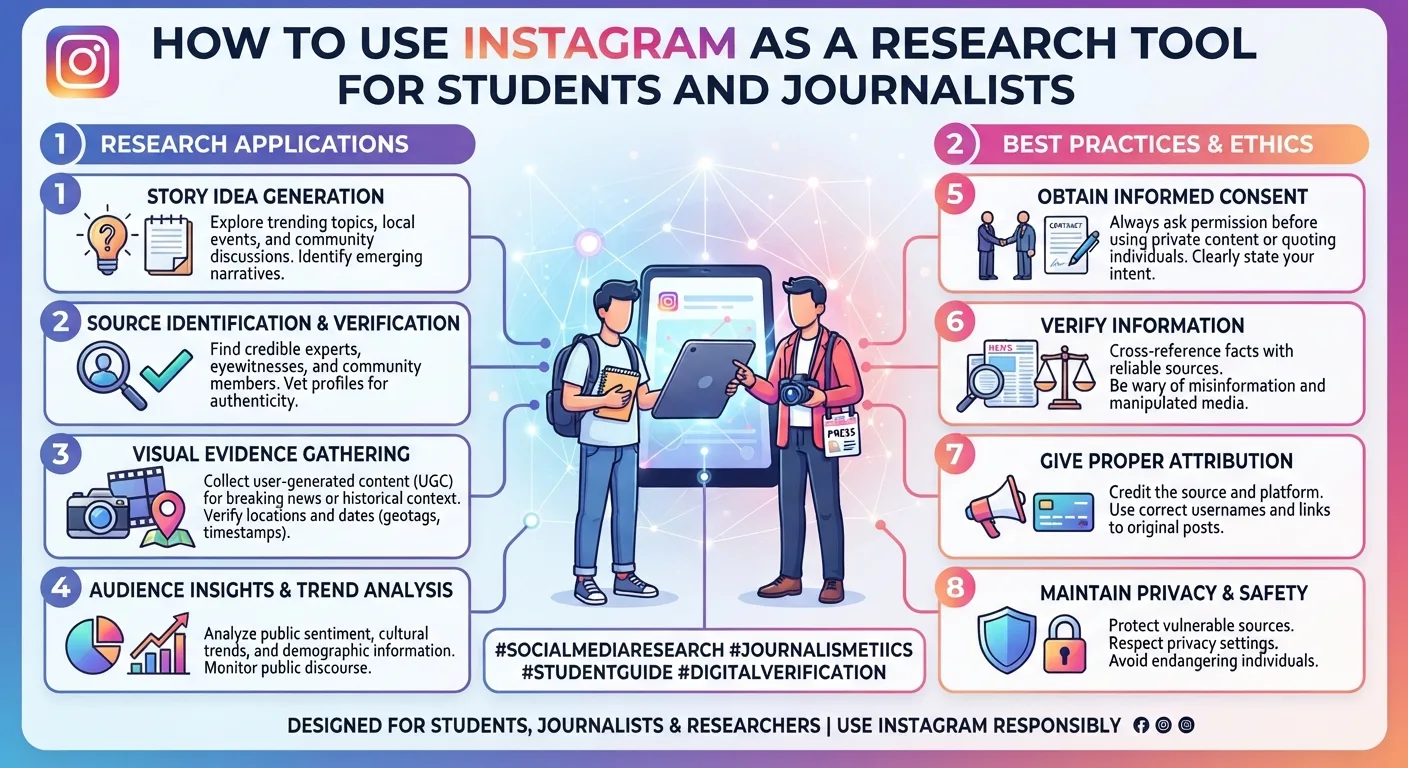
When a significant event occurs, searching the location on Instagram's location search and browsing the most recent posts from that location often surfaces firsthand documentation from people at the scene before any formal media coverage exists. This firsthand documentation is useful both for early awareness of developing situations and as potential primary source material for subsequent reporting.
The 24-hour lifespan of Stories creates a specific research challenge for journalists: significant statements or documentation can disappear before they are captured and archived. Using InstaPV to view and download public Stories before they expire, as covered in Day 13, addresses this directly by allowing journalists to preserve content within the availability window.
Source Discovery
Instagram is one of the most effective tools available for identifying potential sources for specific stories. Searching relevant location tags, hashtags, and keywords surfaces accounts of people with direct experience or knowledge relevant to specific reporting topics.
A journalist covering a specific industry, community, or event can search for accounts with personal connections to that topic and identify potential sources who are already publicly discussing their experience. This approach often surfaces sources whose perspectives would not be accessible through traditional source discovery methods like press contact lists or official spokespersons.
Background Research on Subjects
As covered in Day 13's journalism guide, public Instagram profiles provide background context on subjects of journalism that supplements traditional reporting methods. A subject's public posting history, stated affiliations, public activities, and communication style all become accessible through their public profile and provide context that informs how a journalist approaches an interview or frames a story.
This background research is more efficient when conducted anonymously through InstaPV, which allows thorough profile review without alerting the subject to the journalist's research interest before they are ready to make contact.
Trend Identification and Cultural Coverage
Instagram is one of the most reliable early indicators of emerging cultural trends, community concerns, and social movements. Journalists covering culture, business, or social topics can use Instagram's Explore page, trending hashtags, and fast-growing accounts in specific communities to identify developments worth investigating before they reach mainstream media coverage.
Research Applications for Students
Primary Source Collection for Social Science Research
Students conducting research on contemporary social phenomena, consumer behavior, cultural practices, or community responses to specific issues can use Instagram as a primary source of documentary evidence. Public Instagram posts constitute publicly made statements and behaviors that can be studied as data with appropriate methodological framing.
For qualitative research involving content analysis, discourse analysis, or visual research methods, the scale and accessibility of public Instagram content makes it a genuinely valuable data source for student research projects.
Market and Industry Research
Students working on business, economics, or marketing research projects can use Instagram to study how companies present themselves, how brands communicate with audiences, how consumer communities discuss products and services, and how industry dynamics play out in public social media activity.
This kind of Instagram-based market research, as covered in Day 19's market research guide, provides primary source data that supplements traditional market research methods and captures dynamics that formal market research often misses.
Cultural and Anthropological Research
For students studying cultural practices, community identity, or social dynamics, Instagram provides access to self-curated visual documentation of how communities present themselves and how individuals express identity through shared visual language.
Analyzing the visual culture of specific Instagram communities, the shared aesthetics and language patterns that define niche communities, and how these visual cultures evolve over time provides research data that has no direct equivalent in traditional research sources.
Historical Documentation Research
For topics where Instagram archives of public posts exist from relevant historical periods, Instagram can serve as a primary source for studying how specific topics were publicly discussed, represented, and documented during those periods. A student studying how a specific public health issue was discussed during a particular period, for example, can access public Instagram posts from that time as primary historical documentation.
Ethical Framework for Instagram Research
Using Instagram as a research tool raises specific ethical considerations that students and journalists must address explicitly. As covered in Day 9's anonymous viewing ethics guide, the legal status of accessing public Instagram content does not resolve all ethical questions that arise in a research context.
The Public Account Standard
The ethical foundation for most Instagram research is the public account standard: content published to a public Instagram account by the account owner's own choice is genuinely public and available for research use. The account owner has consented to public visibility by setting and maintaining a public account.
This standard means that research using content from public accounts starts from a solid ethical foundation. Content from private accounts, or content accessed through any means that bypasses the account owner's privacy settings, is not available for research under this standard.
Private Individuals vs Public Figures
Even among public account owners, ethical treatment differs based on whether the subject is a public figure exercising a public role or a private individual who happens to have a public account.
Public figures, including politicians, executives, celebrities, public intellectuals, and others who have sought public attention and influence, have a reduced expectation of privacy regarding their public conduct. Researching their public Instagram statements and documentation is broadly ethically appropriate for journalistic and academic research purposes.
Private individuals who have public accounts may have a stronger expectation of contextual privacy even when their content is technically public. A private individual who posts about a local community event to their public Instagram account may not have anticipated that their post would be used in research, even though the content is publicly available. Ethical researchers consider this contextual expectation when deciding how to use content from private individuals in public accounts.
Verification and Accuracy
A specific ethical obligation in Instagram-based research is not misrepresenting content through decontextualization, selective presentation, or inaccurate attribution. The speed with which Instagram content can be accessed and used creates specific risks of verification failure that responsible researchers and journalists guard against explicitly.
Verifying that a post is genuine, that the account posting it is what it appears to be, and that the content means what it appears to mean requires the same skepticism and corroboration standards that apply to any primary source material. As covered in Day 13's journalism guide, account authenticity verification using the signals from Day 11's fake account detection guide is part of responsible Instagram research practice.
Informed Consent in Academic Research
For formal academic research projects, institutional review boards and research ethics committees have increasingly specific guidance on the treatment of social media data. Students conducting research that will be submitted as academic work should consult their institution's research ethics guidance specifically regarding social media content before collecting Instagram data as research material.
The emerging consensus in research ethics communities distinguishes between observational research using publicly available data, which is generally permissible without individual consent, and research that involves direct interaction with participants through Instagram, which triggers more standard informed consent requirements.
Practical Research Methods and Tools
InstaPV for Story and Highlight Research
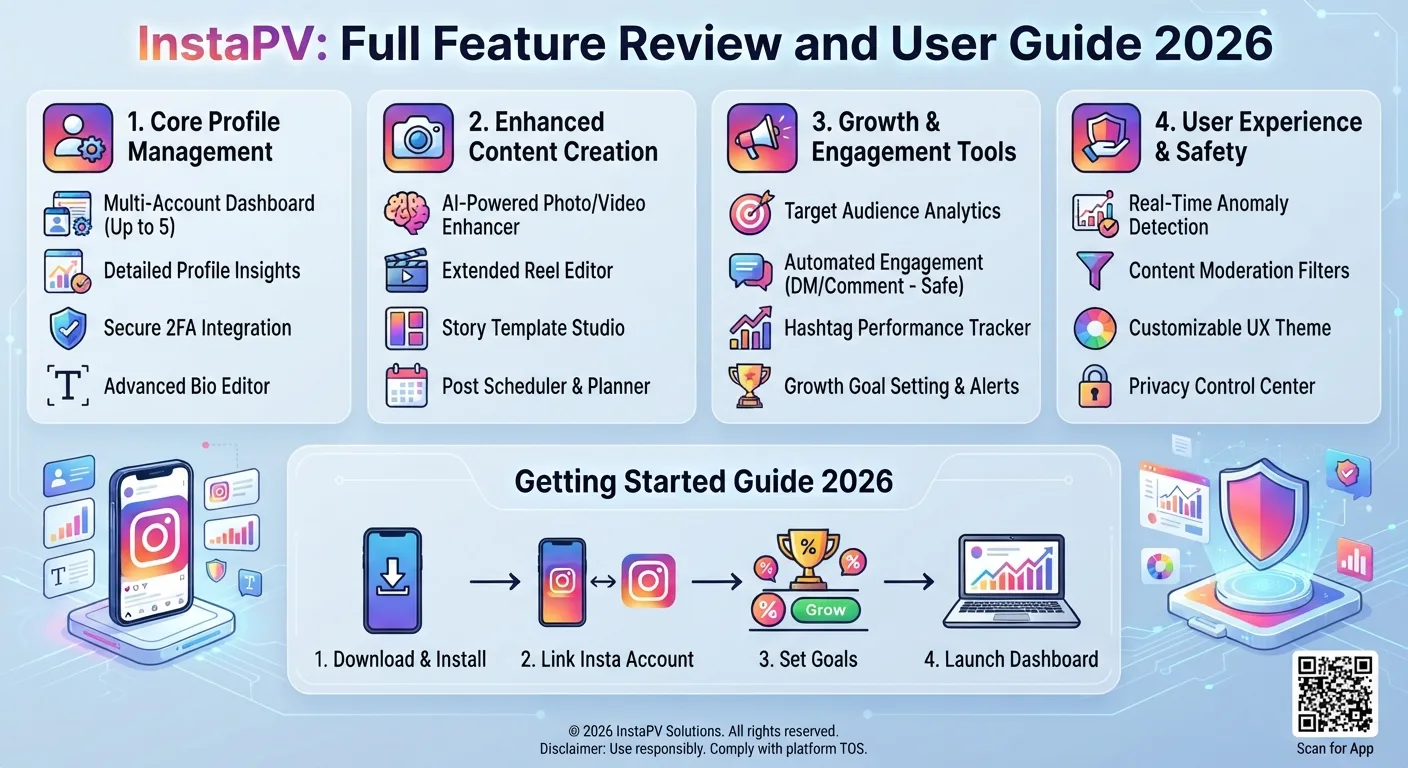
As covered throughout this series, InstaPV provides anonymous access to public Stories and Highlights before they expire, which is particularly valuable for time-sensitive research documentation. The download functionality allows preserving public content that would otherwise disappear within 24 hours.
For researchers who need to archive public Instagram content as research evidence, InstaPV provides a practical solution to the archiving challenge that Instagram's ephemeral Story format creates.
Systematic Hashtag and Location Search
As covered in Day 15's trending topics guide and Day 16's location search guide, systematic hashtag and location search provides structured approaches to finding relevant public content rather than relying on algorithmic curation that may not surface the most research-relevant material.
For research questions with geographic dimensions, location search provides access to content from specific places that general topic search does not organize geographically. For research questions about specific communities or topics, relevant hashtag communities provide direct access to self-organized public discussion.
Screenshot and Documentation Practice
Responsible research documentation of Instagram content requires maintaining clear records of when content was accessed, what account published it, and the URL or other identifying information for the original post. This documentation creates a defensible research record that can be cited and verified.
For journalists, documentation records also protect against claims of misrepresentation by establishing what the content said and when it was accessed. For academic researchers, documentation records satisfy the citation requirements of academic publication and allow reviewers to verify the primary sources cited.
Cross-Reference Verification
Research using Instagram as a primary source should generally cross-reference significant claims or documentation against other available sources before treating Instagram content as authoritative evidence. The same content appearing across multiple independent sources increases confidence in its accuracy and authenticity.
Common Research Mistakes With Instagram
Treating Instagram Content as Representative
Instagram content reflects the self-selected population of Instagram users who chose to post publicly about a topic, not the full population of people with relevant experiences or perspectives. Research that treats Instagram content as representative of broader populations without appropriate methodological qualification overstates what the evidence actually shows.
Failing to Verify Account Authenticity
Not every Instagram account is what it appears to be. Fake accounts, impersonation accounts, and accounts presenting false identities are all present on Instagram. Using content from unverified accounts as primary research material without authentication checks is a research validity risk that responsible researchers address explicitly.
Missing Context From Selective Observation
Instagram search and browsing are not neutral, unbiased sampling methods. Search results reflect algorithmic filtering, hashtag selection effects, and the specific search terms chosen. Research that draws broad conclusions from content discovered through search without acknowledging the selection effects of the discovery method may be drawing conclusions from a systematically biased sample.
-
The Best Time to Post on Instagram: A Data Analysis
-
Instagram Growth Case Study: How an Account Goes From 1K to 100K
-
Instagram Week 3 Recap: Trends, Insights, and What to Focus On Next
Frequently Asked Questions
Q: Can Instagram content be cited in academic papers?
Yes, with appropriate citation formatting that identifies the account, the date accessed, and the URL of the original post. Most academic citation style guides now include formats for social media content citation. Check the specific citation guide required by your institution or publication for the current format.
Q: Do I need permission to use Instagram content in journalism?
For public accounts, using publicly available content in journalism generally does not require permission, though specific uses, such as republishing images commercially, may raise copyright questions separate from the research access question. Journalism that quotes or describes Instagram content accurately and in context is generally considered appropriate use of public source material.
Q: Is there a way to search Instagram content from specific time periods for historical research?
Instagram's own search interface does not provide robust time-filtered search. The Internet Archive's Wayback Machine, as covered in Day 5's follower tracking guide, has captured some Instagram content historically. For more systematic historical Instagram research, academic databases and social media research tools that have collected historical data may provide more structured access.
Q: How should I document Instagram content I am using for research before it disappears?
Using InstaPV to view and download public Stories and Highlights before they expire is one approach. Screenshots with clear date and time stamps provide another documentation method for any Instagram content. For formal research documentation, recording the URL, account username, post date, and access date alongside any downloaded or screenshotted content creates the citation record needed for academic or journalistic purposes.
Conclusion
Instagram is a genuinely valuable research resource for students and journalists who approach it methodologically rather than treating it as purely a social platform. Its unique value lies in real-time primary source documentation, geographic specificity, public statements made nowhere else, and visual documentation of human experience at scale.
Using Instagram effectively for research requires understanding its specific strengths, applying appropriate ethical frameworks to the research design, verifying sources with appropriate skepticism, and maintaining the documentation practices that allow research to be cited, verified, and defended.
The combination of Instagram's native search tools, systematic hashtag and location research, and third-party tools like InstaPV for Story archiving and anonymous profile research provides a complete research toolkit for the kinds of questions Instagram is uniquely well-positioned to help answer.
Use InstaPV for anonymous Instagram research and Story archiving →