Introduction
Every niche on Instagram has accounts that have figured something out. They have found the content angles, the formats, the posting rhythms, and the audience relationship approaches that produce results in their specific corner of the platform. Studying these accounts is not about copying them. It is about understanding what they have discovered through trial and error so you can apply those underlying lessons to your own original approach.
The difference between an account that spends years experimenting to find what works and one that studies the landscape intelligently before and during its growth is often the difference between a slow, frustrating plateau and an accelerating trajectory that benefits from compressed learning.
This guide covers how to find the top accounts in any niche, how to analyze them systematically to extract the most useful strategic intelligence, and how to apply what you learn in ways that inform original strategy rather than producing derivative content.
Defining Top Accounts in a Niche
Before getting into discovery methods, it is worth being precise about what top means in this context because the most followed accounts are not always the most useful ones to study.Instapv
An account is a top performer in a niche when it consistently generates strong results relative to its size and the typical performance standards of the niche. This includes accounts that are growing rapidly even if they have not yet achieved large absolute follower counts. It includes accounts with smaller followings but exceptional engagement rates that indicate an unusually strong audience relationship. And it includes accounts whose content consistently reaches beyond their existing followers through strong algorithmic distribution.
The most followed accounts in a niche are worth studying for their overall strategic positioning and brand approach. But the fastest growing accounts and the highest engagement rate accounts at various size tiers often provide the most actionable tactical intelligence because they are actively doing something that is working right now rather than benefiting from years of accumulated growth.
Stage 1: Discovery - Finding the Right Accounts
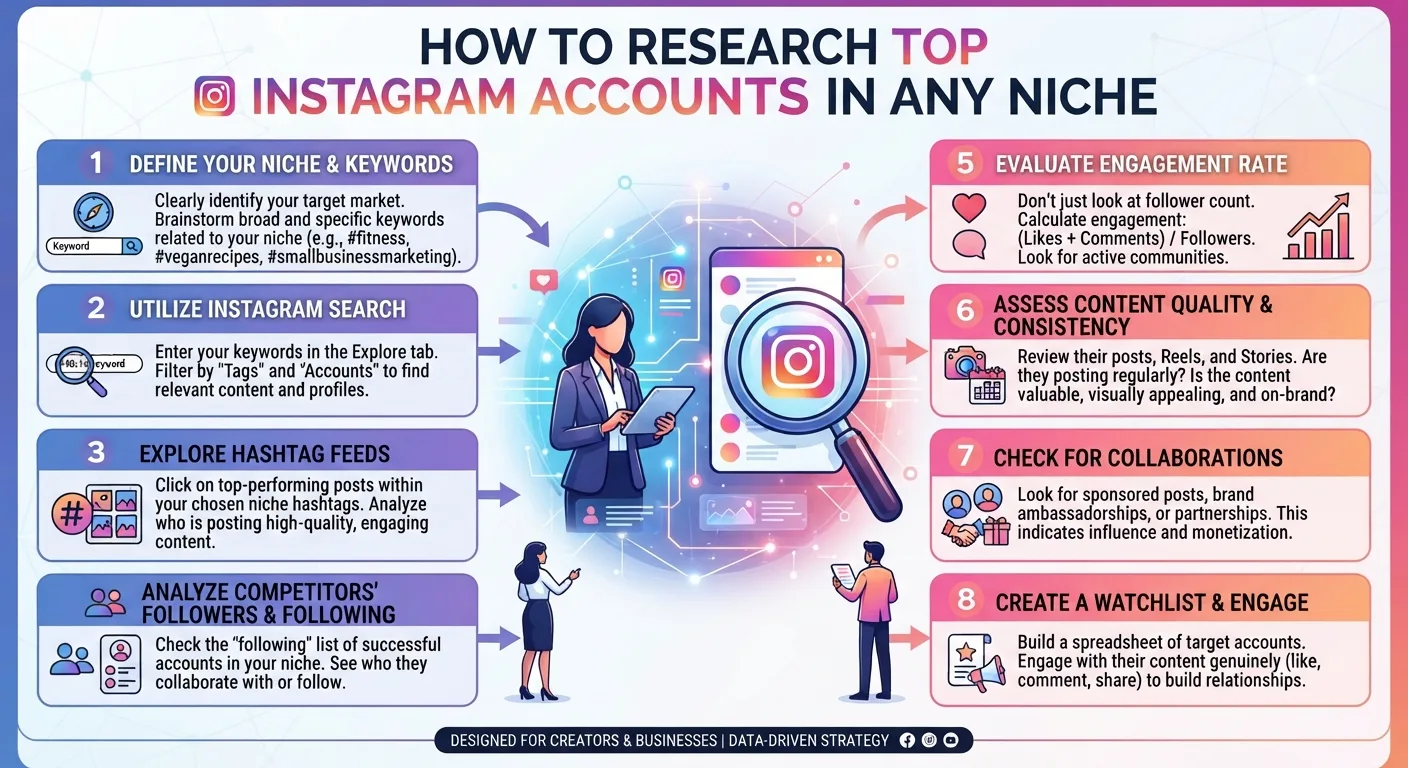
Instagram Native Search
The most direct starting point is Instagram's own search interface. Searching topic keywords, content descriptions, and niche-specific terms in Instagram's search returns both accounts and hashtags relevant to those terms.
When searching for top accounts specifically, look beyond the first few results. The accounts that appear highest in Instagram's search results are often large accounts with established authority, which are useful but represent only one slice of the niche landscape. Scrolling deeper in search results and following the suggested account chains surfaces a broader range of accounts including mid-tier and micro accounts that are often more instructive for growth strategy.
Hashtag Top Posts
Browsing the Top Posts section of niche-relevant hashtags, as covered throughout this series, surfaces accounts that are currently generating strong engagement within the specific community. An account appearing in the Top Posts section of multiple relevant hashtags is receiving above-average algorithmic recognition in the niche, which is a reliable signal of strong current performance worth investigating.
Explore Page Observation
Regular Explore page browsing in your niche, as covered in Day 15's trending topics guide, surfaces accounts that the algorithm is actively distributing to new audiences. Accounts that appear on the Explore page are generating strong early engagement signals that the algorithm rewards with broader distribution. These are often the accounts in an active growth phase whose current strategy is worth studying most closely.
Comment Section Chains
The comment sections of established niche accounts surface additional accounts worth discovering. When an account with a genuine, engaged audience posts content in a niche, the commenters who leave substantive, specific responses are often themselves accounts operating in the same niche. Following the accounts behind insightful comments surfaces mid-tier and micro accounts in the niche community that are not easily discoverable through direct search.
Suggested Accounts Feature
When you visit any public Instagram account, Instagram displays suggested related accounts in the profile view and through the follow confirmation screen. Working through these suggestions from known accounts creates a discovery chain that surfaces the broader niche ecosystem, including accounts that would not appear in direct topic searches.
Stage 2: Filtering - Identifying the Accounts Worth Studying
Not every account discovered through the methods above warrants deep analysis. A quick screening process filters the discovery list to the accounts that will provide the most useful strategic intelligence.
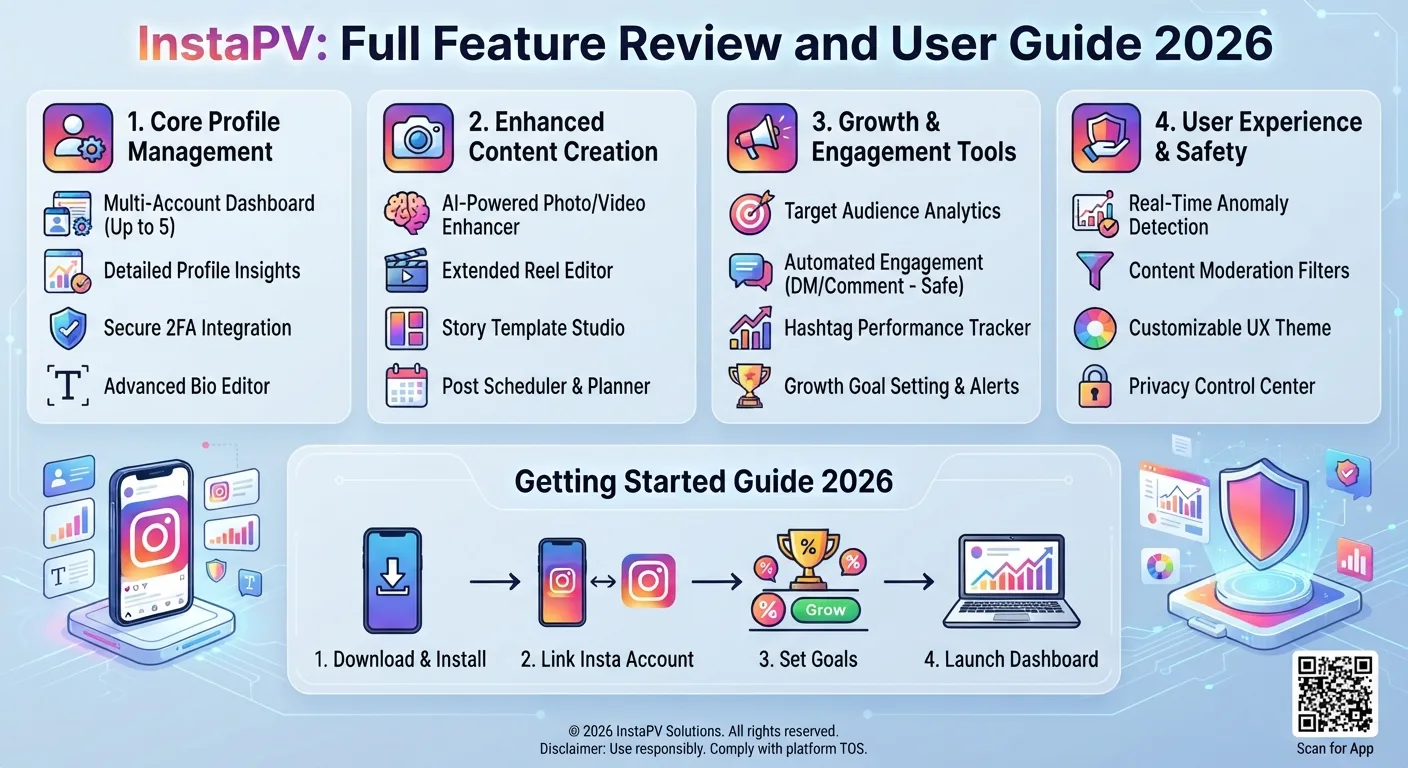
Using InstaPV for Initial Screening
For each discovered account, searching the username on InstaPV provides an immediate analytics overview: current follower count, follower growth trend, and engagement rate. This takes under two minutes per account and quickly surfaces which discovered accounts are genuine high performers versus accounts that appear prominent through other signals but have inflated or stagnant metrics.
Filtering Criteria
Keep accounts that show genuine, sustained follower growth in their InstaPV growth chart without unexplained spikes that suggest purchased followers as covered in Day 18's fake follower guide. Keep accounts with engagement rates consistent with or above the benchmarks for their size tier from Day 8's engagement rate guide. Keep a mix of account sizes, including a few very large accounts for strategic positioning reference, several mid-tier accounts for format and content strategy reference, and several fast-growing smaller accounts for current tactical intelligence.
Eliminate accounts with very low engagement rates for their size, accounts showing the fake follower growth spike patterns from Day 18, and accounts whose content is so different from your own positioning that the strategic learnings would not transfer.
Aim to finish the filtering process with ten to fifteen accounts spread across different size tiers that represent the genuine high performers in the niche.
Stage 3: Analysis - Extracting Strategic Intelligence
With a filtered list of ten to fifteen accounts, systematic analysis extracts the strategic intelligence that informs your own content and growth approach.
Content Theme Analysis
For each account, review the last thirty posts and categorize them by content theme. As covered in Day 12's profile audit framework, this reveals the account's content pillar structure and the themes they have found most resonant with the audience.
Look for patterns across accounts. Themes that appear consistently across multiple high-performing accounts in the niche are almost certainly resonating with the shared audience. Themes that appear in only one or two accounts may represent either a unique differentiating angle or a strategy that has not yet been validated across the broader niche.
Format Distribution Analysis
Note the format mix across each account's recent content: Reels, carousels, single images, and video posts. Compare the format distribution against the engagement patterns visible on each account.
As covered in Day 12's format comparison guide, different formats serve different purposes. Identifying which formats the top accounts in your niche use for different content types provides a validated format strategy framework specific to your niche rather than relying on generic platform-wide format recommendations.
Hook and Opening Strategy
For the Reels of each account in your research set, pay specific attention to the opening three seconds as covered in Day 11's Reels strategy guide. Top performing accounts in any niche have typically refined their hook approaches through extensive testing. Studying the hook patterns that appear across multiple high-performing Reels in the niche provides direct evidence of what openings capture attention from the specific audience.
Note whether hooks in the niche tend to be question-based, statement-based, visual-first, or tension-building. Note the typical pacing and energy level in opening frames. Note whether text overlays or voiceover tend to carry the hook or whether the visual alone does the work.
Caption Structure Analysis
As covered in Day 12's caption guide, caption structure significantly affects comment activity and engagement quality. Review the captions on the highest-engagement posts from your research accounts and identify structural patterns.
Do the highest-engagement captions tend to be long or short? Do they consistently end with specific questions, and if so, what types of questions tend to generate the most response? Do they use personal story structure, direct educational structure, or opinion-based structure most frequently?
Posting Frequency and Timing Patterns
Note how frequently each account posts and at what times. As covered in Day 5's posting time guide, posting during audience peak activity windows improves early engagement performance. Observing what times top accounts in the niche tend to post provides indirect evidence of when the niche's shared audience is most active.
Highlight Structure Review
Using InstaPV to view each account's Highlight structure anonymously reveals how top accounts in the niche organize and present their permanent content. As covered in Day 2's Highlights guide and Day 14's Highlight covers guide, the Highlight structure is a strategic choice that reveals content prioritization. Seeing consistent patterns in how top niche accounts structure their Highlights informs your own Highlight organization decisions.
Story Content and Frequency
Viewing the Stories and Highlights of research accounts through InstaPV gives insight into how top niche accounts use Stories alongside their feed content. As covered in Day 12's format comparison guide, Stories serve relationship maintenance functions that complement the discovery and engagement functions of feed posts. Observing how the best accounts in the niche balance these functions provides a validated Stories strategy reference.
Stage 4: Synthesis - Identifying Actionable Patterns
Analysis of individual accounts is useful but the most actionable intelligence comes from synthesizing patterns across the full research set.
Consistent Patterns
Identify what the top accounts in the niche consistently do. If eight of your twelve research accounts use carousel format for educational content, this is a strongly validated niche-specific finding. If all of your research accounts post at least three Reels per week, this reflects the competitive baseline for Reels activity in the niche. If the highest-engagement posts across multiple accounts consistently use a specific caption structure, this is a validated pattern worth adopting.
These consistent patterns represent the established best practices of the niche, refined through the collective experience of multiple accounts rather than the individual experience of any one account.
Inconsistent Patterns
Identify where top accounts in the niche diverge significantly from each other. These divergences often represent areas of genuine strategic uncertainty where no single approach has proven dominant, or they represent differentiation strategies where accounts have found different approaches that work for their specific positioning.
Both are useful signals. Genuine strategic uncertainty areas represent opportunities for testing and differentiation. Successful differentiation strategies that one account has found represent positioning models worth considering for their transferable principles even if their specific execution would not fit your account.
Gaps Across the Competitive Set
After analyzing the full research set, identify what no account in the niche is doing well or at all. As covered in Day 19's market research guide, content gaps in the competitive landscape represent the clearest differentiation opportunities.
A gap where no top account is serving a specific segment of the niche audience's needs, or where every account covers a topic superficially without genuine depth, represents a positioning opportunity that your account could claim by serving that need specifically and well.
Stage 5: Application - Turning Research Into Strategy
Research produces value only when it informs specific strategy decisions. After completing the analysis and synthesis stages, translate findings into specific commitments.
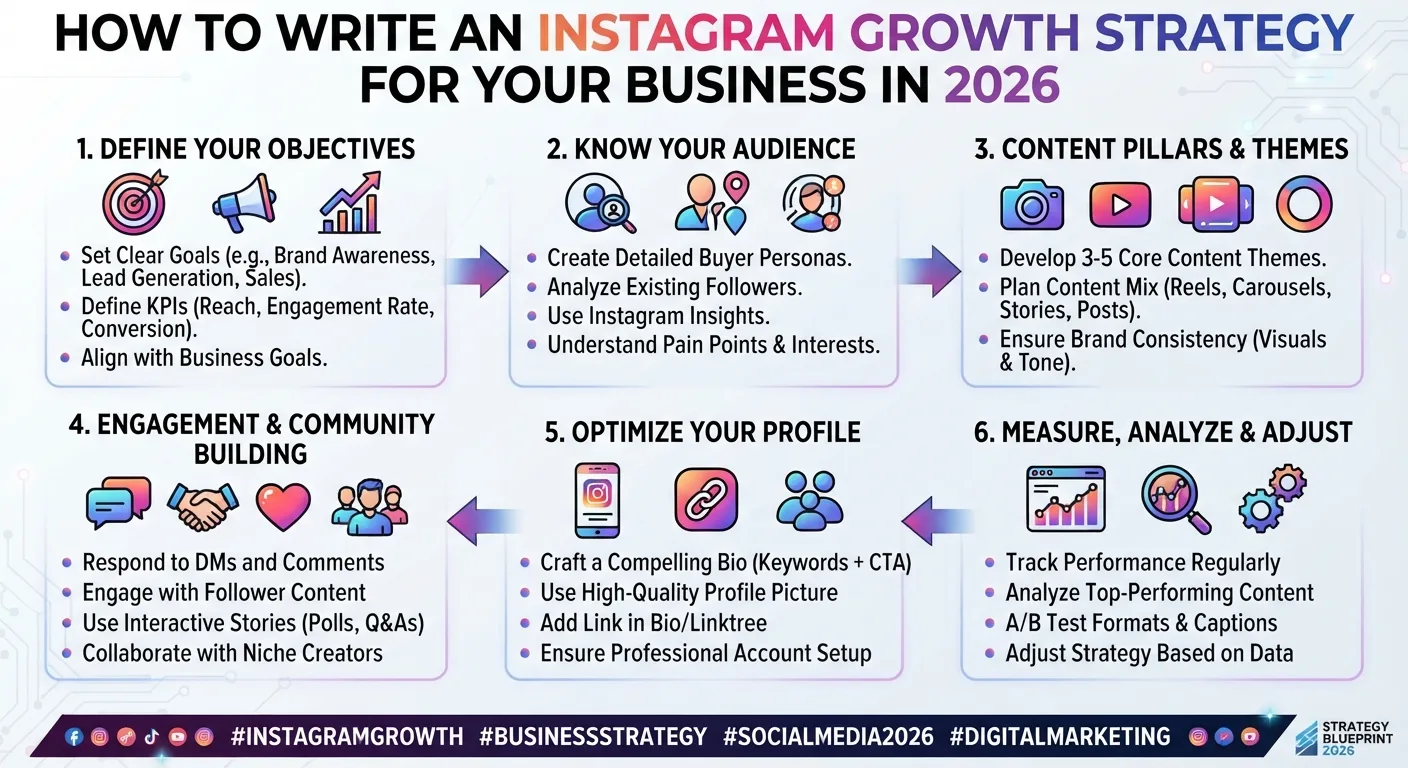
Define your content pillars based on the theme analysis, including both the themes consistently validated across the research set and any gaps you have identified as differentiation opportunities.
Define your format mix based on the format distribution analysis, using the validated niche practices as the baseline while leaving room for format experimentation informed by the gaps you have identified.
Define your hook approach for Reels based on the hook analysis, adapting the patterns that work in the niche to your specific voice and content focus rather than directly replicating anyone's specific execution.
Define your posting rhythm based on the frequency and timing analysis, using the observed practices of top niche accounts as reference for a sustainable rhythm that keeps pace with the competitive baseline.
Build all of these commitments into the content calendar framework from Day 13, creating a specific plan for the next thirty days that applies the research findings directly.
Maintaining an Ongoing Research Practice
The initial research described above provides a strong strategic foundation. Maintaining an ongoing research practice ensures that foundation stays current as the niche evolves.
Setting up saved profile collections on InstaPV for your fifteen research accounts makes monthly monitoring efficient, as covered in Day 8's tracking guide. A monthly review of growth and engagement trends across the research set, combined with a quarterly full content analysis cycle, keeps your strategic understanding of the niche current without requiring the full initial research investment repeatedly.
Adding new fast-growing accounts to the research set as they emerge, identified through the discovery methods above, ensures the research set reflects the current niche landscape rather than only the landscape as it existed when the initial research was conducted.
Frequently Asked Questions
Q: How do I research top accounts in a niche I am entering for the first time with no prior knowledge?
The discovery and filtering process described in this guide works regardless of prior niche knowledge. Start with broad topic keyword searches and follow the discovery chains outward. The filtering process using InstaPV quickly identifies which discovered accounts are genuine high performers, and the systematic analysis reveals the niche's content patterns even without prior familiarity.
Q: Should I follow the research accounts on my own Instagram account?
Following research accounts from your own account creates mutual visibility. For competitive research accounts specifically, using InstaPV to monitor them anonymously as covered in Day 4's competitor research guide avoids signaling your research interest.
Q: How many accounts is too many to research thoroughly?
Ten to fifteen accounts provides a sufficient sample for reliable pattern identification without becoming unmanageable for thorough individual analysis. Larger research sets tend to produce diminishing returns as patterns become clear before all accounts are fully analyzed.
Q: Can I do this research for Instagram accounts in languages or markets different from my own?
Yes. InstaPV works for any public account regardless of language or geographic market. The analytical framework applies universally even when the specific content requires translation or cultural context to interpret fully.
-
Instagram Stories Swipe-Up Links: How They Work and Who Can Use Them
-
How to Do Instagram Market Research for Free
-
Best Instagram Analytics KPIs to Track Monthly
Conclusion
Researching top Instagram accounts in any niche is one of the highest-leverage strategic activities available to any creator or brand at any stage of growth. The five-stage process of discovery, filtering, analysis, synthesis, and application converts the collective experience of the niche's best performers into actionable strategic intelligence that would take years to develop through independent experimentation alone.
The research investment of a few focused hours produces a validated strategic foundation that makes every subsequent content and growth decision more informed and more effective. Maintaining this research as an ongoing monthly practice keeps the strategy current as the niche evolves and new accounts emerge as reference points worth studying.
Start researching top accounts in your niche with InstaPV analytics →