Introduction
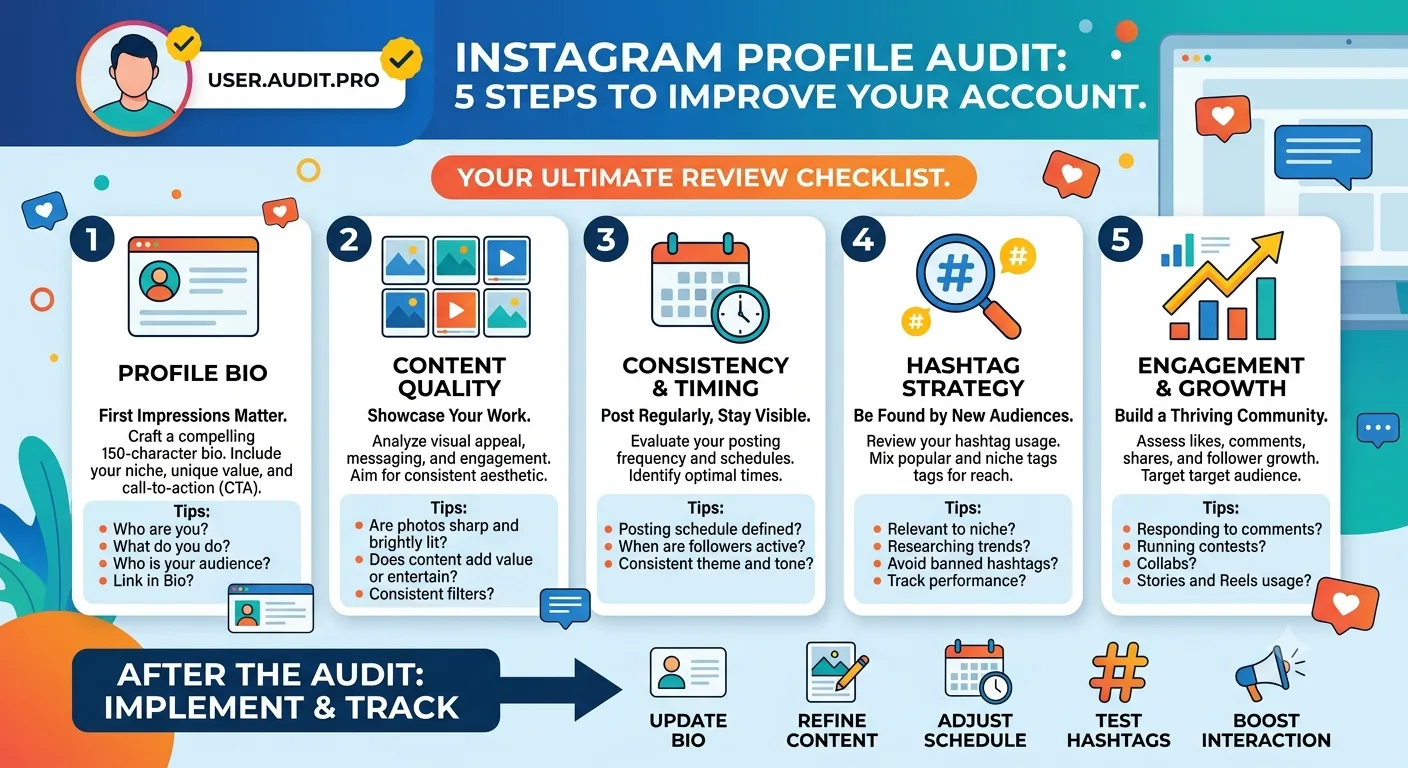
An Instagram profile audit is a systematic review of every element of an account to identify what is working, what is underperforming, and what specific changes would produce the strongest improvement in reach, engagement, and growth.
Most accounts evolve gradually over time without anyone ever stepping back to look at the whole picture. A bio written two years ago may no longer reflect the account's current focus. A content mix that made sense at launch may have drifted from what the audience actually responds to. A posting schedule that worked when the account was smaller may need adjustment as the audience has grown and shifted.
A structured audit, done thoroughly, typically surfaces both quick wins, changes that take minutes to implement and produce immediate improvements, and longer term strategic adjustments that require more sustained effort but address more fundamental performance gaps.
This guide covers a complete audit framework applicable to your own account or to any public account you want to evaluate.
Part 1: Profile and First Impression Audit
The first part of the audit assesses everything a new visitor sees in the first few seconds of discovering the account.
Profile Picture
Ask whether the profile picture is clear and recognizable at small sizes. As covered in Day 6's bio optimization guide, the profile picture appears at very small sizes in the Stories bar, search results, and comment sections. An image that looks good at full size but becomes unrecognizable at thumbnail size is failing at its primary job.
For personal brands, a clear headshot with a simple background works best. For business accounts, a clean, high contrast logo on a plain background works best. Check whether the current image meets this standard and whether it has been updated recently enough to remain current.Instapv
Display Name
Check whether the display name includes a relevant keyword alongside the name or brand name. As discussed in Day 6's bio optimization guide, the display name field is searchable within Instagram and represents a missed discoverability opportunity when it contains only a name with no descriptive keyword.
Note what keyword or descriptor, if any, is currently included and whether it accurately reflects the account's current focus.
Bio Text
Review the bio text against the framework from Day 6: does it clearly communicate what the account offers, who it serves, and what action a new visitor should take? Does it include a specific call to action pointing to the link?
Common bio problems to look for include being too vague about what the account actually covers, listing personal traits rather than audience value, wasting the limited 150 characters on information that does not help a new visitor decide whether to follow, and missing a call to action entirely.
Website Link
Check whether there is a link, whether it goes to a current and relevant destination, and whether the destination is specifically relevant to the Instagram audience rather than a generic homepage. Note whether the bio text references the link with a call to action or whether the link sits there with no direction to tap it.
Overall First Impression
Step back and assess the overall impression the profile creates in the first five seconds. Is the account's topic and value immediately clear? Does the visual presentation communicate professionalism appropriate to the account's positioning? Would someone who discovered this account through a specific piece of content understand immediately whether the rest of the account is relevant to them?
Part 2: Content Audit
The content audit evaluates the account's recent posts across multiple dimensions.
Content Consistency
Review the last 30 posts and assess whether they reflect a consistent set of content pillars or whether the account covers a wide, loosely connected range of topics. As covered in Day 10's small business guide and Day 11's personal brand guide, content clarity and consistency are foundational to building a specific, loyal audience.
Note how many distinct content themes appear in the recent posting history and whether they form a coherent whole or represent an unfocused mix.
Format Mix
Categorize the last 30 posts by format: Reels, carousels, single images, and video posts. Compare this distribution against the performance data available. As covered in Day 12's format comparison post, different formats serve different purposes and the format mix should reflect strategic intent rather than habit or convenience.
Check whether the format most suited to reaching new audiences, Reels, is receiving meaningful allocation. Check whether carousels, which consistently generate the highest save rates, are being used for educational and reference content where they are most effective.
Visual Consistency
Review the overall visual consistency of the feed. As discussed in Day 10's analysis of the most followed Instagram accounts, visual consistency creates immediate brand recognition and compounds over time into a form of brand equity.
Note whether consistent colors, photography styles, or graphic templates are present across the recent content, or whether each post appears to have been created with completely independent visual decisions.
Content Quality
Honestly assess the production quality of recent content relative to the standard expected in the account's specific niche. Quality requirements vary significantly by niche. A raw, documentary style works in some niches while detailed, high production content is the baseline expectation in others. The relevant question is not whether the content is high quality in an absolute sense but whether it meets the standard that the specific audience has learned to expect from strong accounts in this space.
Part 3: Engagement Audit
The engagement audit assesses how well the content is connecting with the audience.
Engagement Rate
Calculate the average engagement rate across the last 20 posts using the formula covered in Day 8's engagement rate guide. Compare this against the benchmarks for the account's size range. Note whether the engagement rate is tracking above, at, or below the expected range for this account size.
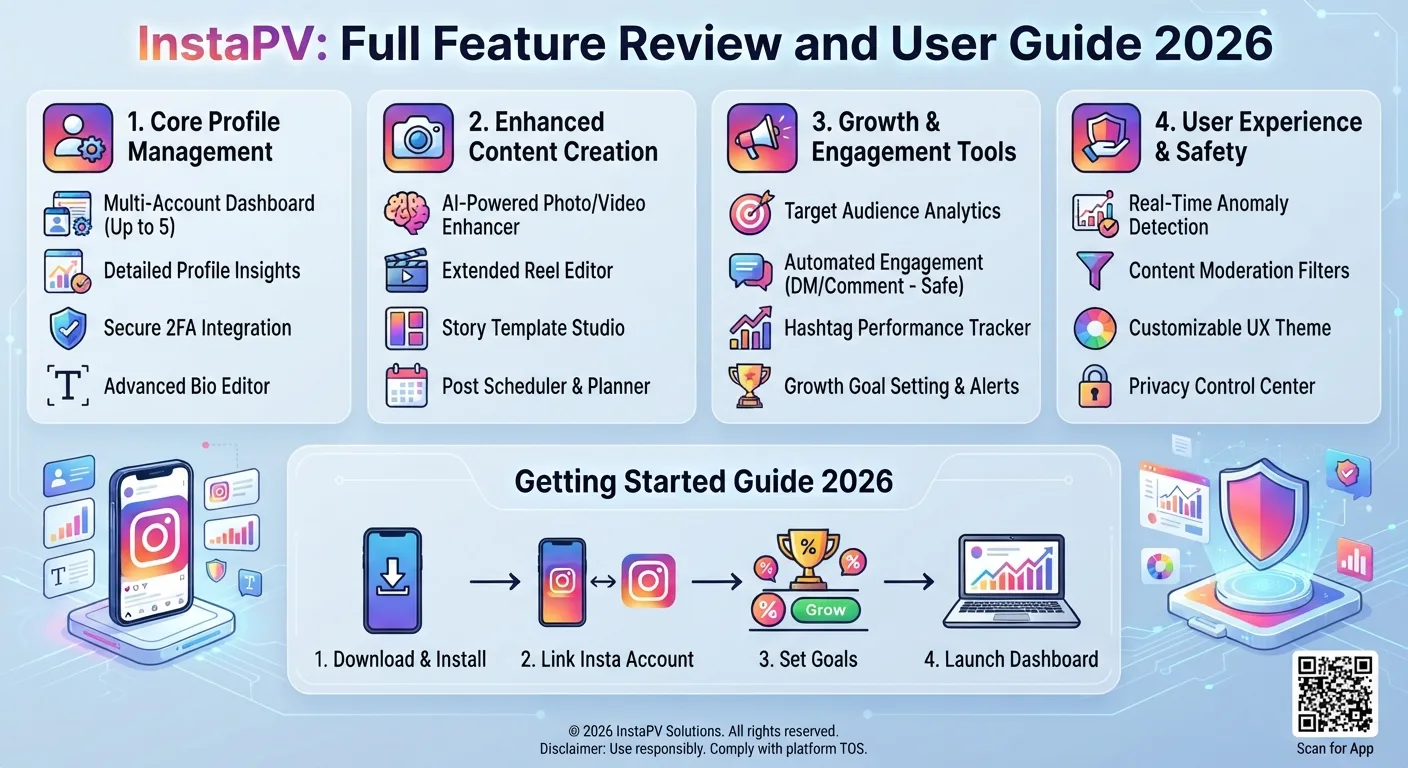
If reviewing a public account through InstaPV, the analytics dashboard provides engagement rate data directly without requiring manual calculation.
Engagement Trend
Beyond the current rate, note whether engagement rate has been trending upward, remaining stable, or declining over recent months. A declining engagement rate even with stable or growing follower count suggests a growing disconnect between what the account is posting and what the audience is genuinely interested in.
Comment Quality
Review comments on recent posts to assess whether they reflect genuine engagement with the content. As discussed in Day 11's fake account guide and Day 12's caption guide, substantive comments that reference the specific content are a stronger signal of genuine engagement than generic single word responses or emojis.
Note the average comment depth, whether comment threads involve multiple exchanges or are mostly single comments with no follow up, and whether the account owner is responding to comments actively.
Save and Share Signals
Where visible, note whether high performing posts in terms of like and comment counts also show strong save signals. Posts with high engagement but very low save rates are connecting emotionally in the moment without providing lasting reference value, which limits their algorithmic longevity.
Part 4: Growth Audit
The growth audit assesses the trajectory of the account rather than its current state.
Follower Growth Trend
Using InstaPV for public accounts or Instagram Insights for owned accounts, review the follower growth trend over the past three to six months. Is the account growing consistently, plateauing, or declining? As covered in Day 5's influencer tracking guide, the trajectory tells a more complete story than the current follower count.
Growth Rate Relative to Niche
Compare the account's growth rate against similar accounts in its niche. Using InstaPV to check the growth trends of two or three comparable accounts in the same space provides the competitive context needed to assess whether the account's growth rate represents strong performance or underperformance for its specific situation.
Follower Quality
Assess the overall quality of the follower base by comparing follower count against engagement rate. Significant underperformance on engagement rate relative to benchmarks for the account's size, combined with any suspicious growth spike patterns visible in the growth chart, suggests a follower quality problem worth investigating using the signals covered in Day 11's fake account detection guide.
Part 5: Stories and Highlights Audit
Stories Activity
Check whether the account posts Stories regularly. As covered in Day 8's Stories best practices guide, consistency in Stories posting is one of the primary factors in maintaining strong Stories bar placement in followers' feeds. An account that posts irregularly or rarely to Stories is missing the daily connection opportunity that the format provides.
Highlights Structure
Review the Highlights section of the profile. As covered in Day 2's Highlights guide, the Highlight structure reveals what the account considers permanently important and functions as a mini-navigation system for new profile visitors.
Check whether Highlights exist, whether they are organized around clear, logical categories, whether covers are visually consistent with the account's overall branding, and whether the content within each Highlight is current and still relevant.
An account with no Highlights is missing a permanent content showcase opportunity. An account with outdated Highlights containing irrelevant old content is creating a negative first impression for new visitors.
Part 6: Posting Consistency Audit
Posting Frequency
Review the last three months of posting history and note the actual posting frequency. Compare this against the account's apparent intended frequency. Gaps of more than a week in posting history are visible to any profile visitor and signal inconsistency that undermines the algorithmic momentum covered in Day 7's algorithm guide.
Posting Time Patterns
Note whether posts appear to be published at consistent, strategic times or at random intervals throughout the day and week. As covered in Day 5's posting time guide, publishing during audience activity peaks improves early engagement, which is critical for algorithmic distribution.
Turning Audit Findings Into an Action Plan
A completed audit produces a list of findings across all six areas. The final step is prioritizing these findings into an action plan.
Categorize findings by impact and effort. High impact, low effort changes, such as updating a vague bio, adding a missing call to action, or saving strong recent Stories to Highlights, should be addressed immediately. High impact, higher effort changes, such as overhauling a content format mix or developing a visual style guide, should be planned and scheduled rather than attempted all at once.
Limit the immediate action list to three to five specific changes rather than trying to address every finding simultaneously. Focused implementation of the highest priority improvements produces better results than attempting a comprehensive overhaul that becomes difficult to sustain.
Frequently Asked Questions
Q: How often should a full profile audit be conducted?
A thorough audit done quarterly catches the gradual drift that happens when no one is stepping back to review the whole picture. Lighter monthly reviews of the content and engagement sections keep ongoing strategy grounded in current data between full audits.
Q: Can I audit a competitor's account using this framework?
Yes, with the caveat that several elements, specifically the engagement rate trend data and growth audit section, require analytics data best accessed through InstaPV for public accounts. Profile, content, visual consistency, and Highlights audits can be conducted through direct profile review.
Q: What is the most commonly overlooked element in a profile audit?
The Highlights section is consistently overlooked in most informal account reviews. Many accounts have outdated, visually inconsistent, or poorly organized Highlights that create a poor first impression for new visitors despite the account investing significant effort in its regular content.
Q: How do I prioritize which audit findings to address first?
Start with the elements that affect every new visitor's first impression: profile picture clarity, bio text clarity, and Highlights structure. These are high impact changes that require relatively low effort and improve conversion from profile visitor to follower immediately. Content strategy and posting consistency improvements follow as the next priority tier.
-
How to Write an Instagram Caption That Gets More Comments
-
Instagram Stories vs Reels vs Posts: Complete 2026 Guide
-
10 Ways InstaPV Helps Social Media Managers Save Time
Conclusion
A structured profile audit done thoroughly surfaces both the quick wins and the deeper strategic gaps that routine content creation never reveals. The six part framework in this guide, covering profile and first impression, content, engagement, growth, Stories and Highlights, and posting consistency, provides a complete picture of where any Instagram account stands and where specific changes will produce the strongest improvement.
The most valuable audits are not those that find the most problems but those that prioritize findings clearly enough to produce a focused, actionable improvement plan that actually gets implemented.
Use InstaPV analytics to support your profile audit with growth and engagement data →