Introduction
Managing Instagram for multiple clients simultaneously creates a specific set of operational challenges that individual account management does not. Research needs to span many accounts and industries at once. Reporting must be professional, consistent, and efficient to produce at scale. Scheduling requires coordination across multiple accounts without confusion. Analytics need to cover both owned accounts and the competitive landscapes surrounding each client. And client communication requires a level of organization and documentation that casual account management never needs.
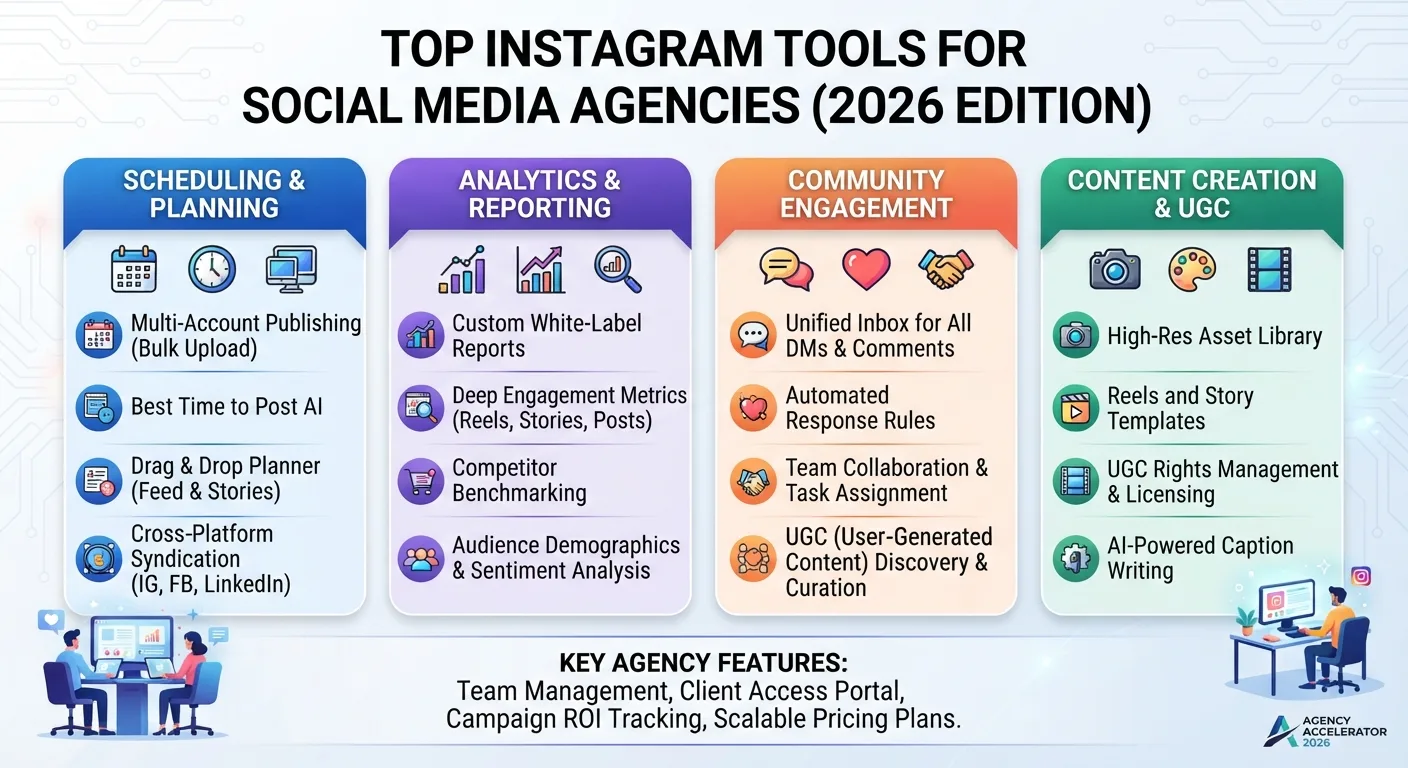
The right tool stack for a social media agency is therefore different from the right tool stack for an individual creator or single-brand social media manager. Agency tools need to handle scale, multi-account management, white-label reporting, team collaboration, and the combination of competitive research and owned account analytics that client service requires.
This guide covers the tools best suited to social media agencies managing Instagram in 2026, organized by functional category and evaluated specifically for agency use cases rather than individual creator or small business use.Instapv
Category 1: Research and Competitive Intelligence
Research is the foundation of client strategy, and the research workload for an agency managing multiple clients across multiple industries is substantially larger than for a single-account manager.
InstaPV Pro
As covered extensively throughout this series, InstaPV is the primary tool for competitive research, influencer evaluation, anonymous Story monitoring, and public account analytics for any public Instagram account. For agencies specifically, the Pro plan's saved profile collections feature addresses the multi-client research challenge by allowing separate collections for each client's competitor sets and tracked accounts.Read blog
The time savings InstaPV generates for agencies are significant, as covered in Day 12's post on how InstaPV helps social media managers. Competitor research that would take thirty to forty minutes of manual Instagram browsing per session takes five to ten minutes through InstaPV's analytics dashboard. Monthly competitive benchmarking data collection for client reports, previously a significant manual effort, is reduced to a quick structured review of saved collections.
For agencies conducting influencer evaluation for client campaigns, InstaPV's combination of anonymous viewing and analytics data makes the vetting process from Day 7's influencer research walkthrough achievable at scale across multiple simultaneous campaigns without revealing the agency's research interest to influencer candidates.
Brandwatch or Mention for Brand Monitoring
As covered in Day 17's brand mentions guide, monitoring where and how brands are being discussed on Instagram requires tools that go beyond InstaPV's profile and content focus. For agencies managing client brand monitoring at scale, dedicated social listening tools that track brand mentions, sentiment, and volume across Instagram and other platforms provide the comprehensive monitoring that manual methods cannot sustain.
Brandwatch, covered briefly in Day 7's analytics tools comparison, provides enterprise-grade social listening at a corresponding price point. Mention provides a more accessible alternative with strong Instagram monitoring capability at a lower price tier that is more accessible for smaller agencies.
Category 2: Scheduling and Content Management
Managing content scheduling across multiple client accounts requires tools designed specifically for multi-account management with appropriate access controls and approval workflows.
Sprout Social
As covered in Day 7's analytics tools comparison, Sprout Social is one of the most comprehensive social media management platforms available and is widely used by agencies for its combination of scheduling, analytics, team collaboration, and client reporting capabilities. Its multi-account management infrastructure, approval workflows, and team permission controls make it particularly well-suited to agency environments where content must pass through review before publishing.
The cost, starting at approximately 249 dollars per month per user as noted in Day 7, places it firmly in the professional agency tier rather than being accessible for individual creators or small businesses.
Later for Mid-Market Agencies
For agencies that do not need Sprout Social's full enterprise capabilities, Later provides solid multi-account scheduling with visual planning features at a more accessible price point. As covered in Day 13's creator tools guide, Later's visual feed planner and link-in-bio tool are particular strengths, and the platform supports the multi-account management needed for small to mid-size agency operations.
Buffer as a Streamlined Alternative
For agencies prioritizing simplicity and cost efficiency over comprehensive feature sets, Buffer provides clean, reliable scheduling with multi-account support. Its interface is less full-featured than Sprout Social or Later but consistently performs the core scheduling function reliably and efficiently.
Category 3: Analytics and Reporting
As covered in Day 20's client reporting guide and Day 24's social media report template, professional Instagram reporting is one of the most time-intensive client deliverables in agency operations. Tools that streamline data collection and report production directly affect agency profitability.
Iconosquare for Deep Analytics
As covered in Day 7's analytics tools comparison, Iconosquare provides some of the deepest owned account analytics available outside of enterprise platforms. For agency clients who need more analytical depth than Instagram's native Insights provides, Iconosquare's historical data depth, industry benchmarking features, and scheduled reporting capabilities make it the strongest dedicated Instagram analytics option at a mid-tier price point.
The per-account pricing structure means costs scale with the number of client accounts being monitored, which is an important consideration for agencies calculating tool costs against client billing.
DataBox or Google Data Studio for Custom Reporting
Agencies that want full control over report design and data presentation often use report-building tools like DataBox or the free Google Looker Studio (formerly Data Studio) to pull data from multiple sources and present it in custom-designed report templates.
These tools require more initial setup time to configure data connections and design report templates, but once configured they dramatically reduce the ongoing time cost of producing consistent monthly reports across many clients. A well-configured report template can produce a complete client report in minutes once the data connections are established rather than hours of manual data collection and formatting.
InstaPV for Competitive Context in Client Reports
As covered in Day 20's client reporting guide, InstaPV's public account analytics provide the competitive context section data that client reports require. For agencies producing reports for many clients, the CSV export functionality in InstaPV Pro and the organized saved collections by client make the competitive data collection for monthly reports significantly more efficient than manually researching each client's competitor set individually.
Category 4: Influencer Marketing Management
Agencies running influencer campaigns for clients require tools that handle the influencer identification, evaluation, outreach, campaign management, and performance tracking that influencer marketing at scale requires.
InstaPV for Influencer Evaluation
The influencer evaluation process covered in Day 7's influencer research walkthrough and Day 25's rising influencer guide is the foundation of any influencer campaign before any other tool engagement. InstaPV's combination of anonymous viewing and analytics data makes the evaluation phase efficient and comprehensive without creating premature visibility with candidates.
Influencer Marketing Platforms for Campaign Management
Once influencers have been evaluated and campaigns are being managed actively, dedicated influencer marketing platforms provide the outreach management, contract tracking, content review, and performance reporting that manual campaign management cannot handle efficiently at scale.
Platforms like Grin, Creator.co, and Aspire provide varying levels of functionality for influencer campaign management, with pricing and feature sets suited to different agency sizes and campaign volumes. The specific platform choice depends on the agency's typical campaign size, the volume of influencer relationships managed simultaneously, and the level of integration needed with other agency tools.
Category 5: Client Management and Communication
Agencies need to manage client relationships, project deliverables, and communication across multiple simultaneous client engagements in ways that individual account managers do not.
Project Management Tools
Asana, Monday.com, or Trello provide the project management infrastructure for organizing client deliverables, tracking content calendar deadlines, managing approval workflows, and ensuring nothing falls through the cracks across multiple simultaneous client engagements.
For Instagram-specific content planning, these project management tools house the content calendar frameworks covered in Day 13's content calendar guide, providing the centralized planning infrastructure that keeps multi-client content production organized.
Client Communication and Documentation
Tools for professional client communication, whether dedicated client portal platforms or document-sharing and communication tools, provide the structured client relationship infrastructure that distinguishes professional agency operations from informal account management arrangements.
Clear documentation of strategies, decisions, and agreed-upon metrics in accessible formats protects both the agency and the client by creating a shared reference point for evaluating performance and managing expectations.
Building the Agency Tool Stack: Tiered Recommendations
Different agency sizes and operational models need different tool stacks. The following tiered recommendations organize the tools above by agency scale.
Starter Agency Stack (One to Three Clients)
For agencies just getting started with a small client base, a minimal stack covers the essential functions without investment in enterprise-tier tools.
InstaPV Pro for all competitive research, influencer evaluation, and client report competitive context. Instagram Insights for owned account analytics on client accounts. Later for scheduling and visual content planning. Google Looker Studio free for custom report templates. A free project management tool for deliverable tracking and client communication.
This stack costs modestly in monthly tool subscriptions while covering the core agency functions for a small client base.
Growth Agency Stack (Four to Ten Clients)
As agency operations grow and client volume increases, additional tools become justified by the efficiency they provide.
InstaPV Pro with organized client collections for all competitive research. Iconosquare for deeper owned account analytics across client accounts. Sprout Social or Later at an appropriate plan level for multi-account scheduling with team collaboration features. A dedicated social listening tool like Mention for brand monitoring across multiple client brands. DataBox or Google Looker Studio with configured data connections for efficient report production. A professional project management tool for deliverable tracking.
Enterprise Agency Stack (Ten-Plus Clients)
At significant client volume, enterprise-tier tools that minimize per-client manual work become cost-justified by the operational efficiency they provide.
InstaPV Pro at maximum capacity for competitive research across all client competitive landscapes. Sprout Social at enterprise tier for fully integrated scheduling, analytics, and reporting across all client accounts. Brandwatch for comprehensive social listening and brand monitoring at enterprise scale. An influencer marketing platform for managing influencer campaigns at volume. Full project management and client portal infrastructure for organized multi-client operations.
Tool Evaluation Criteria for Agency Selection
When evaluating any tool for agency use, several criteria matter more in the agency context than in individual or small business use.
Multi-Account Management
Can the tool efficiently manage multiple separate client accounts without confusion between accounts? Tools designed primarily for single-account use often create significant friction in multi-account agency environments.
Team Access and Permissions
Can different team members have appropriate access levels without requiring individual logins to each client account? Team management features that allow role-based access control are essential for agencies with multiple staff members working across multiple client accounts.
White-Label Reporting
Can reports be produced under the agency's branding rather than the tool's branding? White-label reporting capability matters for agencies that present analytics reports to clients as agency-branded deliverables.
Scalability of Pricing
Does the pricing structure allow cost-efficient scaling as the agency grows? Per-account pricing structures can become expensive as client volume grows, while flat-rate pricing becomes more cost-efficient at scale.
Integration with Other Tools
Does the tool integrate with other tools in the agency stack through APIs or native integrations? Tools that connect well with the rest of the stack reduce the manual data transfer between platforms that creates both operational friction and error risk.
-
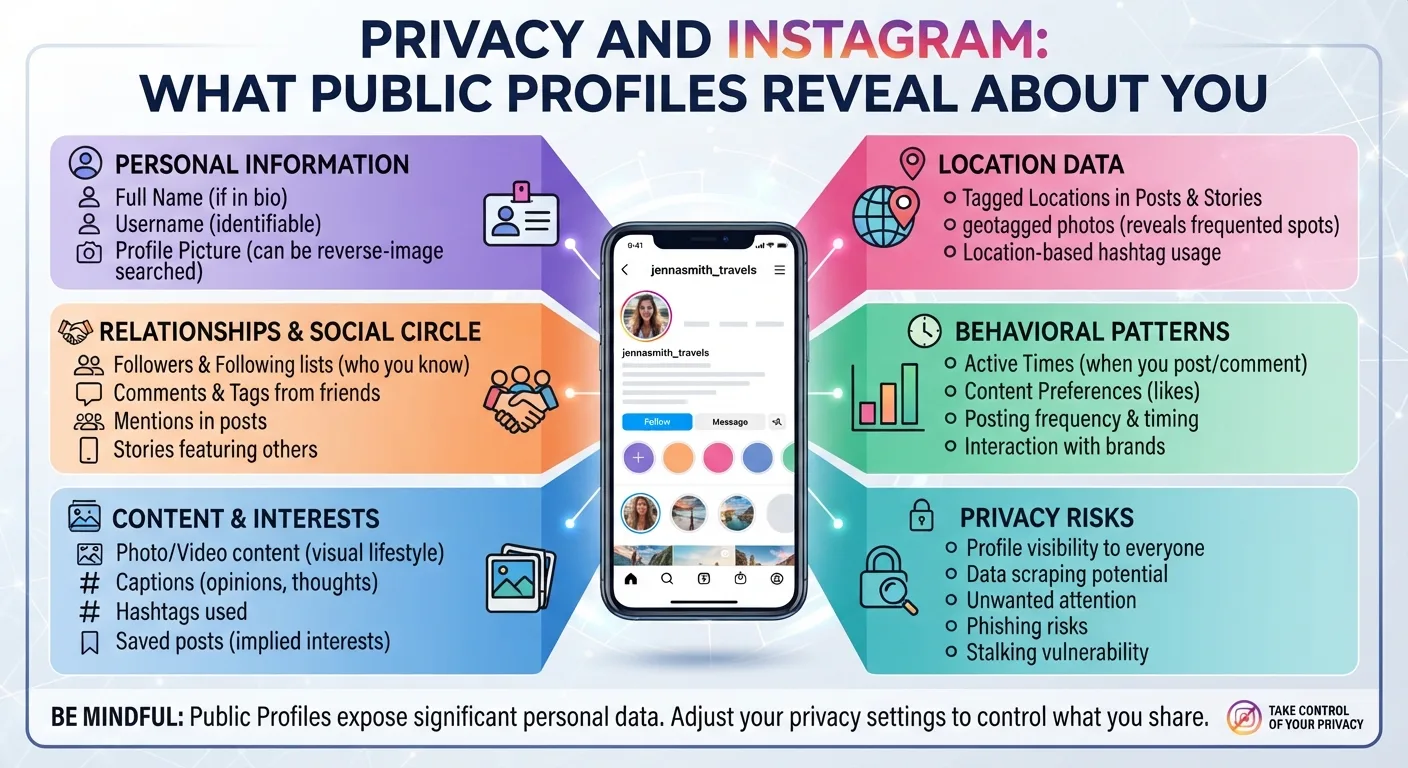
Privacy and Instagram: What Public Profiles Reveal About You
-
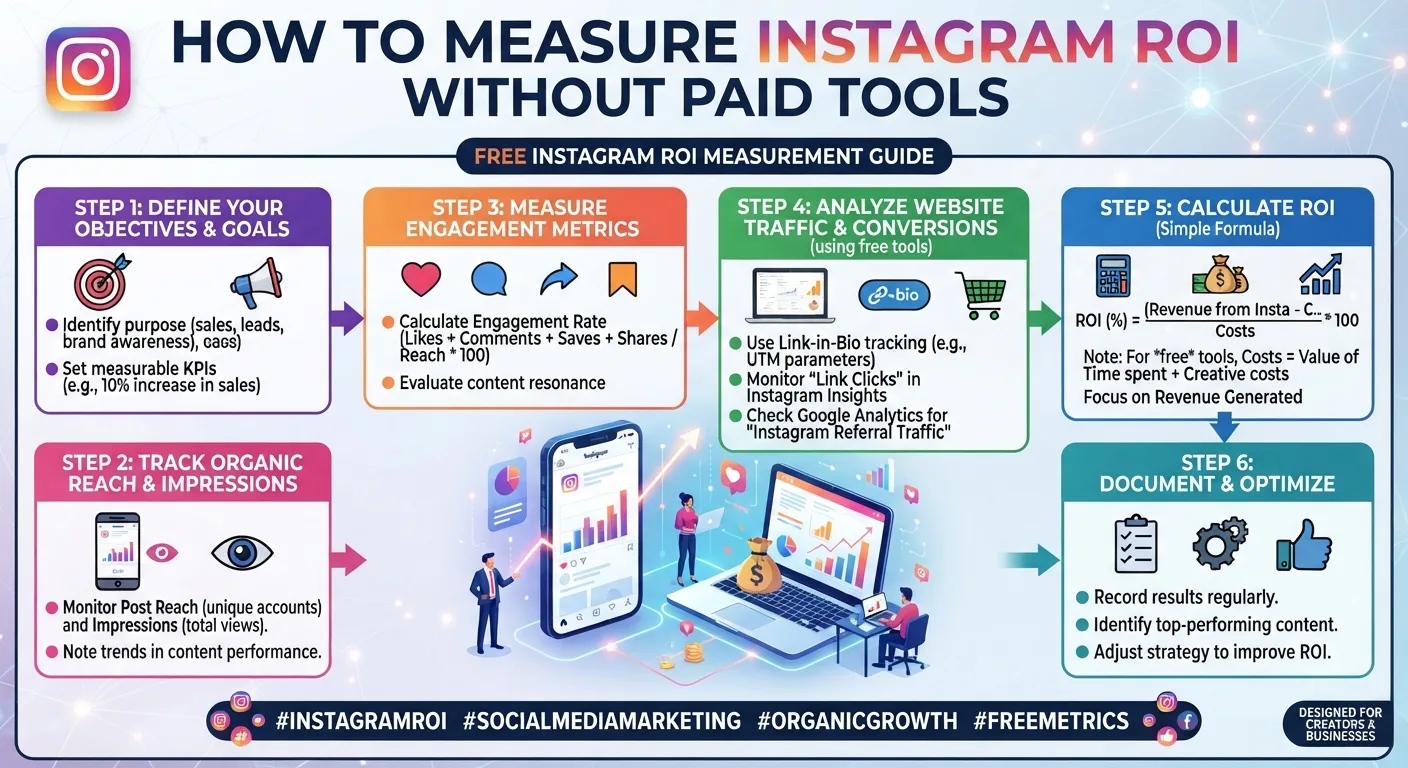
How to Create an Instagram Audit Report for Free
-
Instagram for Fitness Influencers: Analytics, Growth, and Monetization
Frequently Asked Questions
Q: How much should a social media agency budget for tools per month?
Tool costs for social media agencies typically run between five and fifteen percent of monthly revenue, though this varies significantly by agency size, service offering, and tool selection. Larger agencies with more clients see the percentage decline as fixed tool costs are spread across more revenue. Smaller agencies may need to keep tool spend lean by prioritizing free and low-cost options until revenue justifies investment in more comprehensive platforms.
Q: Should agencies use the same tools for all clients or customize the stack per client?
A consistent core tool stack across all clients creates operational efficiency through team familiarity, consistent processes, and consolidated billing. Client-specific tool customization is appropriate primarily when a specific client's needs clearly require capabilities the standard stack does not cover, such as a client in a regulated industry requiring specific compliance features not available in the standard tool set.
Q: How do agencies handle client access to analytics tools without compromising account security?
Best practice for agencies is to maintain tool access centrally rather than sharing login credentials with clients. Reporting can be shared with clients through export features, shared dashboards, or client portal tools that provide view-only access to specific data without granting full account access.
Q: Is InstaPV appropriate for agency use across multiple clients?
Yes. InstaPV Pro's saved collections feature is specifically useful for multi-client agency environments, allowing separate organized collections per client for competitor sets, tracked accounts, and influencer candidates. The unlimited search capability at the Pro level handles the higher search volume that multi-client agency research generates compared to single-account use.
Conclusion
The right agency tool stack in 2026 combines InstaPV Pro for research and competitive intelligence, a multi-account scheduling platform appropriate to agency scale, dedicated analytics tools for deeper owned account performance data, a social listening tool for brand monitoring at volume, and project management and client communication infrastructure for organized multi-client operations.
The specific tools within each category should be selected based on the agency's current client volume, the specific services offered, the team size and collaboration needs, and the budget available at the current stage of growth. Starting lean with the minimum effective stack and adding tools as specific operational needs emerge is more efficient than investing in comprehensive enterprise platforms before the agency's scale justifies the cost.
Use InstaPV Pro for all your agency client research and competitive intelligence needs →