Introduction
Social media research has become a standard component of candidate due diligence for many recruiting and hiring teams. LinkedIn provides professional history and network information. Twitter and other platforms reveal communication style and public commentary. And Instagram, as one of the most widely used social platforms, provides a window into public personal presentation that complements the professional picture built from other sources.
The challenge for recruiters conducting Instagram research is one that runs through this entire series: doing it through an official Instagram account creates visibility. When a recruiter views a candidate's Stories or visits their profile while logged into a company account, those visits can appear in the candidate's viewer lists and profile activity signals. For research that is still at an early and informal stage, this premature visibility can create awkward dynamics, change candidate behavior before an interview, or raise questions about the scope of the research being conducted.
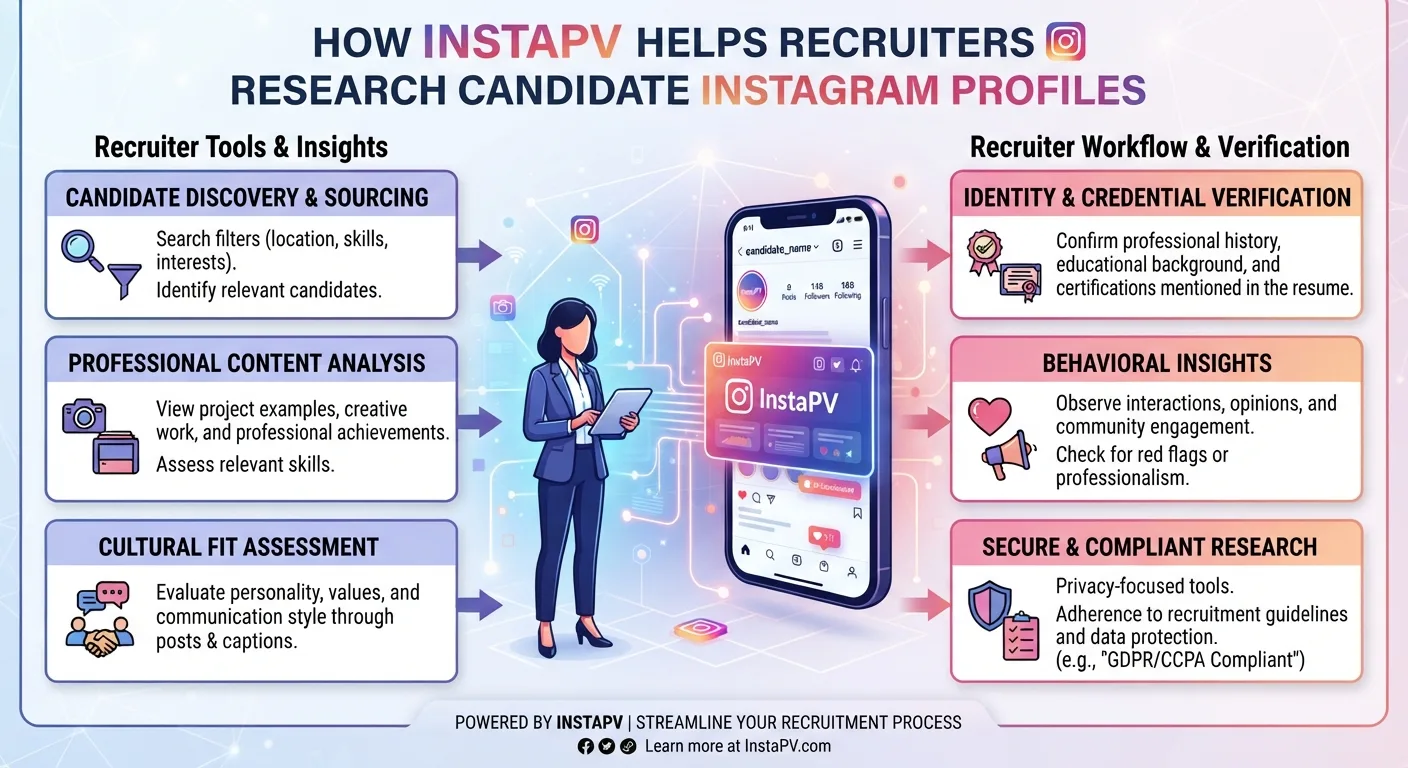
InstaPV addresses this by providing anonymous access to publicly available Instagram content from any public account, which is precisely the tool that makes professional, discreet Instagram candidate research practical.
The Legal and Ethical Context for Candidate Instagram Research
Before getting into how InstaPV supports recruiter research, it is worth addressing the legal and ethical context within which candidate social media research operates, since this is more complex than general public research.
What Is and Is Not Appropriate
Researching publicly available information from a candidate's public Instagram account falls within the same general framework as other public records research: information that a person has voluntarily made publicly available is accessible for legitimate research purposes.
However, recruiting research has specific dimensions that general research does not share. Employment law in many jurisdictions imposes constraints on what information employers can use in hiring decisions, specifically regarding protected characteristics including race, religion, national origin, age, disability status, pregnancy status, and sexual orientation.
A recruiter who conducts Instagram research and encounters information about a candidate's protected characteristics, which may be visible on a public Instagram account through posts, comments, or profile content, creates a legal complication if the candidate is subsequently not hired. The concern is not necessarily that the protected characteristic information caused the decision, but that the recruiter can no longer demonstrate that it did not, since the research occurred.Read blog
Many legal and HR professionals therefore recommend that Instagram research be conducted by someone other than the final hiring decision maker, that specific protocols be in place documenting what is and is not considered in the research, and that research focus on professional conduct relevance rather than personal life visibility.
This guide covers the legitimate uses of InstaPV for recruiter research within this ethical and legal framework. Anyone using Instagram research as part of a hiring process should consult their organization's legal counsel and HR policies for guidance specific to their jurisdiction and situation.
What Makes Instagram Research Professionally Legitimate
The most defensible recruiter Instagram research focuses on factors directly relevant to professional conduct and role requirements: public communication style, evidence of professional expertise or creative work, alignment between the candidate's public personal brand and the role's requirements, and any public content that would be directly relevant to their ability to perform the role.
For roles where social media presence is itself relevant, such as social media managers, marketing professionals, content creators, public relations roles, and communications positions, Instagram research is particularly natural since the candidate's public Instagram presence is itself a demonstration of skills and judgment directly relevant to the role.
How Recruiters Use InstaPV for Candidate Research
Anonymous Profile Review
The core use case is viewing a candidate's public Instagram profile without creating any signal visible to the candidate. InstaPV's anonymous access ensures that the recruiter's interest in the candidate's profile does not appear in any Instagram notification or viewer list.
For research at early stages of a hiring process, this anonymity allows for genuine due diligence before the recruiter and candidate have entered a formal relationship where such research might feel intrusive or change the dynamic of the process.
Story and Highlight Viewing
For candidates with active public Stories and Highlights, these provide additional context beyond the curated feed. As covered throughout this series, Stories tend to be more candid and less curated than feed content, which can provide insight into communication style, personality, and professional conduct that the carefully managed feed does not always reveal.
Highlights in particular can be revealing for candidates whose personal brand is relevant to the role. A social media manager candidate whose Highlights show poor organization, inconsistent aesthetic, or low engagement quality is demonstrating something directly relevant to their professional capability regardless of what their resume claims.
Using InstaPV to view Stories and Highlights anonymously before a formal interview means the recruiter can be more specifically informed about the candidate's public presence without having tipped off the candidate to the research.
Assessing Alignment Between Candidate Claims and Public Presence
Candidates for social media, content, marketing, and communications roles often make specific claims about their Instagram expertise, follower counts, or content quality in their applications. InstaPV allows recruiters to verify these claims quickly.
A candidate who lists Instagram expertise on their resume but whose own public account shows minimal engagement, inconsistent content, or limited evidence of the skills they claim can be assessed against this public evidence before investing interview time. Conversely, a candidate whose public account demonstrates genuine expertise, strong engagement, and professional-quality content provides additional evidence that their application claims are credible.
Specific Research Applications by Role Type
Social Media and Digital Marketing Roles
For these roles, a candidate's personal Instagram presence is itself a portfolio demonstration. As covered in Day 11's personal brand guide, a strong personal brand on Instagram demonstrates the same skills the role requires: content strategy, audience understanding, visual consistency, engagement building, and platform fluency.
Recruiters evaluating candidates for social media roles can use InstaPV to review:
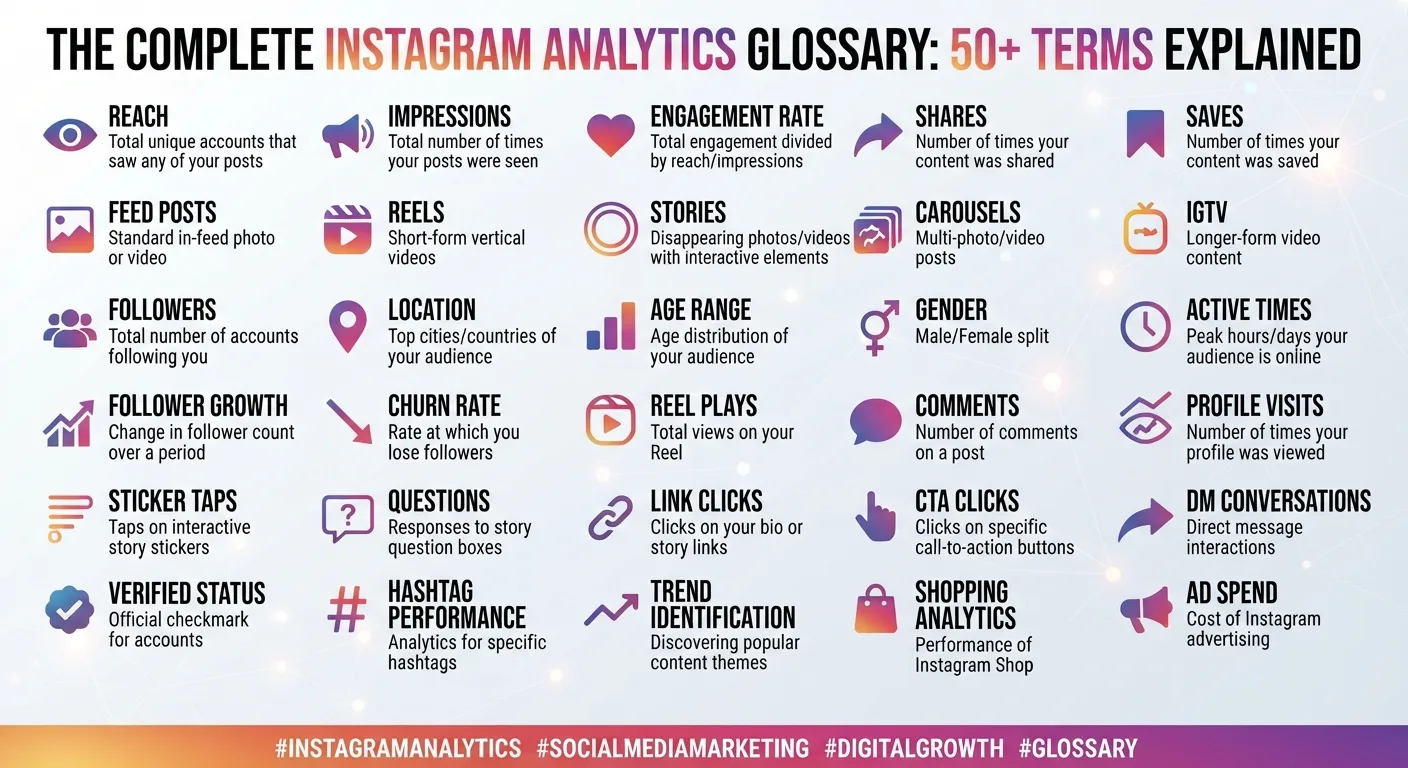
The candidate's follower growth trend, which reveals whether their own account is growing or plateauing and what their actual audience-building track record looks like in practice. Engagement rate relative to account size, using InstaPV's analytics, which provides evidence of genuine audience relationship quality rather than just follower count. Content consistency and visual quality, which demonstrates aesthetic judgment and execution capability. Caption and community engagement quality, which reveals communication style and audience relationship approach.
These analytics-based assessments complement resume claims and portfolio submissions with independent, data-backed evidence of actual Instagram performance.
Creative and Content Roles
For designers, photographers, videographers, writers, and other creative professionals, Instagram often serves as a portfolio channel. Reviewing a candidate's Instagram content through InstaPV allows assessment of portfolio quality, aesthetic sensibility, and consistency of execution in a way that is more revealing than a curated portfolio submission, since the public Instagram account represents the candidate's ongoing work rather than selected showcase pieces.
Leadership and Executive Roles
For senior roles where public presence and professional reputation matter, reviewing a candidate's public Instagram activity reveals how they present themselves publicly and how they communicate in less formal contexts than traditional professional channels.
This is particularly relevant for roles where the candidate will represent the organization publicly, where their personal reputation will reflect on the organization, or where their communication style in public contexts is directly relevant to their ability to perform leadership responsibilities effectively.
Customer-Facing Roles
For roles where candidates will regularly interact with customers, clients, or the public, their public social media communication style provides evidence of how they conduct themselves in public-facing contexts. Communication quality, tone, responsiveness to comments, and general public conduct visible on a public Instagram account are all relevant to assessment of customer-facing capability.
Building a Consistent Research Protocol
For organizations that conduct Instagram research regularly as part of their hiring process, building a consistent protocol prevents the inconsistency and potential legal liability that ad hoc research approaches create.
Define What Will Be Researched
Establish in advance what specific aspects of a candidate's public Instagram presence will be assessed and what criteria will be used to evaluate each aspect. Consistency across candidates in the same role category prevents any appearance of selective research that could suggest discriminatory intent.
Document What Was Found and How It Was Used
Record what was reviewed, what was found, and specifically how each finding was relevant to the role requirements. This documentation creates a defensible record that hiring decisions were based on legitimate professional conduct factors rather than protected characteristic information that may have been incidentally visible.
Maintain Separation Between Research and Decision
Where possible, have the Instagram research conducted by someone other than the final hiring decision maker, with a documented summary of relevant findings that filters out protected characteristic information before reaching the decision maker. This separation creates a cleaner process from a legal risk perspective.
Apply Research Consistently
Research all candidates at the same stage of the process, not selectively applying Instagram research to some candidates and not others in ways that could appear discriminatory. Consistency is both ethically appropriate and legally protective.
What InstaPV Can and Cannot Access for Candidate Research
As established throughout this series, InstaPV provides access to publicly available content from public Instagram accounts. This applies equally in the recruiting context.
What Is Accessible
Public profile information, feed posts, Reels, Highlights, and active Stories from any public account are accessible through InstaPV. Analytics data including follower growth trends and engagement rates for any public account are also available.
What Is Not Accessible
Private account content is not accessible. If a candidate has set their Instagram account to private, their content is not available through any legitimate research tool. Content in Direct Messages and private Stories visible only to Close Friends is not accessible. Any private analytics data that only the account owner can see through Instagram Insights is not accessible.
-
How to View Archived Instagram Posts and Stories (2026 Guide)
-
Social Media Report Template: How to Present Instagram Data
-
Instagram Collaboration Features: How They Work and What to Track
Frequently Asked Questions
Q: Can a candidate tell if a recruiter has researched their Instagram through InstaPV?
No. InstaPV's anonymous access generates no signal visible to the account owner. A candidate cannot see that their public profile was accessed through InstaPV, which is the specific feature that makes it practical for professional research situations where premature visibility would be problematic.
Q: Should recruiters tell candidates they will research their Instagram?
This depends on organizational policy, jurisdiction-specific requirements, and the specific role. Some organizations proactively inform candidates that social media research is part of their due diligence process, which is transparent and allows candidates to ensure their public content reflects their professional best. Others conduct research without advance notice as a standard component of background research on public information. Legal and HR guidance specific to the organization and jurisdiction is the appropriate source for this policy decision.
Q: What if a candidate's Instagram account is private?
A private account means the candidate has chosen to restrict their Instagram content to approved followers, which is entirely their right. For most roles, a private account simply means Instagram research is not available as an information source, and the recruiter relies on other research methods and the interview process itself. For roles where public social media presence is itself a job requirement, a candidate's choice to keep their Instagram private may be directly relevant to their candidacy.
Q: Is it appropriate to consider Instagram content in hiring decisions for non-social-media roles?
This depends significantly on what specific content is being considered and how directly it is relevant to role requirements and professional conduct. Content that reveals information about a candidate's protected characteristics should not be used in hiring decisions as noted above. Public content that reveals professional conduct directly relevant to role requirements, such as communication style, judgment in public contexts, or consistency between application claims and actual practice, has more defensible relevance. Organizations should establish clear policies on this question with appropriate legal guidance.
Conclusion
Instagram research has become a practical component of candidate due diligence for roles where public social media presence is professionally relevant. InstaPV's anonymous access to publicly available Instagram content makes this research practical without the awkward dynamic of a company account appearing in a candidate's viewer lists during early-stage research.
The most professionally appropriate and legally defensible Instagram candidate research focuses on publicly available content, applies consistent protocols across candidates, documents findings and their relevance to role requirements, and operates within the legal framework governing employment decisions in the relevant jurisdiction.
For social media, marketing, creative, and communications roles specifically, a candidate's public Instagram presence provides genuinely relevant evidence of the skills and judgment the role requires, making Instagram research a particularly natural component of candidate assessment.
Research any public Instagram account anonymously on InstaPV →