Introduction
A personal brand on Instagram is not about becoming famous. It is about becoming known and trusted for something specific by the right people. A freelance designer who becomes the go-to resource for branding tips in their niche has built a personal brand. A nutritionist who builds a following of people who genuinely trust their dietary guidance has built a personal brand. A local business owner who becomes a recognizable, respected voice in their community has built a personal brand.
The scale matters less than the specificity and the trust. A personal brand that means something to 5,000 highly relevant people is more valuable, for most practical purposes, than a large following of people with no particular reason to trust or act on what you say.
This guide covers the complete process of building a personal brand on Instagram from nothing, addressing the decisions that matter most at each stage.Instapv
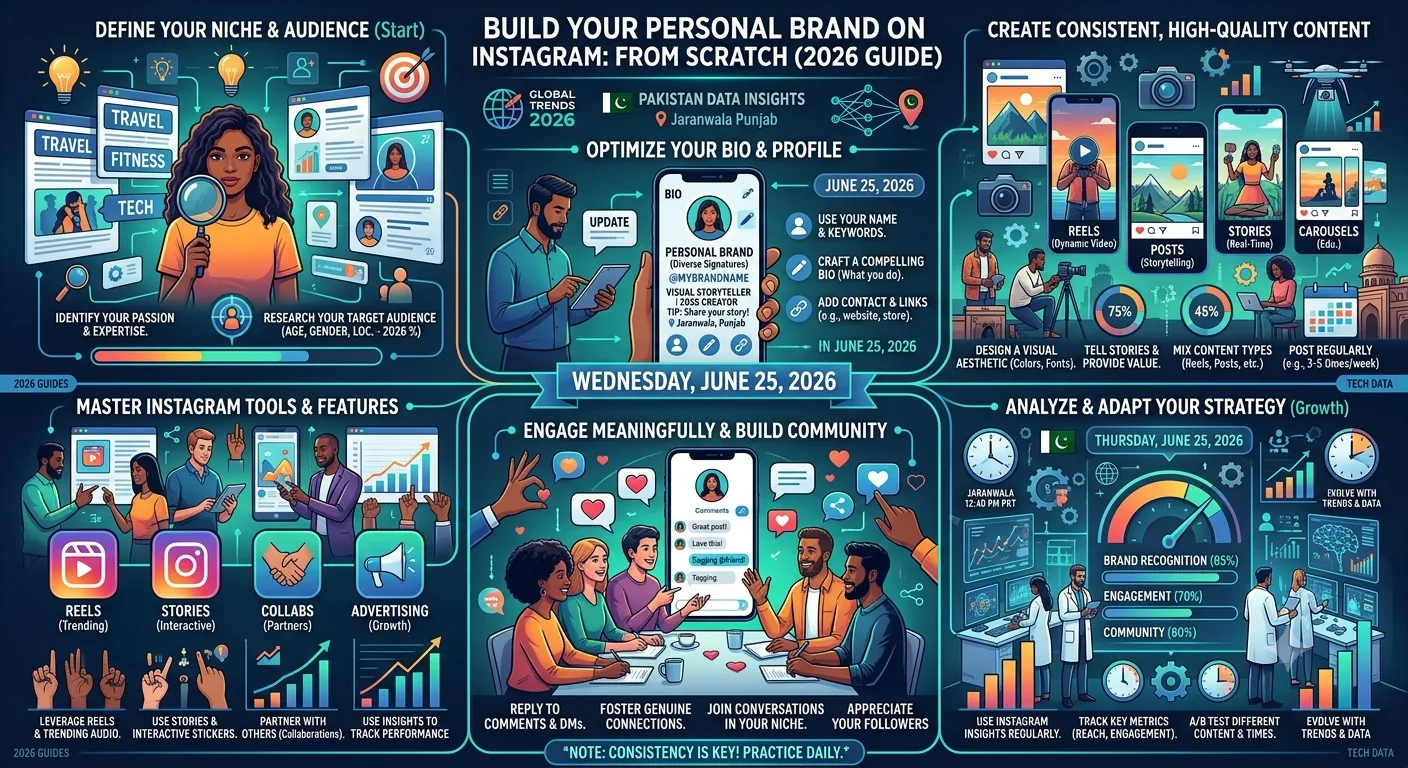
Stage 1: Clarify Your Positioning Before You Post Anything
The most common mistake people make when starting a personal brand on Instagram is beginning to post before they have answered the foundational positioning questions. Content created without clear positioning tends to be unfocused, inconsistent, and ineffective at attracting the specific audience the person is trying to reach.
Define What You Want to Be Known For
This is the most important decision in personal brand building and deserves serious thought rather than a quick answer. The question is not what you are interested in or what you know about. It is what specific value you want to provide to a specific audience through your Instagram presence.
Being known for something specific is far more powerful than being known for something broad. Being the person who helps first generation professionals navigate corporate environments is more powerful than being a generic career coach. Being the creator who makes sourdough accessible for beginners is more powerful than being a general food account. Specificity creates memorability and makes it easier for the right people to self select into your audience.
Define Your Specific Audience
Specify exactly who you are creating content for. The more precisely you can describe this person, including what they care about, what problems they face, what they are trying to achieve, and what kind of content they respond to, the more effectively you can create content that genuinely resonates with them.
Broad audience definitions produce broad content that resonates weakly with everyone. Specific audience definitions produce focused content that resonates strongly with the right people.
Define Your Unique Angle
Most niches on Instagram already have established voices. Your unique angle is what differentiates your perspective from others in the same space. It might be your specific professional background, your personal experience navigating a particular challenge, your methodology or framework, your communication style, or the specific sub-audience within a broader niche that you serve.
You do not need to be the only person talking about a topic. You need to have a perspective that is distinctly yours and that serves your specific audience in a way that is not exactly replicated elsewhere.
Stage 2: Set Up Your Profile for Your Brand
With positioning clarity established, setting up your profile is a matter of translating that positioning into every profile element as covered in Day 6's bio optimization guide.
Your display name should include your name and your primary keyword or specialty. Your bio text should communicate what you do, who you serve, and what someone gets from following you. Your profile picture should be a clear, professional headshot that will remain recognizable at small sizes. Your link should go to the most relevant destination for someone who just discovered your account and wants to learn more.
Every profile element should communicate the same positioning. A visitor who reads your bio and then looks at your content should encounter a consistent message about who you are and what you offer.
Stage 3: Define Your Content Pillars
As covered in Day 10's small business guide, content pillars are the two to four core themes that define what you consistently post about. For a personal brand, these pillars should directly reflect your positioning and the specific value you are delivering to your defined audience.
A personal finance educator targeting young professionals might organize their pillars around investing basics, debt management, career income growth, and personal finance mindset. A UX designer building a personal brand might organize around design critique and analysis, career development for designers, tool tutorials, and industry insights.
Your pillars should be specific enough to give your content direction but broad enough to provide variety across a consistent theme. Content pillars prevent the common personal brand problem of running out of ideas after the first few weeks, since each pillar generates its own ongoing stream of relevant content directions.
Stage 4: Create Your First Ten Posts Thoughtfully
Your first ten posts function as a portfolio for anyone who discovers your account in the early months. They set the visual tone, establish your voice, and demonstrate the value of following before there is much of a following at all.
Prioritize depth and genuine usefulness over frequency in this early stage. A set of ten genuinely useful, well crafted posts that demonstrate your expertise and perspective clearly is far more effective for attracting the right early followers than a high volume of rushed content.
For each of these initial posts, consider whether it clearly demonstrates your positioning, whether it delivers genuine value to your defined audience, and whether it represents the kind of content you want to be known for over the long term.
Stage 5: Develop a Consistent Visual Identity
Visual consistency is one of the most recognizable signals of a deliberate personal brand versus a casual account. As noted in Day 10's analysis of the most followed accounts, visual consistency that makes content immediately recognizable is a feature of virtually every major personal brand on the platform.
Developing a simple visual style guide before creating content prevents the inconsistency that comes from making new visual decisions for every post. Your style guide should cover your color palette, your typography if you use text overlays, your photography or graphic style, and any recurring format templates you use for specific content types.
This does not require design expertise. Choosing two or three colors that appear consistently across your content, maintaining consistent framing and lighting in photography, and using a consistent font for text overlays is enough to create the visual coherence that distinguishes a personal brand from random posting.
Stage 6: Build Your Posting Rhythm
As covered throughout this series, consistency matters more than frequency for building algorithmic momentum and audience expectation. For a personal brand being built alongside other professional commitments, a realistic posting rhythm might be three to four feed posts per week plus daily or near daily Stories.
The key is choosing a rhythm you can maintain through busy periods rather than one that requires peak availability at all times. A content calendar built two weeks in advance, as covered in Day 10's content planning guide, makes consistent posting significantly more manageable.
Stage 7: Grow Through Genuine Engagement
In the early growth stage, genuine engagement with other accounts in your niche and with your target audience is one of the most effective organic growth activities available.
Leaving substantive, specific comments on posts from accounts your target audience also follows puts your name and perspective in front of exactly the right people. Engaging with content from larger accounts in your niche gives you visibility in their comment sections where their audience congregates.
This is not about commenting everywhere as a volume tactic. It is about showing up consistently in the specific spaces where your target audience is already active and contributing genuinely to conversations in a way that reflects your positioning and perspective.
Stage 8: Use Collaborations to Accelerate Growth
As covered in Day 4's growth hacks post and Day 8's micro-influencer guide, collaborations with complementary accounts are one of the most effective organic growth mechanisms available to personal brands at any size.
For personal brands specifically, collaborations work best when they involve genuine intellectual or creative contribution rather than simple cross promotion. A joint Instagram Live, a collaborative carousel where two perspectives are presented together, or a co-created piece of educational content provides more value to both audiences than a simple mutual mention.
Identify three to five accounts in adjacent spaces whose audience overlaps with yours without directly competing for the same positioning and consider what kind of genuinely valuable collaborative content you could create together.
Stage 9: Monetize Strategically
Monetization for personal brands on Instagram typically evolves through several stages, and trying to monetize too early before genuine audience trust is established usually undermines the trust that makes monetization possible in the first place.
The most common monetization paths for personal brands include sponsored content partnerships with brands relevant to your niche and audience, selling your own products or services directly to your Instagram audience, affiliate partnerships where you earn commission on products you genuinely recommend, digital products such as guides, templates, or courses that systematize your expertise, and consulting or coaching arrangements driven by the credibility your personal brand establishes.
The common thread across all effective personal brand monetization is alignment between the monetization and the positioning. Recommending products that directly serve your audience's primary needs and challenges feels like an extension of your value delivery. Recommending products simply because they pay well feels like a betrayal of audience trust and damages the personal brand that made the monetization possible.
Stage 10: Track Your Growth and Adjust
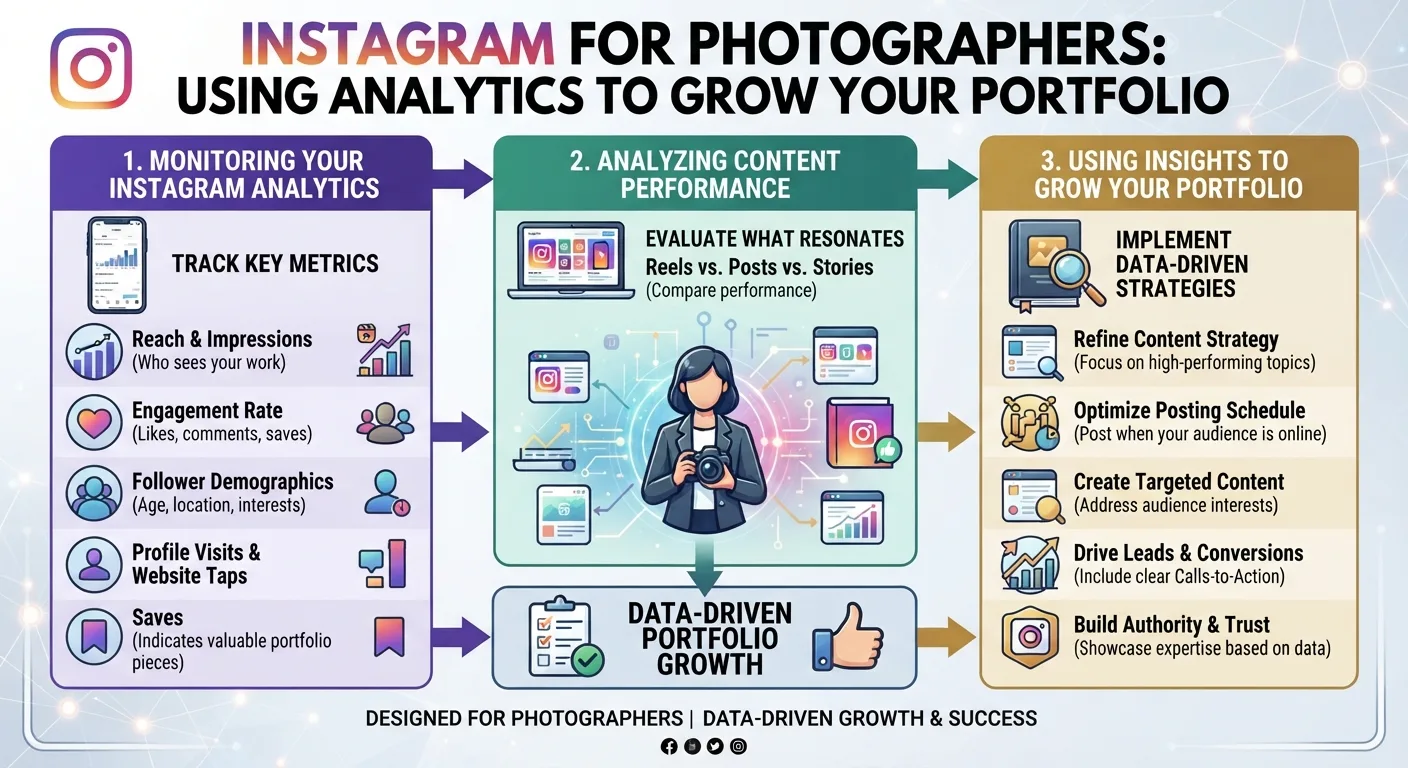
As covered in Day 10's analytics planning guide, using analytics to inform content decisions closes the feedback loop that makes a personal brand progressively more effective over time.
For personal brands specifically, engagement quality is often a more meaningful metric than engagement quantity. A hundred thoughtful comments from people describing how your content changed their thinking or practice is worth more than a thousand generic likes from people who scrolled past your post and tapped without registering the content.
Track engagement quality alongside engagement rate. Track profile visits to follower conversion as a measure of how well your profile communicates your value. Track any measurable downstream outcomes, such as website visits, email signups, or direct messages from potential clients, that connect your Instagram presence to actual business results.
Common Personal Brand Mistakes
Trying to appeal to everyone rather than serving a specific audience precisely is the most fundamental personal brand mistake. Every decision to broaden your positioning reduces the depth of resonance with any specific audience.
Being inconsistent with your positioning by posting off topic content dilutes the clarity of what your account stands for. An occasional personal post that humanizes you without abandoning your positioning is different from regularly posting content that has no clear connection to what you want to be known for.
Waiting until everything is perfect before starting is a form of resistance that prevents many potential personal brands from ever beginning. The clarity that comes from posting, observing what resonates, and adjusting based on real audience response is not available to people who wait until everything is already clear before they begin.
Monetizing too early or with misaligned partnerships damages the audience trust that is the entire foundation of personal brand value. The temptation to take early paid opportunities should always be evaluated against whether accepting them reinforces or undermines the positioning and trust you are building.
-
The Best Instagram Reels Strategy for 2026 (Data-Backed)
-
How to Check If an Instagram Account Is Fake or Real
-
Instagram Audience Demographics: How to Understand Your Followers
Frequently Asked Questions
Q: Do I need to show my face to build a personal brand on Instagram?
No. Many successful personal brands are built primarily through text, graphic, or audio content without heavy reliance on face to camera content. However, showing your face does tend to accelerate the trust building that is central to personal brand development, so if it is comfortable for you, incorporating some face to camera content is generally worth doing even if it is not the primary format of your account.
Q: How long does it take to build a meaningful personal brand on Instagram?
Building a personal brand that generates meaningful results typically takes six to eighteen months of consistent, focused effort. The early months involve establishing positioning clarity and building a content foundation. Growth compounds gradually through the middle period. Meaningful results in terms of audience size, engagement quality, and monetization potential typically become visible somewhere in the six to twelve month range for accounts maintaining a consistent, focused strategy.
Q: Should I niche down even if it feels limiting?
Yes. The fear that niching down limits your audience is almost always the reverse of what actually happens. A specific, clear positioning attracts a dedicated audience much more effectively than broad positioning that resonates weakly with many different potential audiences. You can always broaden strategically once a strong foundation is established. Starting broad makes building that foundation significantly harder.
Q: How do I research what is working for personal brands in my niche?
Using InstaPV to review the content, growth trends, and engagement patterns of successful personal brands in your space gives you a current picture of what is resonating with the audience you are trying to reach, without requiring you to figure everything out through trial and error alone.
Conclusion
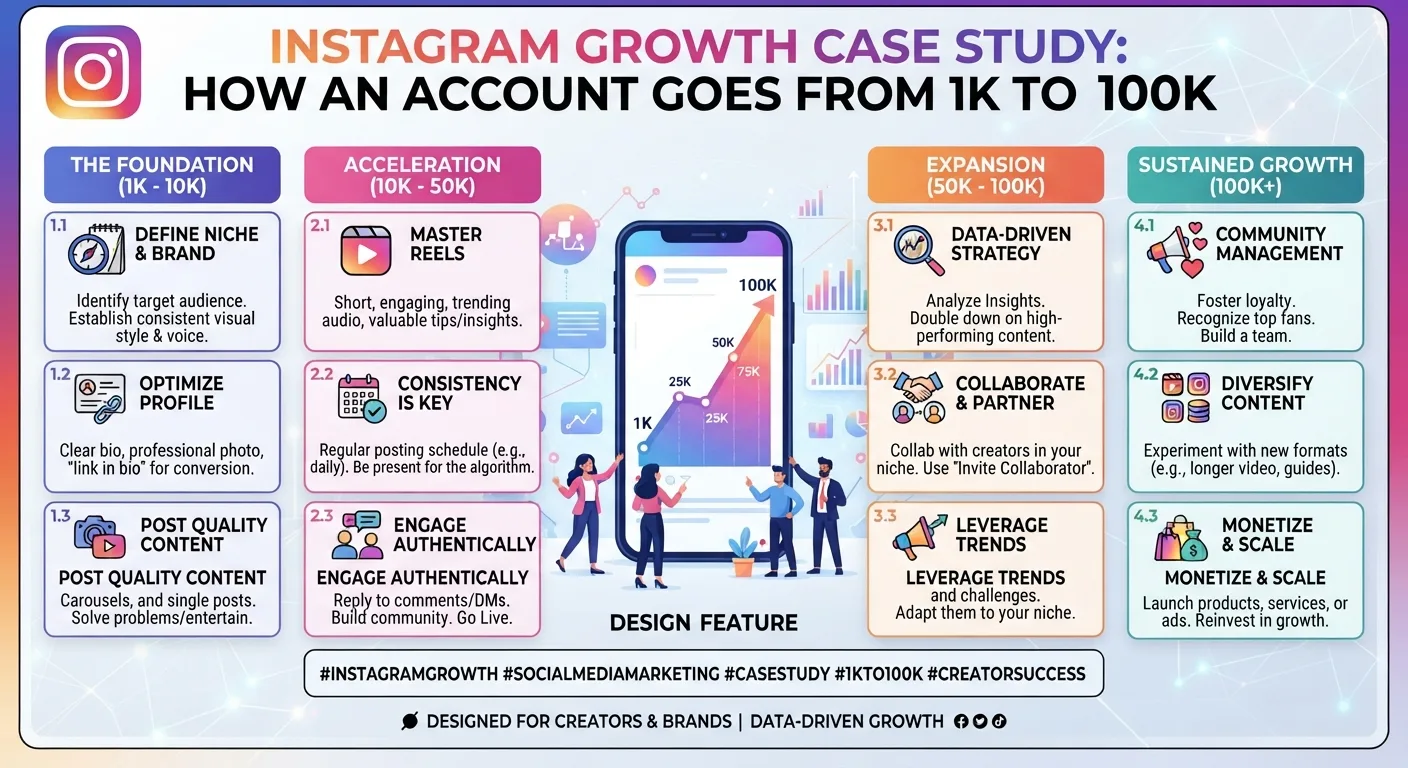
Building a personal brand on Instagram from scratch is a ten stage process that begins long before the first post and continues indefinitely as the brand evolves. The foundation is always positioning clarity, serving a specific audience with a specific perspective in a specific way that is distinctly yours.
Content, consistency, genuine engagement, strategic collaboration, and patient trust building compound over time into something genuinely valuable, not just on Instagram but as an asset that supports every other professional goal.
Research successful personal brands in your niche on InstaPV →